
When commercial water damage hits an office, a storefront or an apartment building, the problem is bigger than wet carpet. Tenants need answers, inventory is at risk, and every hour a suite stays closed costs someone money. DryMax Water Restoration has served New Jersey since 2018. We extract water, dry the structure, map moisture and document every step so owners, managers and insurers can see exactly what happened and what was done.
This page is written for property managers, building owners, office managers and the people who run retail and multi-family buildings across North Jersey. If you are a homeowner, our residential water damage restoration page covers the house side of things. If water is in your building right now, call (973) 992-4400. We answer 24/7/365.
What commercial water damage looks like in North Jersey buildings
Most of the calls we get from commercial properties start with one of a handful of sources. A fire sprinkler line freezes in an unheated stairwell and splits. A supply line under a break room sink lets go over a weekend. A roof leak works its way across the deck and shows up as stained, sagging ceiling tiles three rooms away from where the water came in.
HVAC systems are another common cause. A clogged condensate drain or a failed pump on a rooftop or above-ceiling unit can overflow for days before anyone notices. By the time a tenant reports a musty smell or a brown ring on the ceiling grid, the water has often soaked insulation, drywall and the top of the carpet below.
Lower levels flood too. Heavy rain overwhelms a parking garage drain, a sump pump fails in a mechanical room, or groundwater comes through a slab in a basement storage area. In multi-family buildings, one leaking unit on an upper floor can send water down through two or three units below it.
Each commercial water damage call is a little different, but the job is the same at its core. Stop the spread, get standing water out, find every place the water traveled, and dry the building to normal moisture levels while keeping the people who use it informed. We do not repair plumbing or roofs, so we work alongside your plumber, roofer or facilities team while they fix the source.
Round-the-clock response for property managers
Commercial water damage does not happen on a convenient schedule. Sprinkler lines tend to burst on the coldest nights, and supply lines seem to fail on long weekends when the building is empty. That is why our phone is answered 24 hours a day, 365 days a year, including nights, weekends and holidays.
When you call, we ask a few quick questions. Where is the water coming from, and has it been shut off? Which floors and suites are affected? Is anyone in the building, and is there power to the wet areas? Then we send a crew as soon as you call, with extractors, pumps, air movers and dehumidifiers sized for commercial water damage.
If you can do so safely before we arrive, shut off the water to the affected line, keep people away from wet areas near electrical outlets or equipment, and move small valuables, files and electronics off the floor. Take a few phone photos of the damage as you first see it. Those early pictures help with the insurance claim later.
Protecting tenants, inventory and equipment
On any commercial water damage job, the first hour on site is about limiting the spread. We extract standing water with truck-mounted or portable extractors and use submersible pumps where water is deep, such as an elevator pit or a flooded storage room. Getting the bulk of the water out quickly is the single biggest factor in how much material can be saved.
At the same time, we help you protect what is in the space. In retail settings that usually means moving stock off the floor and away from wet walls, or lifting shelving units onto blocks so the base does not wick water. In offices it means getting computers, servers, printers and paper files out of the wet zone. In apartments it means helping residents protect furniture and personal belongings.
We also look at the floors and suites next door. Water moves sideways under walls and down through ceilings, so a leak that started in one tenant space can easily reach the next one. Checking neighboring areas early keeps a single-suite problem from becoming a whole-floor problem, and it gives you a clear picture of which tenants are affected.
Safety comes first throughout. We flag wet areas near electrical panels, keep walkways clear of hoses and cords where we can, and set up warning signs in common areas so staff and visitors know which spaces to avoid while the work is underway.
Extraction and drying planned around business hours
Downtime is often the biggest cost of commercial water damage. A closed store loses sales, a dental office cancels patients, and an office full of displaced employees loses productivity. We plan the work with that in mind and talk with you about what matters most before we start.
The loud, disruptive work usually happens first. Extraction, moving contents and any flood cuts can often be scheduled for early mornings, evenings or a weekend so the space can reopen sooner. Once the drying equipment is set, much of the building can usually stay in use while the affected rooms dry.
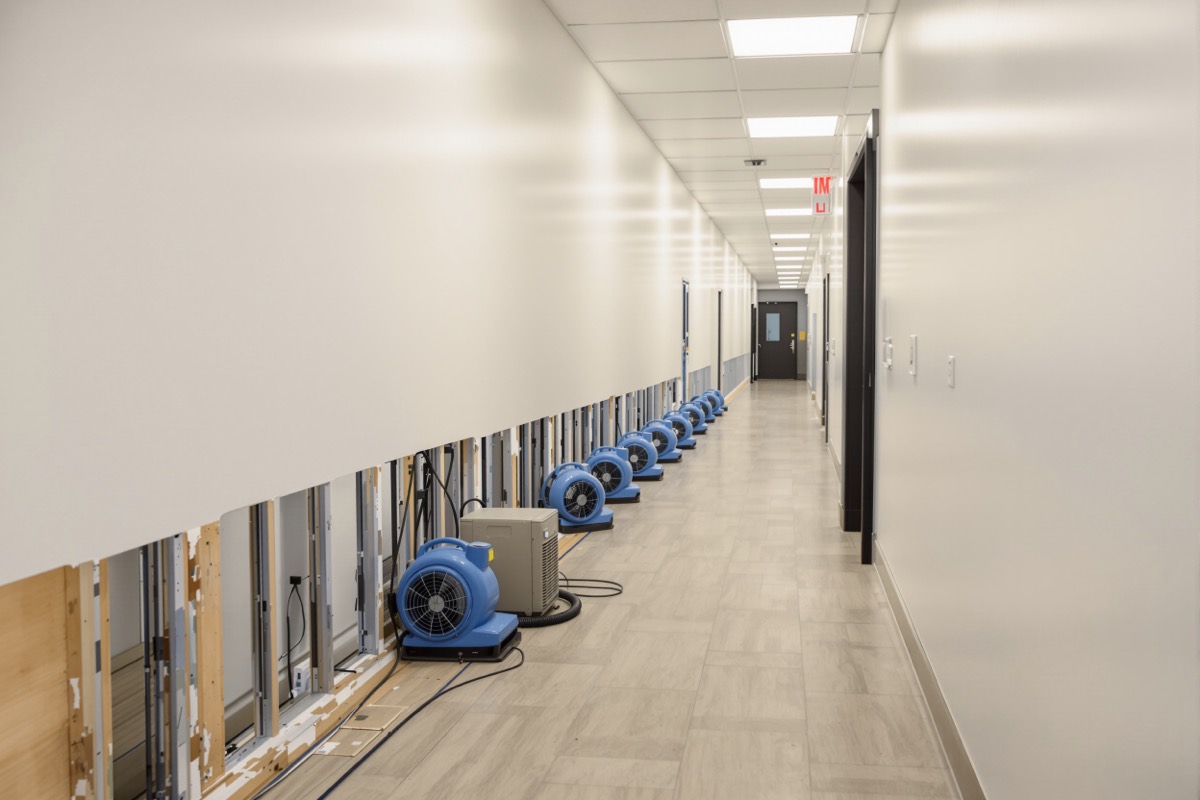
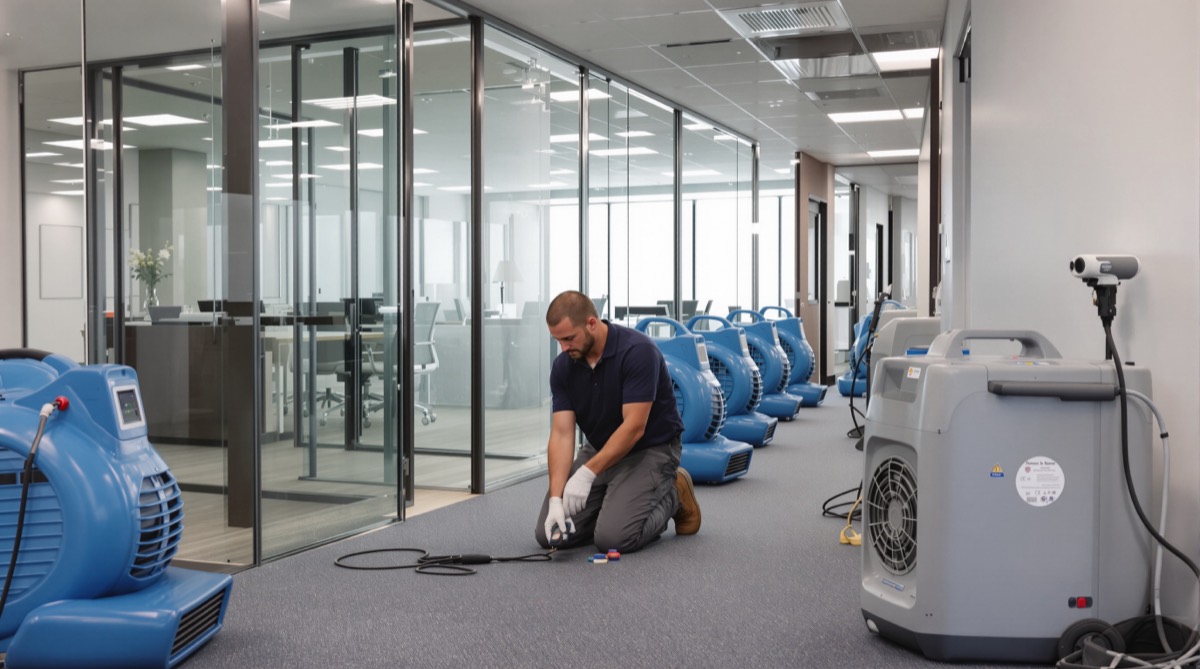
Air movers and commercial dehumidifiers do make noise and need power, so we place them carefully. We route cords to avoid trip hazards, close off drying areas with plastic sheeting where it helps, and position equipment so it does the most work with the least disruption to the people around it. If a tenant needs a room back for a meeting or a client visit, tell us and we will work around it where the drying plan allows.
Drying time depends on the materials, how long the water sat and how much of the building it reached. Rather than guess, we take readings every visit and pull equipment only when the numbers say the materials are dry. That way you are not paying for equipment that has finished its job, and you are not reopening a space that is still wet inside the walls.
Flood cuts and ceiling tile removal for drying
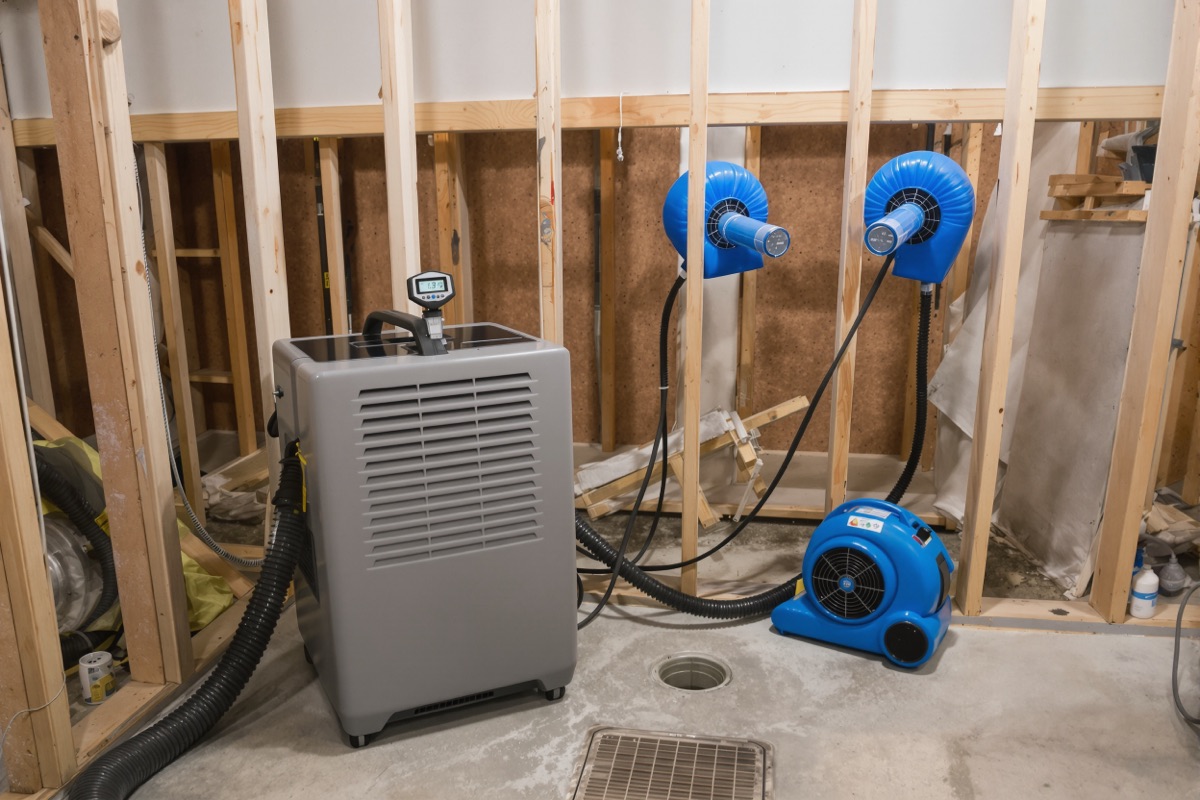
Drywall, insulation and ceiling tiles hold water well and dry poorly when left in place, which is why they are often the slowest part of commercial water damage. To dry the structure properly, we sometimes need to open it up. A flood cut is a straight, clean cut along the lower part of a wet wall, usually a foot or two above the floor, that lets air reach the wall cavity and removes the wettest drywall and insulation.
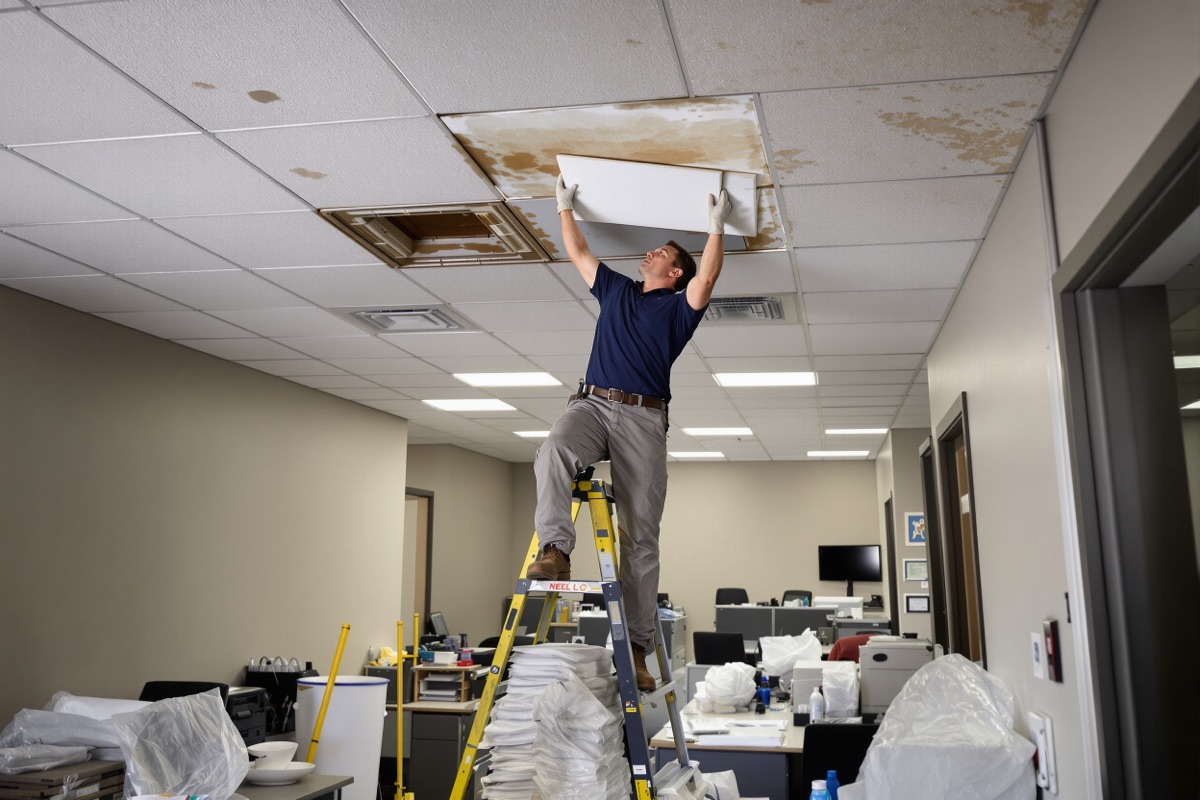
Ceiling tiles that have soaked through are another common removal. Wet tiles sag, stain and can fall, and they hide the condition of the deck and insulation above. We remove the affected tiles, check the space above the grid with moisture meters and thermal imaging, and dry what is up there before anything gets closed back in.
Once the building is dry and documented, we can move straight into the rebuild: drywall, paint, flooring and finish work through our remodeling team. If you prefer your own contractor or maintenance staff, our drying logs show them, and your insurer, that the structure is ready.
We keep removals to what the readings support. Opening walls that do not need it adds cost and downtime, so we cut only where moisture readings and the type of water call for it. You will see the readings that back up each decision.
Moisture mapping across suites and floors
With commercial water damage, the water rarely stays where it starts. In a commercial building it can run along a slab, follow conduit and pipe chases, soak under a demising wall into the next suite, or drip through a floor into the space below. Moisture mapping is how we find all of it.
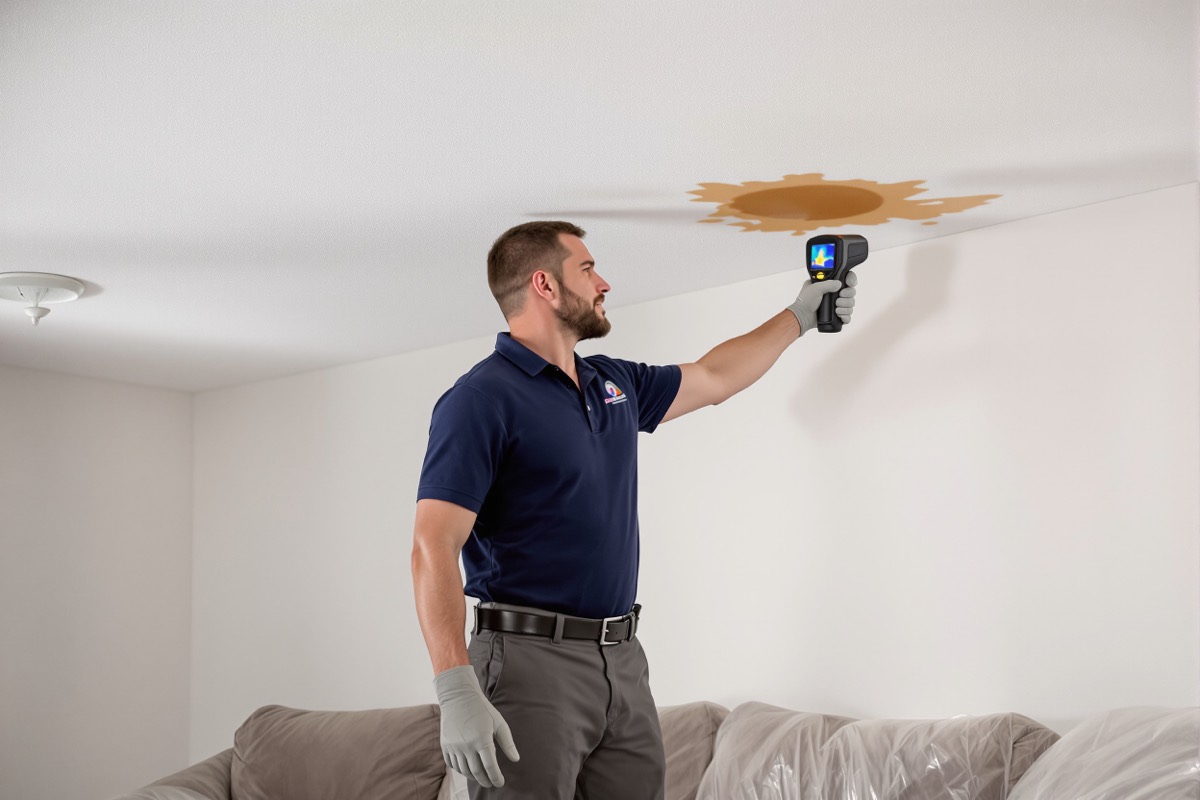
We use pin and pinless moisture meters on walls, floors and framing, and thermal imaging cameras to spot cool, damp areas behind surfaces. Readings are taken in a grid across each affected room and compared with dry reference readings from an unaffected area of the same building. The result is a map that shows the edges of the wet zone suite by suite and floor by floor.
That map drives the whole job. It tells us where to set air movers and dehumidifiers, which walls need flood cuts and which do not, and which tenants are affected. It also becomes part of the record you share with owners and insurers, so there is no confusion later about how far the water reached.
On every return visit we read the same marked points again. Watching those numbers fall day by day is how we know the drying plan is working, and how we know when a room is truly dry.
Daily drying logs and photo documentation for owners and insurers
Commercial water damage claims often involve more than one party. The building owner, the property manager, one or more tenants and their insurers may all want to see what happened. Good records keep everyone on the same page and help claims move along.
Every job we do is documented. We take photos when we arrive, during extraction and removals, and as drying progresses. We record moisture readings at the marked points on each visit, along with temperature and humidity in each drying area, in daily drying logs. When the job is done, you have a clear timeline from the first call to the final dry readings.
You can hand that record directly to your insurance adjuster. It shows the source and extent of the water, the equipment used and for how long, what materials were removed and why, and the readings that confirm the structure is dry. We do not bill insurance companies directly. We are glad to answer an adjuster’s questions about the work and the readings.
For buildings with several affected tenants, we can organize the photos and readings by suite. That makes it simpler for each tenant and their carrier to see their portion of the loss without sorting through the whole building’s file.
| What we record | Why it helps |
|---|---|
| Arrival and damage photos | Shows the source and extent of the water at the start |
| Moisture map by suite | Defines which areas and tenants were affected |
| Daily drying logs | Tracks readings, temperature and humidity each visit |
| Removal photos | Explains why drywall or ceiling tiles were taken out |
| Final dry readings | Confirms the structure is ready for finish work |

Keeping tenants and building staff informed
Commercial water damage in a shared building creates a lot of questions. Tenants want to know when they can get back to work. Residents want to know whether their belongings are safe. Building staff want to know where equipment is running and what to tell people who ask.
We make one clear contact the point person for the job and keep that person updated after each visit. Typically that is the property manager or facilities lead, but it can be whoever you choose. Updates cover what we did that day, how the readings look, what comes next and roughly when each area should be ready for the next step.
When it helps, we are happy to talk with tenants or office managers directly, explain why equipment needs to stay on overnight, or walk a building engineer through the drying setup. We ask that equipment stay on and doors to drying areas stay as we left them, and we explain why, since turning off a dehumidifier overnight can set the drying back a day.
Clear communication also means being straight about what we do and do not handle. If something is outside water and mold work, we will tell you so you can bring in the right trade without delay.
Mold prevention when water sat
Mold is the risk that lingers after commercial water damage, especially when the water sat for a while before anyone found it. An HVAC overflow above a ceiling, a slow roof leak or a flooded storage room that went unchecked over a holiday weekend can give mold time to start. The EPA’s guidance on mold recommends drying wet materials quickly to prevent mold growth, which is why fast, thorough drying matters so much in a commercial building.
When we find signs that water has been there for some time, such as staining, odor or visible growth, we will tell you right away. Our photos and moisture readings show exactly what we found, which helps building owners keep tenants informed.
If mold is found, our mold remediation team sets up plastic sheeting containment and negative air machines, runs HEPA air scrubbers, removes affected materials, HEPA-vacuums the area and checks that everything reads dry. That keeps the work contained so the rest of the building can keep operating.
Where we work in North Jersey
We serve commercial properties throughout Essex, Morris, Bergen, Passaic and Hunterdon counties. That includes office parks and professional buildings in Livingston, Roseland, Florham Park and Morristown, main street storefronts in Montclair, Madison, Chatham and Ridgewood, and apartment and condo buildings in towns like West Orange, Wayne, Little Falls, Totowa and Woodland Park.
We also work with property owners in Franklin Lakes, Wyckoff, Tenafly, Saddle River, Mendham, Clinton, Lebanon and Readington. If you manage a building anywhere in our five counties and you are not sure whether we cover your town, check our service areas page or simply call. For flood preparation tips that apply to any building, Ready.gov’s flood guidance is a good place to start.
Frequently asked questions
Can my business stay open during drying?
Often, yes. Extraction, contents moves and any flood cuts are the most disruptive steps, and we can usually schedule them for early mornings, evenings or weekends. Once drying equipment is running, unaffected areas can typically stay in use. We will talk through what is realistic for your space on the first visit.
How long does it take to dry a commercial space?
It depends on the materials, the size of the affected area and how long the water sat. Rather than guess, we take readings on every visit and remove equipment once the numbers show the materials are dry. You will see those readings in the daily drying logs.
Do you handle the repairs after drying?
Yes. DryMax also does remodeling, so we can rebuild drywall, paint, flooring and other finish work once the structure is dry and documented. If you would rather use your own contractor or maintenance staff, our logs show them the building is ready.
Will you work with our insurance adjuster?
Yes. Every job includes photos, moisture readings and daily drying logs that you can give to your adjuster. We do not bill insurance companies directly. We are always glad to answer an adjuster’s questions about the work we did.
What if several tenants are affected?
We map moisture suite by suite and can organize photos and readings by tenant space. That makes it easier for each tenant and their insurer to see their portion of the loss. We keep one point of contact updated so the whole building gets consistent information.
Should we worry about mold after a leak?
If water sat for more than a day or two, or you notice staining or a musty odor, have us look. We check with moisture meters and thermal imaging, and if there is mold, our remediation team removes it inside sealed containment.
Call DryMax for commercial water damage
If you are dealing with commercial water damage in Essex, Morris, Bergen, Passaic or Hunterdon county, call DryMax at (973) 992-4400. We answer around the clock, every day of the year, and we will send a crew as soon as you call.