
DryMax Water Restoration’s service areas cover five North Jersey counties: Essex, Morris, Bergen, Passaic and Hunterdon. We have been drying out homes and businesses here since 2018, and we handle water damage restoration, sewer backup cleanup and mold remediation. The phone is answered 24/7/365 at (973) 992-4400, including nights, weekends and holidays.
This page walks through each county we work in, the kinds of houses we see there, and the water and mold problems that tend to show up in each one. If you are standing in a wet basement right now, skip the reading and call. A real person will pick up and get a crew moving.
Our service areas at a glance
Our five counties sit side by side in North Jersey, with Essex, Morris and Passaic at the center and Bergen and Hunterdon on either side. That geography shapes where we work. We stay in this part of the state on purpose, because knowing the local housing and the local weather makes us better at the job.
| County | Towns we serve |
|---|---|
| Essex | Livingston, Short Hills, Millburn, Montclair, West Orange, Verona, Cedar Grove, Caldwell, North Caldwell, Essex Fells, Roseland, Glen Ridge |
| Morris | Morristown, Morris Township, Chatham, Madison, Florham Park, East Hanover, Parsippany, Mendham, Harding |
| Bergen | Ridgewood, Glen Rock, Ho-Ho-Kus, Wyckoff, Franklin Lakes, Saddle River, Upper Saddle River, Tenafly, Alpine |
| Passaic | Wayne, Little Falls, Totowa, Woodland Park, North Haledon |
| Hunterdon | Tewksbury, Clinton, Lebanon, Readington |
North Jersey weather is a big part of why we stay local. Nor’easters can drop heavy rain or wet snow for a day or more, summer thunderstorms can overwhelm gutters and storm drains in minutes, and deep freezes in January and February split pipes in exterior walls, crawlspaces and garages. Each season brings its own set of calls, and the same storm can hit a river town and a hilltop town in very different ways.
Across all of our service areas, the work follows the same process: find every bit of moisture, remove the water, dry the structure, and document each step so you have a clear record for your insurance adjuster. The details change from town to town, and that is what the rest of this page is about.

Essex County
We cover all of Essex County. Western Essex towns like Livingston, Roseland, Essex Fells and the Caldwells are full of center-hall colonials, split-levels and capes built in the middle of the last century. Many of them have basements that were finished decades after the house went up, often with carpet over concrete and drywall run right down to the slab.
Those finished basements are where a lot of trouble starts. A sump pump quits during a heavy rain, a water heater lets go, or a washing machine hose splits. The water spreads under the carpet pad and wicks up into the drywall and the bottom plate of the walls. From the room above, everything can look fine for days while moisture sits in places you cannot see.
Older homes in Montclair, Glen Ridge and West Orange bring their own issues. Plaster walls, old cast iron drains, original hardwood and stone foundations all handle water differently than newer materials. Plaster can hold moisture for a long time, and fieldstone foundations can let groundwater seep in after a long wet stretch.
Winter matters here too. Ice dams form along the eaves of older colonials when heat escapes through the attic, melts the snow, and the melt refreezes at the edge of the roof. Water backs up under the shingles and shows up as a stain on a bedroom ceiling. Roof repair is outside what we do. Our part is to find out how far that water traveled, dry the ceiling and walls, and check for mold growth afterward.
Short Hills and Millburn have many larger, older homes with additions built onto the original structure. Where an addition meets the old house, rooflines, foundations and plumbing runs can create spots where water collects or travels in unexpected directions. Thermal imaging helps us follow it without tearing open walls on a guess.
In Essex County we serve Livingston, Short Hills, Millburn, Montclair, West Orange, Verona, Cedar Grove, Caldwell, North Caldwell, Essex Fells, Roseland and Glen Ridge. Because these service areas are closest to our base, Essex is where we spend a lot of our time.
Town guides: water damage restoration in Caldwell, Cedar Grove, Essex Fells, Fairfield, Glen Ridge, Livingston, Maplewood, Montclair, North Caldwell, Roseland, Short Hills, South Orange, Verona, West Caldwell, West Orange.
Morris County
Morris County homes tend to be larger, and many have finished lower levels with full bathrooms, media rooms, home gyms and guest suites. Towns like Mendham, Harding and Chatham have older estates and farmhouses mixed in with newer construction, while Florham Park, Madison and Parsippany have neighborhoods of postwar homes that have been expanded over the years.
Big finished basements mean more surface area for water to reach and more hidden cavities inside walls, under built-ins and behind cabinetry. A slow leak from a lower-level bathroom or a wet bar can go unnoticed until the baseboards swell or a musty smell sets in. Our technicians use pin and pinless moisture meters and thermal imaging cameras to trace where the water went before anything gets opened up.
Town guides: water damage restoration in Chatham, Chester, Florham Park, Harding Township, Kinnelon, Madison, Mendham, Montville, Morristown, Mountain Lakes.
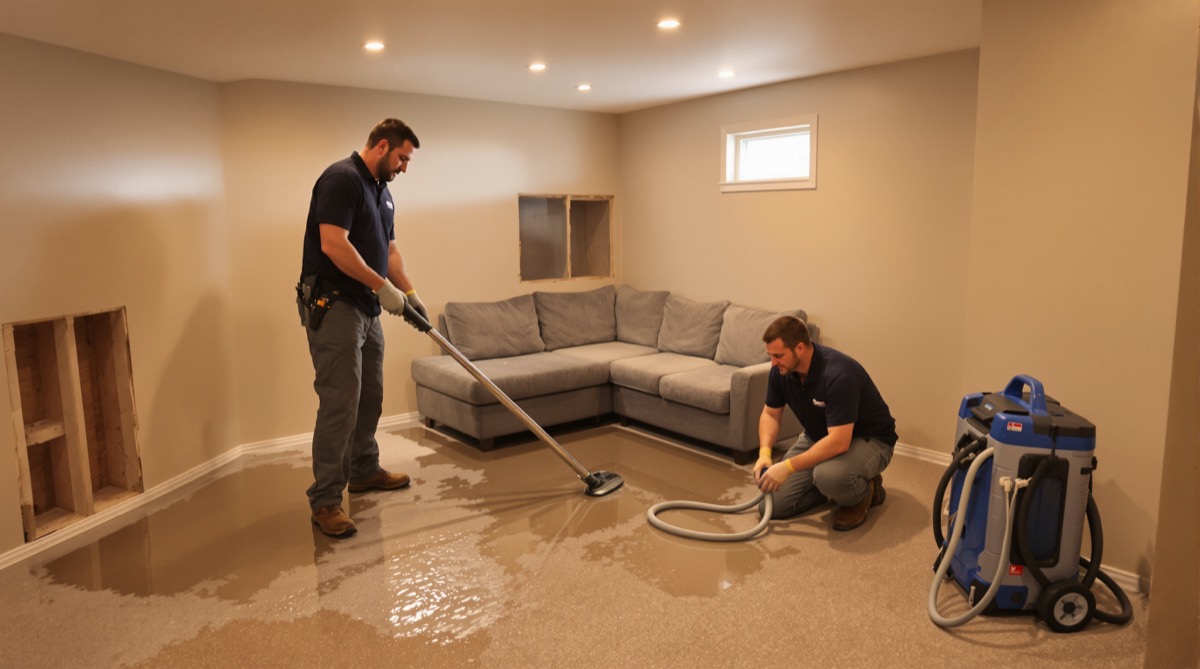
Parts of Morris County sit close to the Passaic, Whippany and Rockaway rivers, and some neighborhoods in East Hanover and Parsippany have high water tables. After a nor’easter or several days of rain, groundwater pushes up against foundation walls and floors. Sump systems run nonstop, and when one fails or loses power, the basement can take on water quickly.
Summer brings a different problem. North Jersey humidity can keep a basement damp for months, and a lower level that never fully dries out is an easy place for mold to get started. If you notice a smell, spots on drywall or a dehumidifier that cannot keep up, call us and we will take a look. Mold remediation is part of what we do.
Our Morris County service areas also include plenty of commercial space, from offices along the main corridors to shops in the downtowns of Morristown, Madison and Chatham. A burst pipe over a weekend can soak carpet tile and the bottom of office walls before anyone comes in on Monday.
We serve Morristown, Morris Township, Chatham, Madison, Florham Park, East Hanover, Parsippany, Mendham and Harding.
Bergen County
Our Bergen County service areas are mostly in the northwest part of the county, plus the towns up on the Palisades. Ridgewood, Glen Rock and Ho-Ho-Kus have plenty of older Tudors and colonials on tree-lined streets. Franklin Lakes, Saddle River, Upper Saddle River and Alpine have large homes on big lots, many with finished lower levels, high-end flooring and custom millwork.
Fine finishes call for careful drying. Hardwood, natural stone, custom cabinets and built-in shelving can warp, crack or delaminate if they are dried too fast or not dried enough. We set up air movers and commercial dehumidifiers based on the materials in the room, then take moisture readings each visit so the drying stays on track. Those readings go into the drying logs you can share with your adjuster.
The Saddle River and Ho-Ho-Kus Brook run through several of these towns, and low-lying properties near them can see water in the basement after big storms. Wyckoff and Franklin Lakes also have homes with long runs of plumbing to second-floor laundry rooms and bathrooms, where a single failed supply line can send water through two or three levels of a house.
Tenafly and Alpine, on the eastern side of the county, have older stone and brick homes as well as newer custom builds. Winter storms and ice dams cause ceiling leaks there, and the wooded lots keep many basements cool and damp, which can lead to mold on stored items, framing and the paper face of drywall.
Many Bergen homeowners also store a lot in their basements: holiday decorations, old furniture, boxes of paperwork and family photos. Cardboard and fabric soak up water fast and give mold something to feed on. After a leak, we help sort what can be dried from what should go, and we photograph the damaged items for your claim.
We serve Ridgewood, Glen Rock, Ho-Ho-Kus, Wyckoff, Franklin Lakes, Saddle River, Upper Saddle River, Tenafly and Alpine.
Town guides: water damage restoration in Franklin Lakes, Ridgewood, Saddle River, Wyckoff.

Passaic County
Southern Passaic County borders Essex County. Wayne, Little Falls, Totowa, Woodland Park and North Haledon have a mix of postwar capes, raised ranches, split-levels and newer townhome communities, along with a lot of small commercial buildings and offices.
This part of the county sits where the Passaic, Pompton and Ramapo rivers come together, and that makes it one of the more flood-prone pockets of North Jersey. Heavy rain upstream can raise river levels for days. Even homes outside the mapped flood zones can see groundwater rise through basement floors or seep in at the joint where the wall meets the slab.
When the rivers are up, sump pumps in Wayne and Little Falls can run around the clock, and a power outage during a storm can stop them cold. A battery backup helps, but it only lasts so long. If water gets in, we bring submersible pumps and extractors to remove it, then set up drying equipment and track moisture until the structure is dry.
If flooding is in the forecast, the federal Ready.gov flood guide has solid advice on what to do before, during and after a flood. Floodwater can carry sewage and chemicals, so stay out of it and keep kids and pets away until it has been removed.
Raised ranches deserve a special mention. The lower level is partly below grade and often finished as a family room, so any water that comes in reaches carpet, paneling and drywall right away. We see a lot of these homes in Passaic County.
Of all our service areas, this is where we talk with homeowners most about getting ready before a storm. Test the sump pump by pouring a bucket of water into the pit, keep the discharge line clear, and move anything valuable off the basement floor when heavy rain is coming.
We serve Wayne, Little Falls, Totowa, Woodland Park and North Haledon, and we handle commercial water damage for offices and storefronts in these towns as well.
Town guides: water damage restoration in Wayne.
Hunterdon County
Hunterdon is the most rural of our service areas. Tewksbury, Lebanon, Readington and the Clinton area have farmhouses, converted barns, older stone homes and newer houses on several acres. Many properties run on private wells and septic systems, and a lot of them depend on sump pumps to keep the basement dry.
Well systems add a few failure points that suburban homes do not have. A well pump, pressure tank or water softener in the basement can leak or burst, and because the system keeps refilling from the well, the leak can keep going until someone shuts off the pump. Older farmhouses may also have fieldstone or block foundations that let water in during wet seasons.
Rural homes are also more likely to sit empty for stretches, such as weekend houses or homes where the owners travel in winter. A pipe that freezes and splits in an unheated room can run for a long time before anyone finds it. When that happens, we dry what can be saved, remove what cannot, and check for mold, since a long-running leak gives growth plenty of time to start.
Distance is the main thing to know about these service areas in Hunterdon. Homes are spread out, and some are down long private drives. Give us the address and any directions when you call, and we will tell you plainly what to expect.
We serve Tewksbury, Clinton, Lebanon and Readington in Hunterdon County.
What we do in every town
The same services are available everywhere we work: water damage, sewer backup cleanup, mold remediation and remodeling, so one team takes your job from wet to finished.
- Water damage restoration: water extraction with truck-mounted and portable extractors, moisture mapping, and structural drying with air movers and commercial dehumidifiers.
- Commercial water damage: the same process for offices, retail spaces and other commercial buildings, planned around your business hours where possible.
- Sewer backup cleanup: safe removal of sewage and contaminated materials, then cleaning, disinfecting and drying.
- Mold remediation: plastic sheeting containment, negative air machines, HEPA air scrubbers and HEPA vacuums, removal of affected materials, and a final HEPA cleaning.
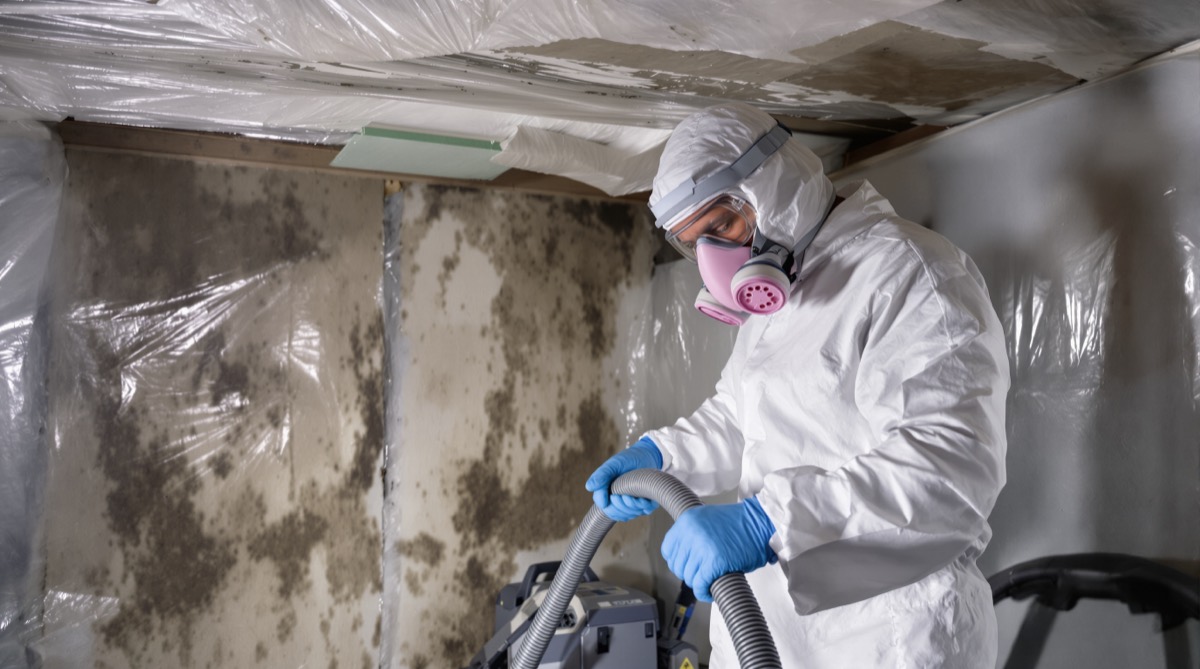
On a typical water call, the crew starts by stopping the source if it is still running, then extracts standing water and maps moisture through floors, walls and ceilings. Wet materials that cannot be dried, such as soaked carpet pad, are removed. Air movers and dehumidifiers run until readings show the structure is dry, and we check back on each visit to adjust the setup. The process is the same in every one of our service areas.
Every job is documented with photos, moisture readings and drying logs. You can hand that record straight to your insurance adjuster, which makes the claim conversation simpler. If you have questions about mold and health, the EPA’s mold guidance is a reliable place to start.

How to tell if you’re covered
The easiest way is to call. Our service areas are listed above by county and town, but plenty of neighborhoods, sections and smaller communities sit inside or right next to those towns. If your town is not on the list, it does not mean we cannot help.
When you call (973) 992-4400, we will ask where the property is and what happened. If we can get a crew to you quickly, we will send one as soon as you call. If we cannot reach you quickly, we will tell you that honestly so you can find help without losing time. Water damage gets worse by the hour, and we would rather point you in the right direction than keep you waiting.
While you are on the phone, we can also walk you through a few safe first steps, like shutting off the water supply, turning off power to a flooded area if you can reach the panel without standing in water, and moving valuables to a dry spot.
Service areas FAQ
Which counties does DryMax serve?
We work in Essex, Morris, Bergen, Passaic and Hunterdon counties in New Jersey.
My town isn’t listed. Can you still help?
Call us and ask. The town list covers the places we work most often, and nearby communities are often within reach. If we cannot get there quickly, we will say so on the call.
Do you answer calls at night and on weekends?
Yes. The phone is answered 24/7/365, including holidays. A person picks up, takes down what happened, and gets a crew moving.
Are the same services offered in all of your service areas?
Yes. Water damage restoration, commercial water damage, sewer backup cleanup and mold remediation are available in every town we serve.
Do you work on commercial properties too?
We do. Offices, retail spaces and other commercial buildings get the same extraction, drying and documentation as homes, scheduled around your hours where possible.
Will I get paperwork for my insurance claim?
Every job includes photos, moisture readings and drying logs. You can give that record to your insurance adjuster.
Call DryMax now
Water in the basement, a stain spreading across the ceiling, or a musty smell that will not go away? Call (973) 992-4400 any time, day or night. The DryMax team serves homes and businesses across all of our service areas in North Jersey.