
Verona water damage restoration often begins in the basement, and the reason is the ground the township is built on. Verona sits in a valley between the First and Second Watchung Mountains, with the Peckman River running along the bottom toward the Passaic. Water from both ridges heads downhill toward that river, and plenty of it passes by, or into, Verona foundations on the way. We are DryMax Water Restoration, an IICRC certified Essex County outfit under local ownership since 2018, and (973) 992-4400 rings through to a live voice around the clock.
Below you’ll find what makes water behave the way it does in this valley, the problems we look for in homes here, and what our crew does from extraction through the last coat of paint.
A town at the bottom of a valley
Picture Verona from above. On one side rises First Mountain, on the other Second Mountain. Between them the land slopes down to the Peckman, a small river that flows toward the Passaic River at Little Falls. In the nineteenth century the area was even called Vernon Valley, before the postal service asked for a different name and residents chose Verona.
Valley towns collect water. Rain that lands on the ridges does not stay there. It runs over lawns and driveways, soaks into the soil and moves underground toward lower ground. During a long, soaking storm, the soil around a basement can become saturated, and water pressure against the foundation pushes moisture through cracks, joints and floor drains.
Verona gets around 44 inches of rain a year. That steady supply keeps groundwater high through much of the spring and fall, which is when many homeowners first notice damp corners, efflorescence on block walls or a sump pump that runs more often than it used to.
Water has shaped Verona for a long time
The township’s own history has water running through it. Verona was once part of the Horseneck Tract, then Caldwell Township. One of the disputes that pushed residents to break away in 1892 was trouble with the water supply, and the later split into a separate borough in 1907 followed the need for a water system and other public utilities.
Those early fights were about getting water into homes. Our work is about getting it out of the places it should not be. Still, the history is a reminder that this valley has always had to manage water carefully, and that the basements, drains and slopes in town deserve the same attention today. Good Verona water damage restoration starts with knowing where water wants to go on your lot.
Homes near the Peckman and Verona Lake
Verona Lake is one of the named places in the township, and the Peckman River runs through the low part of town. Houses closer to these waters sit lower than those up the slopes, and lower lots usually have a higher water table under them.
That does not mean every home near the river or the lake will take in water. It does mean these basements deserve more attention. When we work on a house in the low part of the valley, we pay close attention to:
- The floor-to-wall joint, where groundwater most often seeps in
- Floor drains that can back up when the ground and sewer lines are full
- Finished walls built tight against the foundation with no gap for air
- Carpet laid directly on a concrete slab that stays cool and damp
- Storage boxes and furniture sitting right on the floor
If you want to know whether your property falls in a mapped flood zone, the FEMA flood map service lets you search by address. Those maps help with flood insurance questions, though basements outside a mapped zone can still get wet from groundwater and backups.
Hillcrest, the slopes and fast runoff
Not every Verona call comes from the low streets. Hillcrest is another named place in the township, and many homes sit on the hillsides that climb toward the two ridges. On a slope the problem is speed. A heavy downpour sends sheets of water across yards and driveways, and if a house sits below a neighbor’s lot or below a steep section of street, that water heads straight for the foundation.
Hillside homes often get wet at the uphill wall. Look for water at window wells, at the back of a garage cut into the slope, or along a basement wall that faces up the hill. Downspouts that dump right next to the house make it worse. Extending them away from the foundation is one of the cheapest fixes there is.
Inside the house, hills have no effect on plumbing. Supply lines, water heaters, dishwashers and washing machines fail on the slope just as they do in the valley, and those indoor leaks make up a large share of the water damage we see in any town.

Verona water damage restoration when the sump pump quits
In a valley, the sump pump does a lot of quiet work. It sits in a pit at the low point of the basement and pumps out groundwater that collects there. Most days you never think about it. Then a storm knocks the power out, or the float switch sticks, or the pump simply wears out, and the pit overflows across the floor.
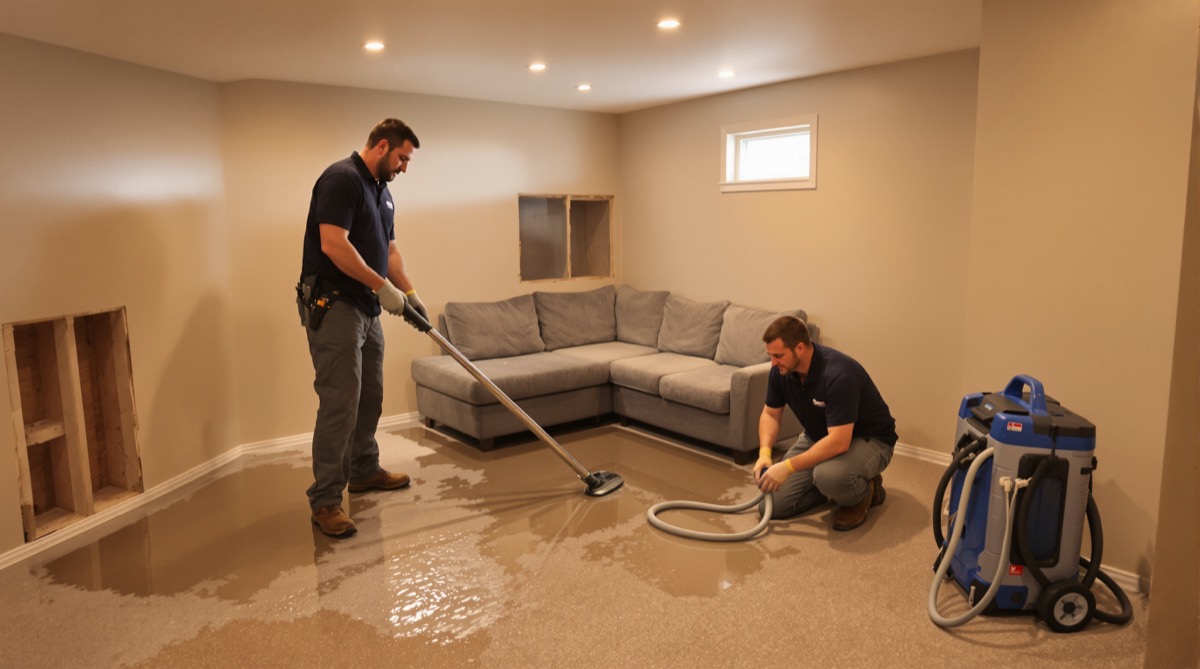
When that happens, we bring submersible pumps to take out deep water fast, then truck-mounted or portable extractors to pull water out of carpet and pad. After that, the real work starts: finding out how far the water wicked up drywall and into the bottom plates of the walls.
Ways to lower the risk before it happens:
- Pour a bucket of water into the pit every few months to make sure the pump starts
- Check that the discharge line outside is not frozen, crushed or clogged
- Ask a plumber about a battery backup pump for power outages
- Keep the pit lid on and the area clear so the float can move
We do not repair or replace pumps; that is a plumber’s job. We clean up and dry everything the water reached, and we document the failure so your adjuster can see what happened.
Clean, gray or sewage: why the source matters
The cleanup plan depends on what kind of water got into the house. The IICRC groups water into three categories, and we decide the category on the first visit.
| Category | Typical Verona source | What it means for cleanup |
|---|---|---|
| Clean water | Burst supply line, water heater, sink overflow | Many materials can be dried in place if we start fast |
| Gray water | Washing machine discharge, dishwasher, groundwater seepage | Carpet pad usually comes out; surfaces get cleaned before drying |
| Sewage | Floor drain or toilet backup, sewer line failure | Porous materials it touched are removed; area is cleaned and disinfected |
Clean water does not stay clean. After a day or two sitting in a basement, it picks up whatever is on the floor and in the carpet, so a delay can turn a simple drying job into a bigger one.
Sewer backups deserve their own warning. When heavy rain fills the ground and the lines at the same time, wastewater can come up through the lowest drain in the house. Stay out of the water, keep children and pets away, and call us. Our crew wears protective gear, removes contaminated materials and cleans the area before any drying starts.
Nor’easters, snowmelt and January cold
Snow is common in Verona from December to March, and nor’easters can bring significant amounts of it. January highs sit in the upper 30s with lows in the lower 20s. That combination produces three kinds of winter calls.
Frozen pipes
Pipes in exterior walls, unheated garages and crawl spaces freeze when the temperature drops into the 20s for a few nights. The pipe splits while frozen and starts leaking as it thaws, sometimes days later.
Ice at the eaves
Heat escaping into the attic melts the snow on the roof. The water runs down to the cold edge and refreezes, forming a dam. More meltwater backs up behind it and leaks into the attic and down through ceilings and walls.
Melt on the hillsides
When a deep snowpack melts quickly, especially with rain on top, all of that water runs down the slopes at once. Basements in the low part of the valley can see seepage for days after the snow is gone.
Ready.gov keeps a short flood safety checklist that is worth reading before storm season.
Ten minutes that help before we get there
While our crew is on the way, a few simple steps can limit the damage. None of them should put you at risk. If water is near outlets, cords or the electrical panel, stay out and wait for us.
- Stop the source if you safely can. The main water shutoff is usually where the line enters the basement, often near the water meter.
- Take photos. A few wide shots and close-ups of the water, the source and damaged belongings help with your claim later.
- Lift what you can. Move photos, papers, electronics and rugs off the floor and to a dry room.
- Put foil or blocks under furniture legs. That keeps stain and swelling from spreading into wet carpet.
- Leave the heavy lifting to us. Wet drywall and saturated carpet are heavy, and sewage is a health hazard.
Once we arrive, Verona water damage restoration moves quickly from there, because the first readings and the first hour of extraction set up everything that follows.
How a wet basement gets dry again
Here is what to expect from a typical Verona basement job, start to finish.
The call. Somebody on our team picks up at any hour. After a few quick questions about depth, source and whether water is still entering, a truck rolls.
The walk-through. We check for electrical hazards, confirm the source is stopped and scan walls and floors with a thermal imaging camera. Wet areas show up as cool spots that are often invisible to the eye.
Extraction. Submersible pumps handle deep water. Extractors pull water from carpet, pad and the slab. The more water we remove now, the faster everything dries.
Moisture mapping. We take readings with pin and pinless meters across walls, floors and framing and record them on a sketch of the basement.
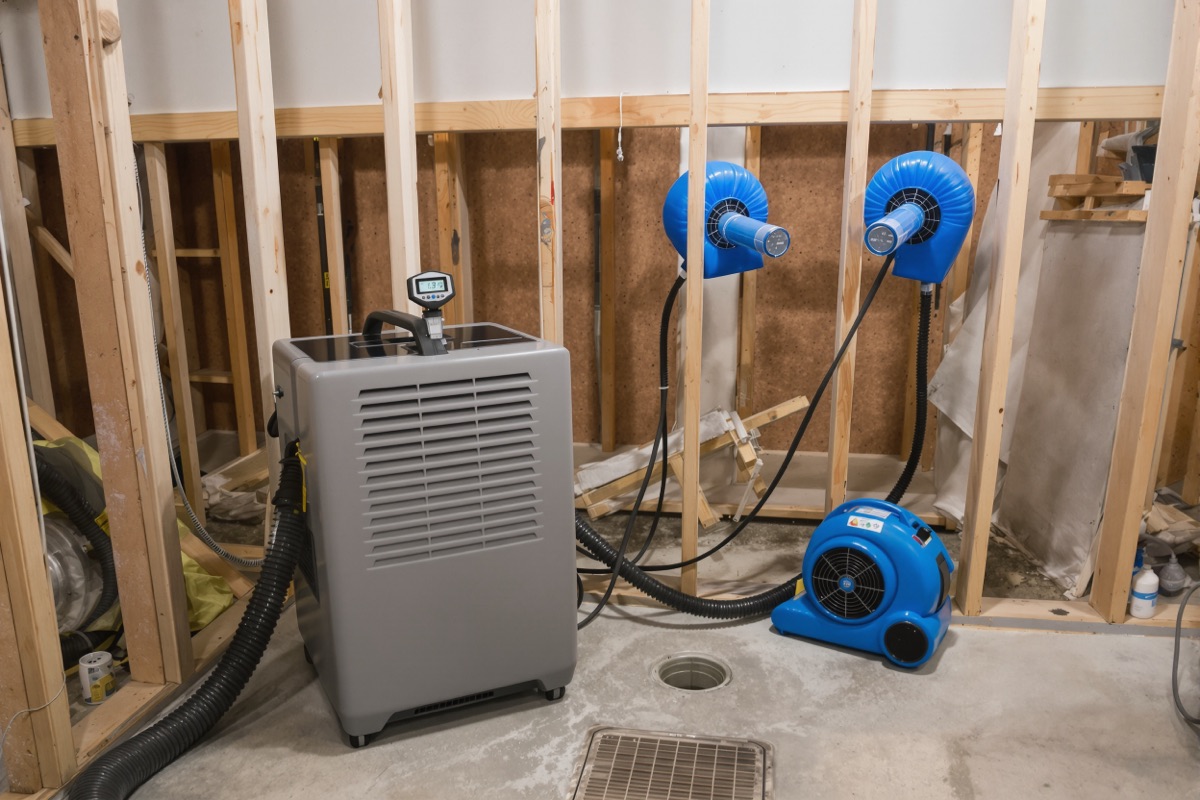
Removal. Wet pad, soaked insulation and swollen baseboard come out. If water reached inside the walls, we slice the drywall off just over the highest damp reading so air can get into the cavity.
Drying. Air movers push air across wet surfaces while commercial dehumidifiers pull moisture out of the air. In a closed basement in summer humidity, the dehumidifiers do most of the work.
Daily checks. We come back to take readings and adjust equipment until every material reaches a dry standard. Most basements take a few days. Concrete, thick framing and stone take longer.
That same sequence applies whether the job is a single laundry room or an entire lower level, and it is the backbone of Verona water damage restoration from our crew. Our water damage restoration page covers the process in more detail.
Mold, rebuilding and the insurance file
A basement that stayed wet for more than a day or two, or one that has had repeated seepage, may already have mold on drywall, paneling or the back of carpet. When we find it, our mold remediation crew sets up plastic containment and negative air, runs HEPA air scrubbers, removes affected materials, HEPA vacuums and cleans the framing, then dries it. Final meter numbers, thermal shots and photographs back up the result.
Once everything is dry, the basement still needs walls, floors and trim. Our carpenters handle that too, from insulation and wallboard to new floors, cabinets, trim and fresh paint. Some homeowners use the rebuild to fix what made the room vulnerable, such as leaving a gap between new walls and the foundation or choosing flooring that handles moisture better. See our remodeling page for the kind of finish work we do.
Through it all we keep a file for your insurance company: photos, daily moisture readings, drying logs and a list of what we removed and why. What gets paid comes down to your policy wording and why the water got in, and the adjuster makes that call. Our job is to give them clear records to decide from.
Verona water damage restoration and nearby towns
Verona borders Cedar Grove, Essex Fells, Montclair, North Caldwell and West Orange. Our five-county territory (Essex, Morris, Passaic, Bergen, Hunterdon) puts every one of those towns on our regular routes.
Across the northern line we provide water damage restoration in Cedar Grove. Over First Mountain to the east, we handle Montclair water damage cleanup, and to the south there is water damage help in West Orange. The complete list is on our service areas page.
For shops and offices along Route 23 and County Route 506, which runs right through the township, our commercial water damage service plans drying around business hours.
Frequently asked questions about water damage in Verona
Why does my Verona basement get wet when it rains even though I’m not near the river?
Verona sits in a valley between two ridges, and rain from the slopes soaks into the ground and moves downhill. Saturated soil pushes water against foundation walls anywhere in town. Gutters, downspouts and the grade around the house also play a big part.
Our sump pump failed during a storm. Can the carpet be saved?
Sometimes. Groundwater from a sump pit is usually treated as gray water, so the pad underneath typically has to come out. The carpet itself can sometimes be cleaned and dried if we get there quickly. We decide after we see it and take readings.
Do you handle sewage that came up through a floor drain?
Yes. Our team pumps the wastewater out, tears out soaked absorbent materials, disinfects what remains and then dries the room. Stay out of the water until we arrive.
How long will it take to dry a finished basement?
Most finished basements take a few days once extraction is done. Concrete floors, block walls and thick framing can take longer. We take readings every day and tell you where things stand.
Will my homeowners insurance pay for this?
Your carrier decides that based on the policy and the source of the water. Some policies treat sump failures and sewer backups differently from burst pipes. We do not decide coverage, but we document the job thoroughly so your adjuster has what they need.
Can you put the basement back together after drying?
Yes. Our own crew frames back the walls, hangs board, lays flooring and paints, so no second contractor is needed.
Call for Verona water damage restoration any hour
Water in the basement, a ceiling dripping after a nor’easter, or a pipe that burst overnight: call DryMax at (973) 992-4400. Your call reaches a real person 24/7/365, Christmas morning and 3 a.m. Sunday included. Describe what you see and our crew heads your way as soon as you call. Learn more about our company while the crew is on the way.