
Found mold after a leak?
Maybe you pulled a box off a basement shelf and saw fuzzy gray spots on the drywall. Maybe a musty attic smell sent you up the ladder. Either way, you want to know how big the problem is. DryMax Water Restoration handles mold remediation for homes and buildings across North Jersey, and this page walks through exactly how we do it.
We have served New Jersey homeowners since 2018. Our owner built the company around water damage, mold remediation and the rebuild that follows. Doing all three lets us get very good at the part of the job that keeps mold from coming back.
Our phone, (973) 992-4400, is answered 24/7/365, including nights, weekends and holidays. If you are looking at a growing patch right now, read on to understand the process, or call and talk it through with a real person.
One quick note: mold almost always follows water. Mold remediation that removes visible growth without dealing with the moisture is like mopping under a running faucet. Everything below is built around that idea.
Step one: assessment
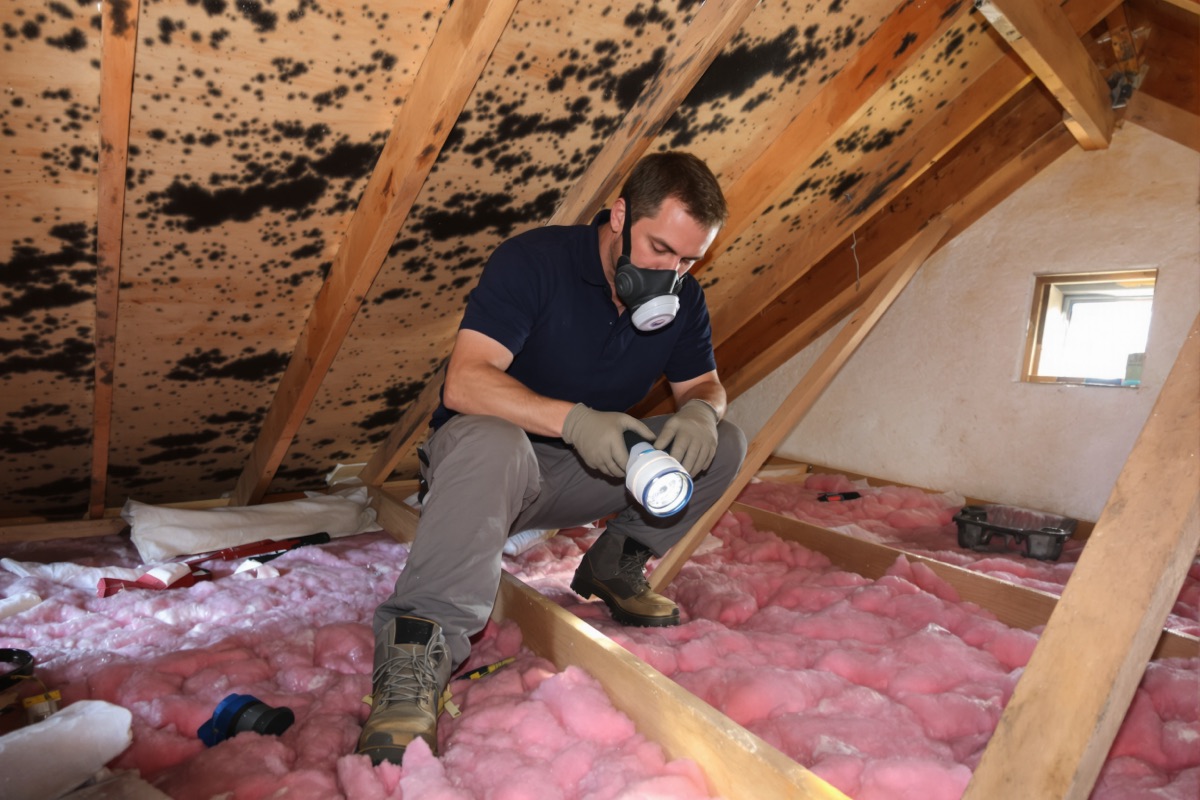
Good mold remediation starts with a clear picture of what you are dealing with. Before we set up a single sheet of plastic, we walk the affected area with you, ask what you have noticed and when, and look for the water that made the growth possible.
We use pin and pinless moisture meters on drywall, framing and subfloors, and thermal imaging cameras to spot cool, damp areas behind finished surfaces. Mold you can see is often only part of the story. A stain on a basement wall can mean wet insulation and studs on the other side, and the meter readings tell us how far the moisture actually goes.
We use moisture meters and thermal imaging to find where the water went, because mold follows moisture. That tells us how far the problem reaches behind walls and under floors, so the plan is based on readings instead of guesses.
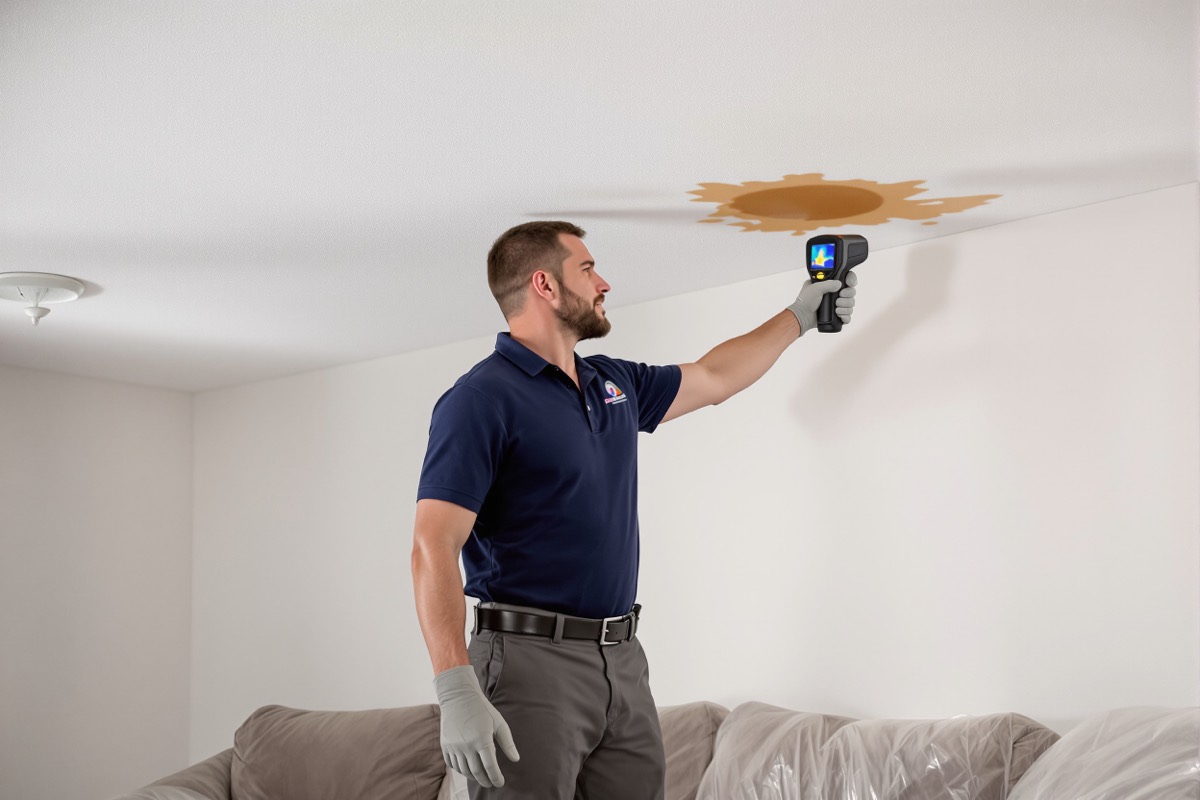
From the walkthrough and readings, we put together a written scope. It lists which rooms will be contained, which materials need to come out, which surfaces can be cleaned in place, and where the water came from. You know exactly what is happening in your home before work begins.
Our mold remediation process, step by step
Every home is different, but the core steps stay the same. Here is what a typical mold remediation job looks like from the day our crew arrives.
1. Plastic containment
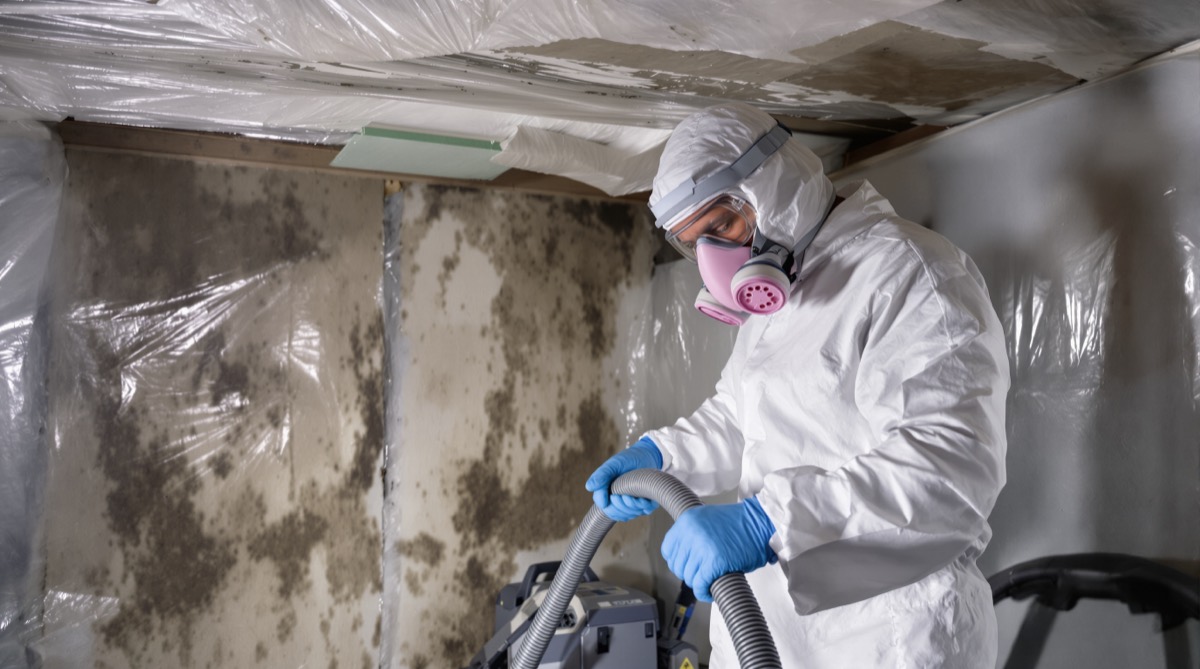
Disturbing moldy material releases spores into the air. To keep them from drifting into clean parts of the house, we build containment out of plastic sheeting. That usually means sealing off doorways, covering HVAC vents and returns in the work area, and creating a zippered entry so the crew can move in and out without opening the space up.
In a small bathroom, containment might be a few walls of plastic. In a finished basement or attic, mold remediation may call for a full enclosure. Whatever happens inside the plastic stays inside the plastic.
2. Negative air pressure
Once the area is sealed, we set up negative air machines. These pull air out of the containment through HEPA filters and exhaust it, usually to the outside. Because more air is leaving the space than entering, air leaks flow into the work area instead of out of it. If there is a small gap in the plastic, clean air gets pulled in rather than spores escaping.

3. Protective equipment for the crew
Our technicians wear personal protective equipment inside containment: respirators, gloves, eye protection and disposable suits. This protects the crew, and it also keeps spores from riding out of the work area on clothing. Suits come off at the containment exit before anyone walks through the rest of your home.
4. HEPA air scrubbing
While work is underway, HEPA air scrubbers run inside the contained space. They pull in air, trap fine particles, and push filtered air back out, which steadily lowers the amount of airborne spores and dust during removal. Scrubbers often keep running after the hands-on work ends, until the final cleaning is done.
5. Removing affected porous materials
Some materials cannot be reliably cleaned once mold has grown into them. Drywall, ceiling tiles, insulation and carpet pad are porous, and growth can extend below the surface. When those materials are affected, we cut them out, bag them inside containment, and remove them from the home in sealed bags.
We cut drywall past the visible growth and past the wet area the meters found, so we are not leaving damp or contaminated material hidden at the edges. Once the space is clean and dry, our remodeling crew can put the new drywall, insulation and flooring back, so you are not hunting for a contractor.
6. HEPA vacuuming
After removal, every exposed surface inside containment gets HEPA vacuumed. That includes studs, joists, subfloor, concrete, ledges and the plastic itself. A regular shop vacuum would blow fine spores right back into the air. A HEPA vacuum captures them.
7. Cleaning and treating surfaces
Nonporous and semi-porous materials that can stay, such as framing lumber, concrete block and metal, are cleaned to remove growth and residue. Wood framing with surface growth is scrubbed or sanded as needed, then wiped down. Once surfaces are clean, we may apply an antimicrobial treatment as an added step, and we explain what we are using before we use it.
Spraying a product over growth does not solve the problem, and neither does painting over a stain. In mold remediation, we remove the growth first and treat second.
8. Final HEPA pass and drying check
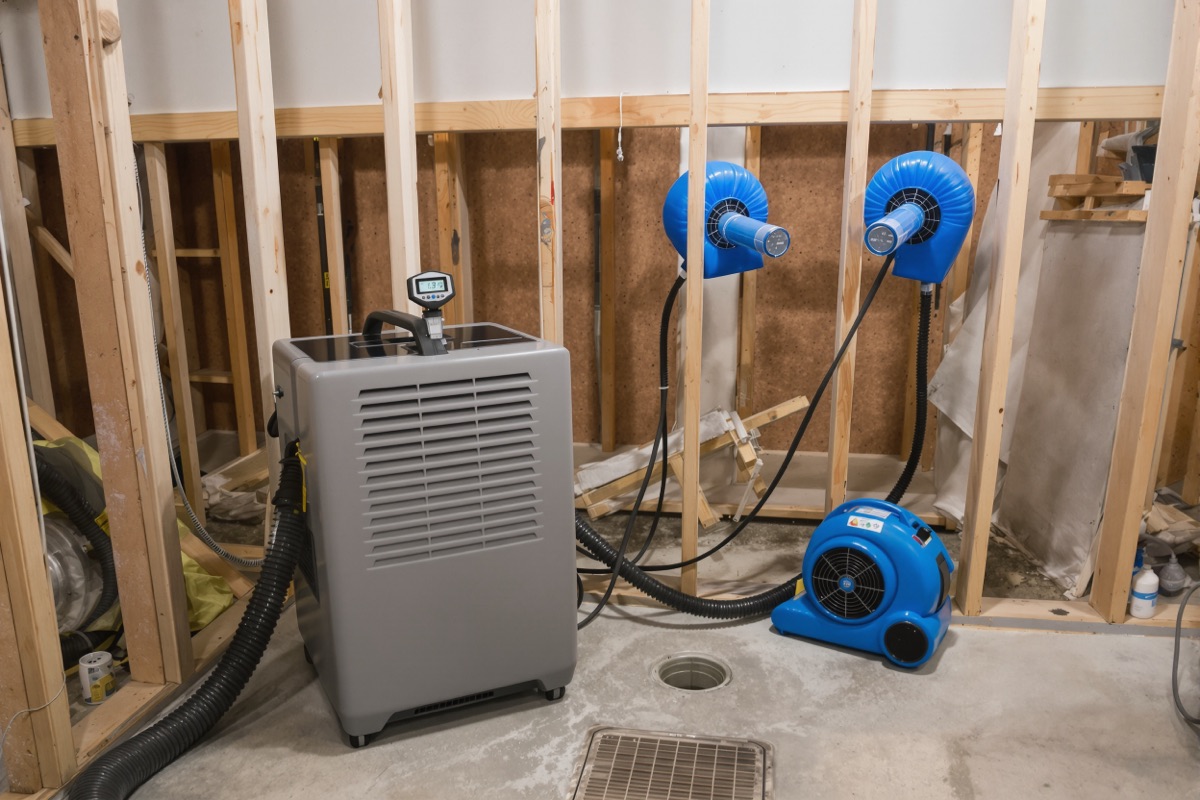
Before we wrap up, we do a final HEPA vacuum and wipe-down, check the containment, and take moisture readings on the remaining materials. Wood and drywall edges need to read dry. If they do not, we keep air movers and dehumidifiers running until they do.
Fixing the moisture that fed the mold
Mold remediation that skips the moisture source is only a temporary fix. Spores are present almost everywhere, indoors and out. What lets them turn into a visible colony is water: a leak, condensation, or humidity that stays high for days at a time.
During the assessment we track down where the water is coming from. Sometimes it is obvious, like a supply line that was weeping inside a vanity. Sometimes it takes the thermal camera and a few rounds of readings to trace a damp area back to a window, a foundation crack or a bathroom fan that vents into the attic instead of outside.
When the cause is a leak that needs a plumber, we tell you exactly what we found and where, so your plumber can repair it quickly. We do not do the plumbing ourselves. What we do handle is the drying. If framing, subfloor or concrete is still wet, we bring in commercial dehumidifiers and air movers and log readings until the materials are back to normal levels.
That drying work is the same structural drying we do on our water damage restoration jobs. If you caught the leak early, before growth started, that page is the better place to start, because fast drying is the best way to prevent mold in the first place.
For humidity problems, the fix may be a basement dehumidifier, better attic ventilation, or a bathroom fan that vents outdoors. We point out what we see so your mold remediation results last.

Proof the job is done
How do you know the job worked? Before the containment comes down, we check the work area closely: every affected material removed, every surface HEPA-cleaned, and every remaining stud and edge reading dry.
When the readings and the walkthrough check out, we remove the containment and the space is ready for drywall, paint and flooring.
If results come back elevated, we clean again and retest. We would rather find a problem while the plastic is still up than after new drywall is painted.
You also get the paperwork. Every job is documented with photos, moisture readings and drying logs. Your mold remediation record helps with a future buyer’s questions and with your insurance adjuster if you file a claim.
| Stage | What we document |
|---|---|
| Assessment | Photos, moisture readings, thermal images |
| Removal and cleaning | Photos of containment, removed materials and cleaned surfaces |
| Drying | Daily moisture readings and drying logs |
| Final check | Photos and final moisture readings |
DIY cleanup or a pro?
Not every spot of mold needs professional mold remediation. The U.S. Environmental Protection Agency says that if the moldy area is less than about 10 square feet, roughly a 3 foot by 3 foot patch, most homeowners can handle the cleanup themselves. Their guide to mold, moisture and your home covers how to do it safely.
A small patch of mildew on a shower grout line or a window sill usually falls into that category. Clean it with detergent and water, dry the surface, and fix whatever is keeping it wet. Wear gloves and eye protection, and avoid touching mold with bare hands.
It is time to call a professional when:
- The growth covers more than about 10 square feet, or keeps coming back after you clean it.
- Mold is on or inside drywall, insulation, ceiling tiles or other porous materials.
- You smell mustiness but cannot find the source, which can point to growth inside a wall cavity or under a floor.
- The mold followed a leak from sewage or flood water.
- Growth may be in your heating and cooling ducts. The EPA advises against running the HVAC system if you suspect it is contaminated.
- Someone in the home has asthma, allergies or a weakened immune system.
On that last point, health effects from mold vary from person to person. The EPA and the CDC both note that mold exposure can cause allergy-type symptoms such as a stuffy nose, wheezing, or red or itchy eyes and skin, and that people with asthma or weak immune systems can be more sensitive. If anyone in your home has symptoms, talk with a doctor. We handle the building; your doctor handles the health questions.
One more reason to bring in a pro: large-scale removal without containment can spread spores through the house. Professional mold remediation keeps a small problem from becoming a whole-house problem.
Common causes of mold in North Jersey homes
Older colonials, finished basements, humid summers and wet springs create a few patterns we see on mold remediation calls again and again.
Basement humidity
Basements in Essex, Morris and Passaic counties often sit below the water table for part of the year. Even without a leak, concrete walls wick moisture, and summer humidity condenses on cool surfaces. Finished basements with carpet, drywall and boxes stored against exterior walls give mold plenty to feed on. A musty smell is usually the first clue.
Sump pump failures
A sump pump that fails during a heavy rain, or loses power in a storm, can put inches of water on a basement floor in a few hours. If that water is not extracted and the space dried quickly, the bottom of the drywall, the carpet pad and the framing can start growing mold within days.
Poor attic ventilation
In winter, warm, moist air from the living space rises into the attic. If the attic is not ventilated well, or if bathroom and kitchen fans vent into it, that moisture condenses on the cold underside of the roof sheathing. The result is often a dark, blotchy pattern across the plywood that homeowners find during an unrelated trip into the attic.
Slow plumbing leaks
The leaks that cause the most mold are often the quiet ones. A drip from a supply line inside a wall, a wax ring failing under a toilet, a dishwasher hose seeping into the cabinet base. Nobody notices for weeks or months, and by the time a stain appears, the drywall and framing behind it have been wet for a long time.
For property managers and commercial spaces
We also provide mold remediation for property managers, landlords and building owners. Mold in a rental unit, an office or a common hallway raises extra concerns: tenants who need clear answers, neighboring units that should stay unaffected, and owners who want documentation on file.
The process is the same one described above, scaled to the building. Containment protects occupied areas, negative air keeps the work area under control, and photos plus moisture readings give you a record to share with tenants or ownership. If a larger water event is behind the growth, our commercial water damage page explains how we handle extraction and drying in offices, retail spaces and multifamily buildings.
Mold remediation in Essex, Morris, Bergen, Passaic and Hunterdon
We provide mold remediation across five North Jersey counties. In Essex County that includes Livingston, Short Hills, Montclair, West Orange, Essex Fells and Roseland. In Morris County we work in Morristown, Chatham, Madison, Florham Park, Mendham and Harding.
Up in Bergen County, we cover towns like Ridgewood, Franklin Lakes, Saddle River, Tenafly, Alpine and Wyckoff. In Passaic County, that means Wayne, Little Falls, Totowa and Woodland Park. Out west in Hunterdon County, we serve Tewksbury, Clinton, Lebanon and Readington.
If your town is not listed, it is likely still in range. Check our service areas page or just call and ask.
Frequently asked questions
How long does mold remediation take?
It depends on the size of the area and how much material needs to come out. A bathroom is a shorter job than a full attic or finished basement. Drying and lab turnaround also affect the timeline. We give you a realistic schedule after the assessment.
Can I stay home during mold remediation?
In most cases, yes. Containment and negative air are designed to keep the work area separate from the rest of the house. We talk with you about it during the assessment, especially if someone in the home has asthma, allergies or other health concerns.
How do you find mold I can’t see?
Mold follows moisture. We use moisture meters and thermal imaging to find wet materials behind walls and under floors, and we look closely wherever there is a musty smell, staining or a past leak.
Will bleach kill the mold?
Bleach is not the answer for most household mold problems. The EPA guidance focuses on removing growth from hard surfaces with detergent and water and removing porous materials that are affected. Never mix bleach with ammonia or other cleaners, since that can create toxic fumes.
Does homeowners insurance cover mold?
That depends on your policy and what caused the mold. Coverage is more likely when mold results from a sudden covered event, such as a burst pipe, than from long-term humidity. Either way, we give you photos, moisture readings and drying logs that you can share with your adjuster.
Will the mold come back?
Mold returns when moisture returns. That is why we track down the water source, dry the materials fully and confirm it with moisture readings. If the leak is repaired and humidity stays under control, the space should stay clean.
Call DryMax today
If you found mold in a basement, attic, bathroom or behind a wall, you do not have to figure it out alone. Call DryMax Water Restoration at (973) 992-4400. We answer 24/7/365, and we send a crew as soon as you call.