
Cedar Grove sits in a valley, and that one fact explains a lot about Cedar Grove water damage restoration. The township lies between the First and Second Watchung Mountains, with the center of town about 280 feet above sea level and several sections climbing well above 400 feet. The highest ground reaches 600 feet. Rain that falls on those hillsides has to go somewhere, and in a heavy storm a lot of it heads downhill toward basements.
DryMax Water Restoration is a locally owned company serving Essex, Morris, Bergen, Passaic and Hunterdon counties since 2018. Our technicians are IICRC certified, and the phone at (973) 992-4400 is answered around the clock, seven days a week, on holidays too. Below we break down where water problems in this township tend to come from, section by section, and how we deal with them.
A town in a valley between two ridges
The township took its name from the Eastern Red Cedars that once covered its valley and hillsides. That landscape is still the setting for most of its homes. Some houses sit on slopes that face down toward the center of town. Others sit near the low point of the valley, where runoff from higher ground collects.
Each position brings its own risk. A home on a hillside can have water come in at the uphill foundation wall, where soil stays saturated against the block after a long rain. Window wells on the high side fill and spill over. Driveways that pitch toward a garage can send water under the door and into a finished room below.
Homes lower in the valley face a different pattern. Groundwater rises after several days of rain, and the sump pump has to run much harder than usual. If the pump fails, loses power or simply cannot keep up, the basement floor is the first thing to go under. In a valley town, a dependable pump and a backup plan for power outages are worth thinking about before the next big storm.

North End, Central and South End: different houses, different leaks
Locals divide the township into three sections, and each one has a different character. The table below sums up what that can mean for water in each area. These are general patterns. Your own house may be different.
| Section | What the area is like | Water issues to watch for |
|---|---|---|
| North End | Mostly homes, including the large houses of Park Ridge Estates, on higher ground | Larger homes with upstairs laundry and several bathrooms, hillside runoff at the foundation |
| Central | Business district, the Cedar Grove Reservoir and Mills Reservation | Commercial leaks, roof drains and older plumbing in storefronts |
| South End | The most built-up part of town, with homes closer together | Shared drainage between tight lots, basement seepage, sewer backups |
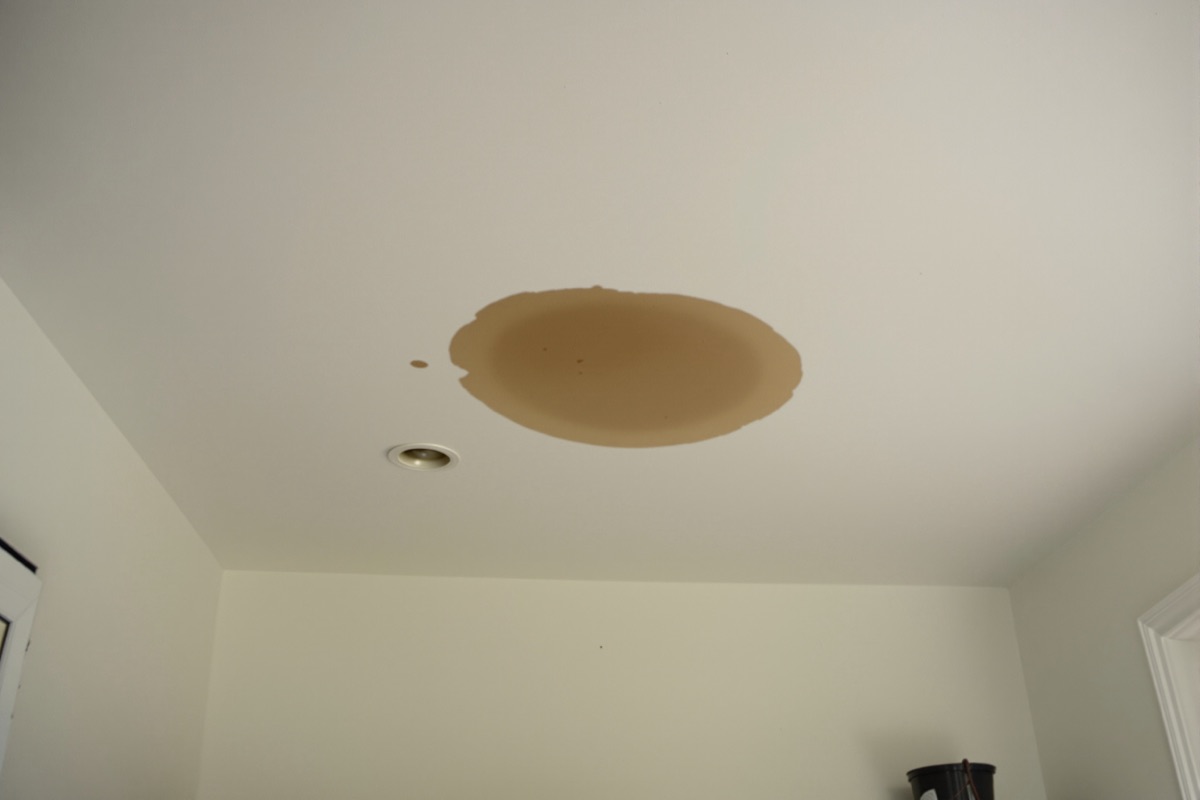
In the North End, the bigger homes tend to have more water sources. A washer on the second floor, a steam shower or a wet bar can each fail and send water down through the ceiling of a finished room. Those leaks are often discovered as a brown stain on the ceiling rather than a puddle on the floor.
In the South End, homes sit closer together. When lots are tight, the water coming off one roof and one driveway can end up against a neighbor’s foundation. A downspout that empties too close to the house, or a grade that slopes the wrong way, is often enough to wet the lower part of a basement wall during a long storm.
Forty-four inches of rain and a lot of snow
The local weather explains a lot. Rainfall is plentiful, at around 44 inches a year. Snow is common from mid January to early March, and nor’easters can bring a lot of it. The Blizzard of 1996 alone dropped about three feet of snow on the township.
Heavy snow causes water damage in two ways. First, it melts. A deep snowpack that thaws quickly over a couple of warm days, sometimes with rain on top, sends a lot of water into the ground all at once. Basements that stay dry the rest of the year can take on water during a fast thaw.
Second, ice builds up at the roof edge. When snow on a warm roof melts and refreezes at a cold overhang, it forms an ice dam. Water backs up behind the dam, works under the shingles and drips into the attic, the top of the walls and the ceilings below. We handle the interior damage from ice dams: wet insulation, stained drywall and soaked framing. Roof repair is a separate trade, and we do not do it.
January lows in the lower to mid 20s also mean frozen pipes are a real risk in unheated spaces. Pipes in an exterior wall, a crawl space or a garage are the usual suspects.
Wooded reservations and big pieces of open land
The township is less crowded than Montclair, Verona and Little Falls, largely because big tracts are owned or were owned by government. Mills Reservation, a county park, covers about 157 acres of protected woods. The Cedar Grove Reservoir property belongs to the City of Newark. Hilltop Reservation opened in 2003 on the grounds of a former sanitorium.
Living near woods is one of the best things about this town, and it brings a few water habits worth keeping. Oak and maple leaves fill gutters fast in the fall. A clogged gutter on a hillside house sends roof water straight down beside the foundation, often on the side that already gets the most runoff. Cleaning gutters before the November storms and again after the leaves finish dropping is cheap insurance.
Tree roots are the other concern. In older neighborhoods, roots can work into clay or cast iron sewer laterals over the years. The first sign is often a slow floor drain, and the second is a backup during heavy use or a big storm. Sewage that comes up through a basement drain is a contamination issue, and we handle it with protective gear, removal of porous materials it touched, cleaning and sanitizing, and then drying.
Basements in the homes built during the suburban boom
In the 1950s and 1960s, the township became one of Essex County’s destination suburbs, as people moved out from Newark and New York City. Many homes in town were likely built or expanded around that time, though plenty have been renovated since.
Houses from that era often have poured concrete or block foundations, and many owners have since turned the basement into living space. A finished basement is where water damage gets expensive. Carpet and pad soak up water fast. Drywall wicks moisture upward from the floor. Wood paneling and baseboards swell. Furniture and stored boxes sit right in the wet zone.
When we dry a finished basement, we pull up wet carpet pad, which almost never dries well in place, and often save the carpet itself if the water was clean. We measure how high moisture has climbed in the walls and cut the drywall above that line so the cavity behind it can breathe. Then we run air movers and commercial dehumidifiers, checking readings every day until the concrete, framing and remaining drywall reach normal levels.
Water heaters and washing machines in mid-century basements are another frequent cause. A tank that rusts through at the bottom can empty forty or fifty gallons onto the floor, and then keep running from the supply line until someone shuts it off.
Cedar Grove water damage restoration for shops and the industrial district
Route 23 bisects the township, and most of the commercial zone sits along that road. There is also an industrial district along Commerce Road, just off Route 23, with light industrial factories and other businesses.
Water damage in a business is a different kind of emergency. Every day the space is closed costs money, and customers or employees may need to be kept safely away from wet floors and running equipment. We plan commercial drying jobs to keep as much of the building open as we can, using containment to separate the wet area and scheduling noisy work around business hours when possible.
Commercial buildings also tend to have flat roofs, long runs of sprinkler pipe and large open floors. A single failure can spread across a lot of square footage quickly. Our commercial water damage service brings extra extraction capacity, larger dehumidifiers and moisture mapping across the whole affected area. For businesses along this corridor, Cedar Grove water damage restoration is about getting back to work with good records in hand.
The first hour after you find water
What you do before our crew arrives can make the drying go faster. Start with safety. If water is near outlets, a panel or appliances that are plugged in, stay out of that area. If you can reach the main water shutoff safely, close it. For a water heater leak, turn off the cold supply valve at the top of the tank.
Next, move what you can. Lift rugs, boxes, electronics and anything made of paper off the floor. Wipe up water on wood furniture and put foil or plastic under the legs so the finish does not stain the carpet. Open interior doors to let air move, but do not run a household fan on a wet ceiling.
Take your own photos with your phone, wide shots and close-ups, before anything is moved. Those images help us and your adjuster. Then call us and leave the heavy lifting, extraction and drying setup to the crew.
How we get a wet house back to dry
When you call, we ask a few quick questions and dispatch a crew as soon as you call. We arrive with pumps, extractors and drying equipment already loaded. Before anything moves, we photograph the damage and take moisture readings so there is a clear starting point.
Standing water comes out first, with a submersible pump for deep water or truck-mounted and portable extractors for carpet and hard floors. Then we use a thermal imaging camera and moisture meters to find where the water spread. That map decides where the air movers and dehumidifiers go and what has to come out, and it is the backbone of every Cedar Grove water damage restoration job.
Every day after that, we return to check readings and adjust. When materials are back to normal moisture levels, the equipment comes out and you get the drying logs.
Hardwood floors, kitchen cabinets and plaster walls each need their own approach. Hardwood can often be saved if it is dried slowly and evenly with mats or directed airflow. Cabinets may need the toe kick removed so air can reach the cavity underneath. Plaster dries more slowly than drywall, so we plan for extra days and keep checking it with meters instead of guessing from the surface.
For a full look at our approach, read our water damage restoration page.

When moisture turns into mold
The EPA’s guide to mold and moisture stresses drying wet materials within 24 to 48 hours. In a basement that took on water during a thaw, or a wall cavity behind an ice dam, mold can start before anyone notices the leak.
Our mold remediation process isolates the affected area with plastic containment and negative air, filters the air with HEPA scrubbers, removes materials that cannot be cleaned, HEPA vacuums and cleans what remains, and dries the space. We document the result with moisture readings, photos and thermal images so you can see the area is dry.
From bare studs to a finished room
Drying is only half the job. Once the structure is dry, the room still needs new drywall, insulation, paint, trim and maybe flooring or cabinets. Our remodeling team handles that work, so you are not hunting for a second contractor while the basement sits open.
Having one company from the first call to the final coat of paint also keeps the records clean. The photos and readings we took on the first day show your adjuster exactly what came out and why. We do not decide coverage, since that depends on your policy, but we make sure the documentation is complete. That is true for a small laundry room leak and for the largest Cedar Grove water damage restoration project alike.
Frequently asked questions from Cedar Grove homeowners
Why does my basement flood when it rains hard, even though I live on a hill?
Homes on a slope often take water at the uphill wall, where saturated soil presses against the foundation. Window wells and driveways that pitch toward the house can make it worse. We dry the basement and show you where the water came in.
My sump pump failed during a storm. What now?
If it is safe, unplug nearby electronics and move valuables up. Then call us at (973) 992-4400. We pump out the water, extract the floors and set up drying equipment, with daily readings until the space is dry.
Do you fix ice dams?
We do not repair roofs. We handle the inside damage an ice dam causes, including wet insulation, ceiling stains and wet framing, and we document it for your adjuster.
Can you help a business on Route 23?
Yes. We handle commercial water damage, including shops and light industrial buildings, and plan the work to keep as much of the building open as possible.
How long will drying take in a finished basement?
It depends on how much water there was, what the walls and floors are made of and how long it sat. We take readings every day and remove the equipment only when the materials reach normal moisture levels.
Does homeowners insurance pay for basement water?
That depends on your policy and the cause, and the insurer makes that decision. We provide photos, moisture readings and drying logs so the adjuster has a full record.
Cedar Grove water damage restoration starts with one call
Water in your basement, ceiling or business does not wait. Call (973) 992-4400 any time, day or night, and a real person will answer. We also work in the towns around you, including water damage restoration in Verona, North Caldwell water damage cleanup and Montclair water damage help. See every town on our service areas page.