
Out in southwestern Morris County, a leak can go unnoticed longer than it would on a crowded suburban street. Houses sit farther apart, lots are bigger, and some rooms are not used every day. DryMax handles Chester water damage restoration around the clock, through IICRC certified technicians who pump, dry, clean up mold and put rooms back together. Our phone is staffed every night and every holiday.
Farms, estates and open country
Chester Township is a semi-rural residential community known for agricultural and equestrian farms along with its country estates. Much of the township is open space made up of farmland, a good part of it preserved, plus public parks. With about 29 square miles of land, it is one of the larger municipalities we serve.
That landscape shapes the water damage we expect to see. In a town like this, rain does not run off into a dense storm sewer grid the way it does in a city. It soaks into fields, travels across sloped lawns, and moves through low spots toward brooks and the river. Homes at the bottom of a slope, or close to a stream, can feel that movement in their basements.
Chester Township also wraps entirely around Chester Borough. It is known as a “doughnut” town, one of 21 such pairs in New Jersey where one municipality fully surrounds another. Our crews serve both, and the same water risks often carry across that boundary.
Place names inside the township include Hacklebarney, Horton, Milldale, Milltown, Mount Paul, Pleasant Hill and Upper Ironia. Each sits in its own part of the landscape, some higher, some closer to water. We look at every property on its own terms.
Chester water damage restoration in the Black River valley
The Black River runs through the story of Chester from the beginning. The earliest recorded settlement here, from deeds dated 1713, was near a point where two Lenape trails crossed at an area called Black River. Today, the river bisects a township park and is described as one of the premier trout fishing streams in New Jersey.
The Black River Fish and Wildlife Management Area covers about 3,020 acres in the northern portion of the township. Tiger Brook Park holds a 10-acre reservoir. Chubb Park has ponds. Put together, there is a lot of water moving through and around Chester, even though the township’s total water area on paper is small.
Homes in the river valley or near brooks and ponds can see high groundwater after a long stretch of rain or a heavy snowmelt. That water presses against foundations and finds its way through cracks, joints and the gap where the floor meets the wall. A sump pump that runs all day during a storm is a sign the soil around the house is saturated.
When a pump fails, or the water rises faster than it can keep up, a basement can fill quickly. We arrive with submersible pumps and extractors to remove the water, then set air movers and commercial dehumidifiers to dry the slab and walls. Chester water damage restoration in a river valley often means watching readings closely for several days, since saturated ground keeps pushing moisture toward the house.
Riverside owners can pull up their parcel on the FEMA flood map service to see how it is zoned for flood risk.
Buildings from the iron mining years
Chester’s history includes a surprising chapter. Iron ore was discovered in the area starting in 1875, which led to dozens of mines, a blast furnace and many of the commercial and residential structures in the township. That boom lasted about 15 years before richer mines in Minnesota ended it, and Chester returned to farming.
The result is a township where some buildings date back well over a century. Older structures like these often have stone or early masonry foundations, plaster walls and wood framing that has been repaired, extended and updated by many owners. Each layer reacts to water differently.
Stone foundations, in particular, can let water seep through mortar joints during wet weather. Plaster can hide a soaked wall cavity for a long time. Old wood floors may cup slowly as they take on moisture from below. A thermal camera, backed up by probe and surface meters, is how we catch those details.
Our goal in an older building is to dry what can be dried and remove only what must go. Original materials are often worth saving, and careful readings tell us when that is possible.
Large homes and the long way water travels
Country estates are part of Chester’s character. Larger homes in town often have several bathrooms, laundry rooms on upper floors, wet bars, big kitchens and finished lower levels. More plumbing means more places for a leak to start.
Size also affects how water spreads. A supply line that fails in a second-floor bathroom can send water across a ceiling, down an interior wall and into a finished basement before anyone notices, especially in a room that is used only on weekends or for guests. In a big house, the first sign of trouble may be two floors away from the source.
That is why we map moisture on every level, not just where the water is visible. Thermal cameras show cool areas in ceilings and walls. Meters confirm how wet the drywall, framing and subfloor actually are. We trace the full path before we decide what to open and where to put equipment.
Guest wings, pool houses and finished rooms over garages are easy to forget about for a week or two. If you have spaces like that, a quick walk through them after a hard rain or a cold night can catch a problem while it is still small and cheap to dry.
Common sources in larger homes
- Upstairs washing machines with old or cracked hoses.
- Ice maker and filtered water lines behind refrigerators.
- Tub, shower and toilet seals in guest bathrooms that are not used often.
- Water heaters and boilers in mechanical rooms.
- Pipes in exterior walls or unheated spaces during a hard freeze.
Covering a 29 square mile township
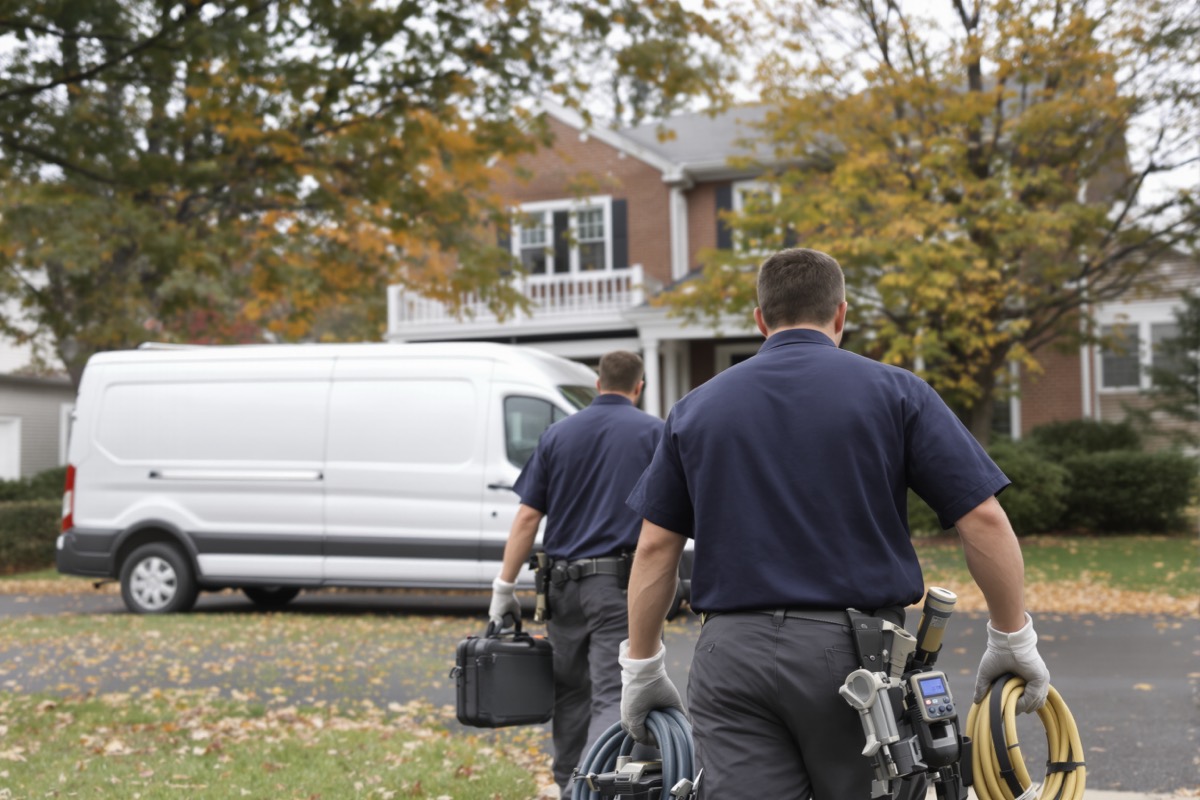
Long driveways and spread-out homes are part of life here. We plan for that. Our trucks carry the equipment a typical job needs, so the crew can start work on the first visit instead of making several trips. When a truck-mounted extractor cannot reach the house, portable units take over.
A truck is dispatched the moment the call ends. Until it pulls in, close the main valve when plumbing is to blame, and cut breakers for soaked rooms only if the panel sits somewhere dry. Move valuables and paperwork out of the water, and take photos of what you see.
Chester borders Mendham Township to the east, Randolph and Roxbury to the northeast, Mount Olive to the northwest and Washington Township to the west. To the south lie Bedminster and Peapack-Gladstone in Somerset County, and Tewksbury Township in Hunterdon County sits to the southwest. We cover Morris and Hunterdon counties as part of our regular service area.
How we dry a big house
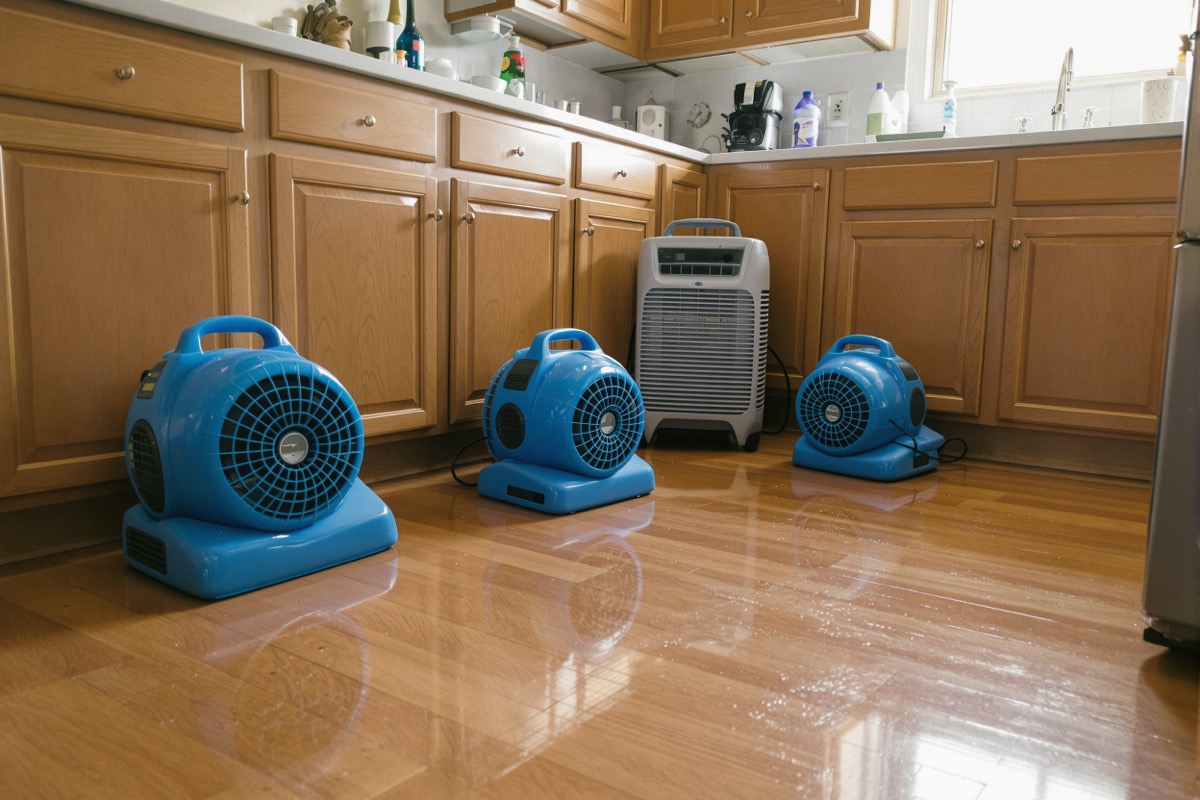
Drying is a process, not a guess. After the standing water is out, we set equipment based on the readings and the size of the affected area. Large rooms and open floor plans may need more air movers and dehumidifiers than a small basement. Rooms are sometimes sealed off with plastic so the equipment can work on a smaller volume of air.
Air movers push moisture off wet surfaces. Commercial dehumidifiers pull that moisture out of the air before it can settle somewhere else. Where drywall or insulation is too wet to dry in place, we cut it out, usually a short distance above the wet line, so air can reach the cavity behind it.
Follow-up visits are for metering and moving fans. Every stop puts fresh numbers in the log, and the gear stays until wet rooms read like the unaffected ones. Our water damage restoration page lays out the whole sequence.
Hard freezes, snowmelt and spring thaw
Winter is its own season for water damage in northwest New Jersey. A pipe running through an outside wall, a crawl space or an unheated mudroom can freeze on a bitter night and split. Most of the time, nothing happens until the ice thaws. Then water pours out wherever the crack is, often inside a wall or ceiling where nobody can see it.
Homes that sit empty for part of the winter carry more risk. If a family is away for a week and the heat drops or a pipe gives way, water can run for days before anyone returns. Keep the thermostat at a steady setting while you travel, and ask a neighbor to look in if you will be gone for long.
Snowmelt is the other half of the story. When a deep snowpack melts quickly, or rain falls on frozen ground that cannot absorb it, water runs across the surface and collects against foundations. Window wells fill, basement doors leak, and sump pits that sat quiet all winter suddenly run hard.
We handle both kinds of calls in the same careful way: stop the water, extract, map the moisture and dry the structure. Chester water damage restoration in late winter often means working around snow and ice on long driveways, and our crews come prepared for that.
Quick winter checklist
- Know where the main water shutoff is and make sure everyone in the house can reach it.
- Disconnect garden hoses before the first freeze.
- Open cabinet doors under sinks on outside walls during deep cold.
- Clear snow away from basement window wells and doors when you can.
Even with good habits, things go wrong. When they do, the sooner the water is out, the more of the home can be saved. That is the simplest rule in Chester water damage restoration, and it holds in every season.
Mold in basements and attics
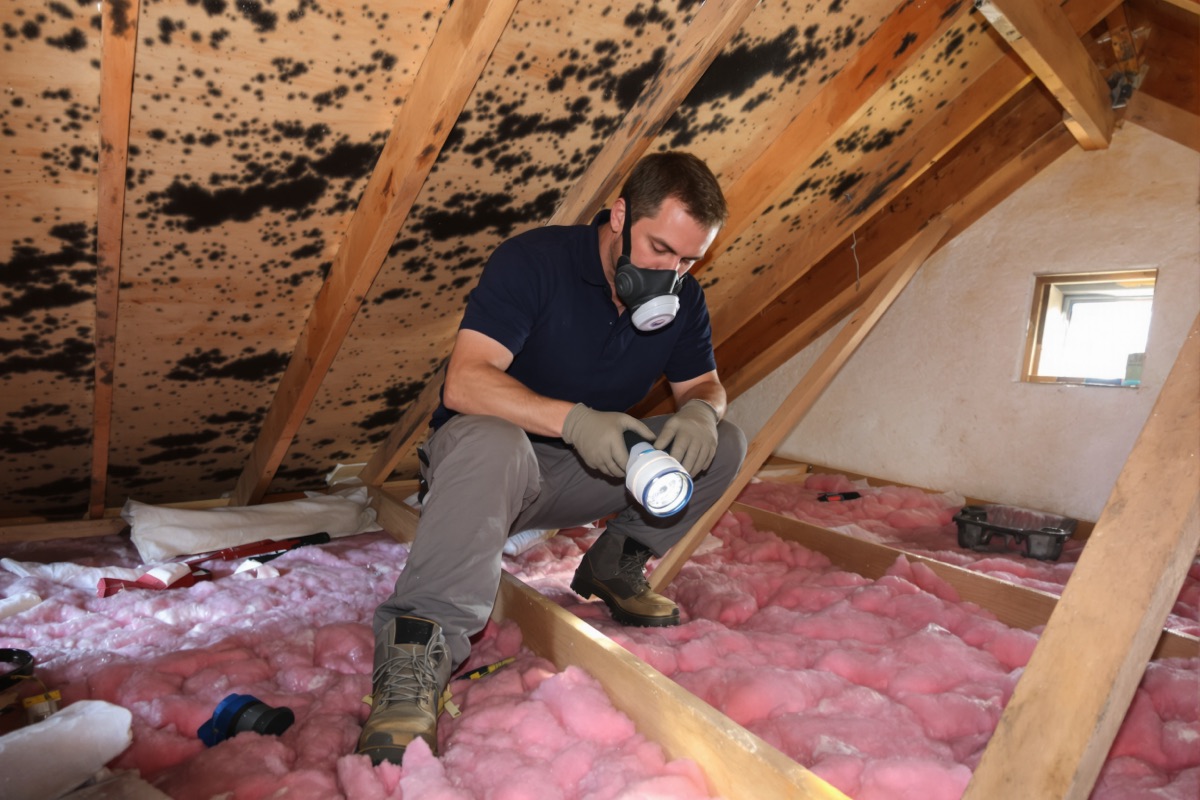
Mold does not wait for an invitation. When a basement stays damp after a storm, or an attic collects moisture from a bathroom fan or a small roof leak, growth can start within days. In homes where some rooms go unused for stretches, it can spread quite a bit before anyone sees it.
Growth we discover gets walled in with poly sheeting, and a negative air unit vents that enclosure outdoors. Contaminated board and insulation are bagged out, framing is HEPA vacuumed and wiped, and a HEPA scrubber runs the whole time. At the end, meter numbers, pictures and an infrared scan document that the area is clean and dry.
The EPA’s brief guide to mold and moisture is clear that controlling moisture is how you control mold. We show you what we found so you can deal with the cause. For more, see our mold remediation page.
Storm water and sewage backups
Storm runoff that crossed pasture, lawn or driveway is dirty by the time it reaches a basement. Backups from a drain line are dirtier still. Either way, anything spongy it touched, such as padding, wallboard near the floor and fiberglass, generally has to be removed.
Our crew wears protective gear, extracts the water, removes contaminated materials and cleans and sanitizes hard surfaces before drying starts. Keep children and pets away from the area and avoid running household fans, which can spread contamination.
Chester water damage restoration after a storm follows the same documentation as any other job. Every material we remove is photographed and noted, so your adjuster can see exactly what was done and why.
Rebuilding and keeping the record
Once the framing reads dry, the rebuild starts: wallboard, batts, flooring, paint, casings and cabinet work. Keeping drying and repair in the same company cuts out the handoff where details usually get lost. Our remodeling page shows the rebuild side of the work.
Pictures, meter logs and daily drying sheets pile up in a folder from the first visit. Hand it to the adjuster whenever they ask. The policy itself settles coverage questions, and our folder simply gives them solid facts.
We also handle commercial water damage for businesses and larger buildings. The about page covers who we are.
Mendham, Morristown and Mountain Lakes
Our Morris County crews work across the area around Chester, with pages for water damage restoration in Mendham, flood and leak cleanup in Morristown and water damage repair in Mountain Lakes. A full town list sits on the service areas page.
Many Chester families have relatives or second properties in nearby towns, and a single call to us covers all of them. Whether the problem is a flooded lower level in the township, a leaking water heater in Chester Borough or a ceiling stain in a neighboring community, the same crew standards, equipment and documentation apply. You will deal with one company and one phone number from the first visit to the finished room.
Frequently asked questions about Chester water damage restoration
My house is near the Black River. Why does the basement get wet after long rain?
Ground near the river and its brooks can stay saturated for days. That water pushes against the foundation and finds cracks and joints. We remove the water, dry the space and show you where moisture is coming in.
Do you serve Chester Borough as well as Chester Township?
Yes. The township surrounds the borough completely, and we serve both as part of our Morris County coverage.
We have a large home with rooms we rarely use. How do you find all the water?
We check every level with thermal imaging and moisture meters, tracing the water from its source to wherever it traveled. That way, wet areas in ceilings, walls and lower levels do not get missed.
Can you save materials in an older building?
Often we can. When the readings show plaster, trim or wood floors can be dried in place, we dry them in place. We remove only what will not dry or is a mold concern.
How quickly do you respond for Chester water damage restoration?
Any hour, a live dispatcher takes the call and a loaded truck heads out right after. Pumping and drying begin on that first trip.
Is the damage covered?
Your carrier decides, based on the policy and what caused the water. We give the adjuster a thorough photo and reading record to work from.
Reach us any hour
Water in the basement, a stain on a guest room ceiling or a musty smell in a rarely used wing all deserve a quick look. Dial (973) 992-4400. Morning, midnight or Sunday afternoon, you get a person on the line.