
Mendham is a place people choose on purpose: a historic Main Street, country homes on rolling land and the quiet of the Somerset Hills. Houses here are often older, larger and set farther apart than in the towns closer to Newark, and that affects how water gets in and how it should come out. Mendham water damage restoration from DryMax covers everything from the first emergency extraction to the last coat of paint, handled by one IICRC certified team. Call (973) 992-4400 day or night, any day of the year.
Where two rivers begin
Few towns can say this: an unnamed pond in Mendham Borough is the source of the Passaic River, and the North Branch of the Raritan River also begins in the borough before flowing southwest toward Somerset County. Headwater country is land where water starts its trip downhill. Springs, seeps, small streams and soggy low spots are part of the landscape.
For a homeowner, that matters below grade. Ground that feeds streams tends to hold a lot of water after long rains and snowmelt. When the soil around a foundation is saturated, water presses against basement walls and up through the floor. A sump pump that seems to run all spring is often a sign of this, and if that pump stops, the basement can fill quickly.
We see this pattern across the hillier parts of Morris County. The water is usually clean groundwater, which is good news for drying. The challenge is volume and persistence: the ground keeps sending water until the weather changes, so we pair extraction and drying with a plan to keep the pump running and the discharge moving well away from the house.
Mendham water damage restoration in the historic district
The Mendham Historic District covers about 153 acres along Route 24, which is Main Street in town. The district counts 140 contributing buildings, with significance dating from 1750 to 1924, and the Black Horse Inn traces back to 1742. The borough has had a Historic Preservation Ordinance since 1999 to protect the district’s character.
Water damage in a building like that calls for restraint. Original plaster, hand-planed trim, wide-plank floors and old window casings are not easy to replace, and in many cases they should not be. Our approach is to measure first, remove as little as we can and dry as much in place as the readings allow.
That means more time with moisture meters and thermal imaging cameras before anything is cut. It means drying plaster walls with focused airflow and dehumidification rather than ripping them out by default. When a material truly cannot be saved, we explain why, photograph it and keep samples of trim profiles or flooring so the rebuild can match.
Commercial buildings on Main Street get the same care. Shops, offices and restaurants in old buildings often have plumbing that has been rerouted many times over the years, and leaks can travel along old framing in unexpected directions. For shop owners, our commercial water damage service can schedule the loud work for evenings so the door stays open by day.
Country homes on the hills
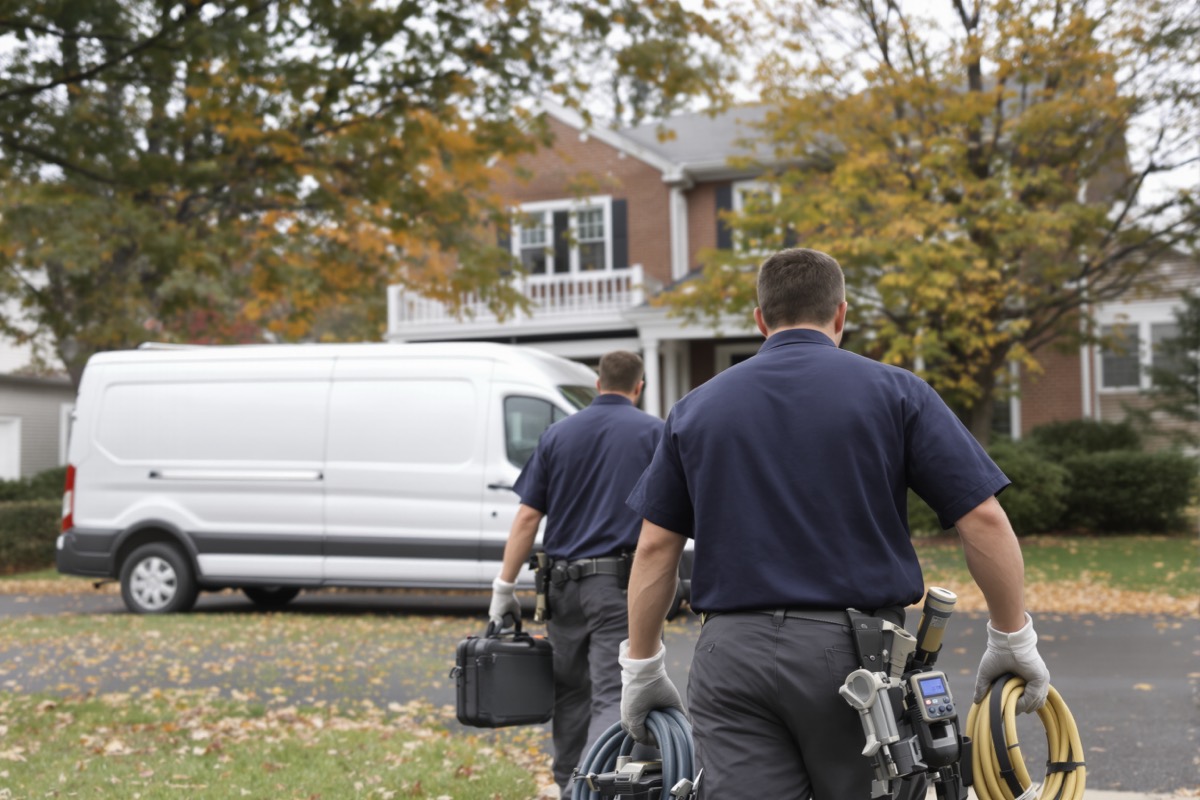
The borough sits at the northern end of the Somerset Hills and is known for its country homes. Part of it lies on the southern slope of Bernardsville Mountain, where the old Wendover estate stands. Hills and big lots bring a different set of water problems than tight suburban streets.
Slopes move water. A house set into a hillside can have the uphill side of its foundation taking runoff from the whole yard above it. Long driveways may drain toward a garage. Wooded lots drop leaves that clog gutters, so roof water overflows next to the walls. All of that adds up during a big storm.
Large homes also have a lot of plumbing. Several bathrooms, a second-floor laundry, a butler’s pantry sink, a wet bar in the lower level, a pool house or guest suite: every one of those is a place a supply line, valve or drain can fail. And when a house is big, a leak in a guest wing or an upstairs bath that rarely gets used can run for a long time before anyone notices.
If you are away often, a few precautions help. Automatic leak sensors near water heaters and washers, a shutoff valve that is easy to reach, and a neighbor who can check the house during long trips all cut the risk of a slow leak becoming a big one.
Pool houses, detached garages with apartments above and barns converted to living space deserve their own look. Plumbing in an outbuilding may sit unheated for part of the year, and lines that run underground between buildings can freeze or crack. A leak in a building you only visit on weekends can soak a floor for days. Insulating those lines, draining them before winter if they are not used, and checking the space after a hard freeze all go a long way.
Stone, fieldstone and old basements
Homes in a district that dates to the 1700s include some very old construction, and many older homes in the area sit on fieldstone or rubble foundations. Those walls were built to stand, not to keep water out. Mortar between stones wears and washes away, and groundwater can come straight through the gaps during wet weather.
Many of these basements were never meant to be living space. When they have been finished later with framing, insulation, drywall and carpet, the old wall behind keeps acting the way it always has. Damp air and occasional seepage get trapped behind the new wall, where nobody sees them until there is a smell or a stain.
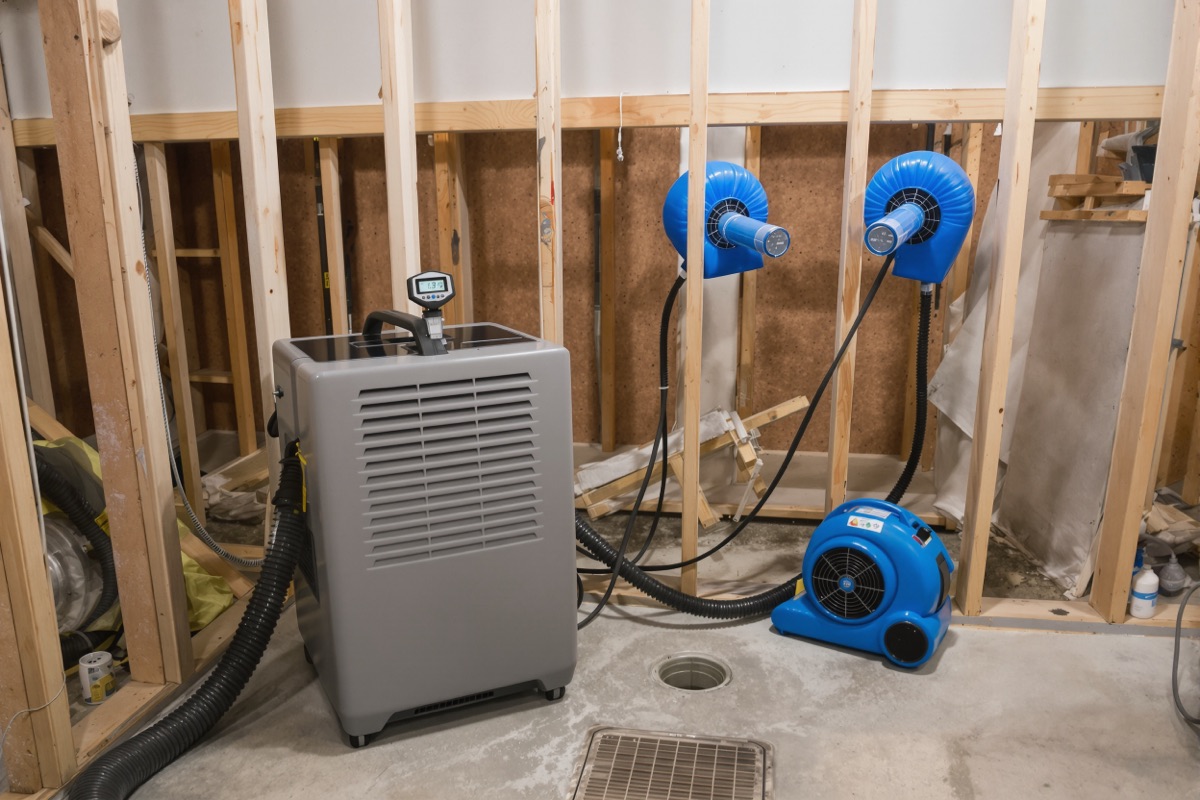
When we dry a finished stone basement, we usually need to open the finished wall to reach the stone and the framing behind it. Wet insulation comes out. Air movers and commercial dehumidifiers dry the cavity and the stone face. We take readings in the wood framing, the stone and the slab, because each dries at its own pace.
Crawl spaces under additions and porches are another frequent trouble spot. They are hard to reach, often damp and easy to forget. We check them on every job where they connect to the wet area.
Storms, outages and the sump pump problem
Out in the hills, the storms that bring the most rain are often the same storms that knock out power. That is a bad combination for any house that depends on a sump pump. The pit fills, the pump has no power, and the basement starts taking water within hours.
A battery backup pump is the simplest fix. It sits next to the main pump and kicks on when power drops or the main pump fails. Test both pumps a few times a year by pouring a bucket of water into the pit and watching them cycle. Check that the discharge line is clear and that it empties far enough from the house that the water does not just circle back to the foundation.
The Ready.gov flood preparation page has a helpful checklist for getting a household ready before heavy weather: moving valuables up, knowing your shutoffs and keeping important papers somewhere dry. A little preparation can keep a storm from turning into a long cleanup.
When a storm does flood a lower level, Mendham water damage restoration starts by sorting the water. Groundwater coming up through the slab is usually clean. Surface water that ran in through a door or window well has picked up soil and debris and is treated as contaminated, so carpet, pad and porous materials it touched are removed and the hard surfaces cleaned before drying.
Sewage backups
When water rose from a floor drain, toilet or shower in the lower level, assume it is sewage. Keep people and pets out of the area, do not try to clean it with household tools, and call us. Our crew uses protective gear, removes contaminated porous materials and cleans and dries what remains. Mendham water damage restoration for a sewage loss always includes that extra cleaning step before any rebuild.
Mendham water damage restoration: what the first visit looks like
A crew gets dispatched right after you hang up. Once on site, the first job is safety: checking for electrical hazards, unstable ceilings and contaminated water. Then we help you stop the source if it is still running, whether that means a valve under a sink, the main shutoff or the cold inlet on a water heater.
Next comes documentation. Before moving furniture or pulling anything up, we photograph every affected area and take moisture readings, including a dry reading from an untouched part of the house for comparison. A thermal camera lets us follow the water through walls and ceilings without opening them.
Extraction follows. Big truck-mounted extraction handles large volumes, portable units reach tight rooms, and submersible pumps go into deep water. Ruined pad, waterlogged insulation and swollen baseboard get hauled out. Valuable furniture and rugs are moved to a dry area or blocked up off the floor.
Finally, we set up drying. Air movers and commercial dehumidifiers are placed based on the size of the space and the materials involved. Before we leave, we walk you through what was done today, how long drying should run and what repair work is likely. We come back every day to check readings and adjust the setup.
Attics, cathedral ceilings and hidden mold
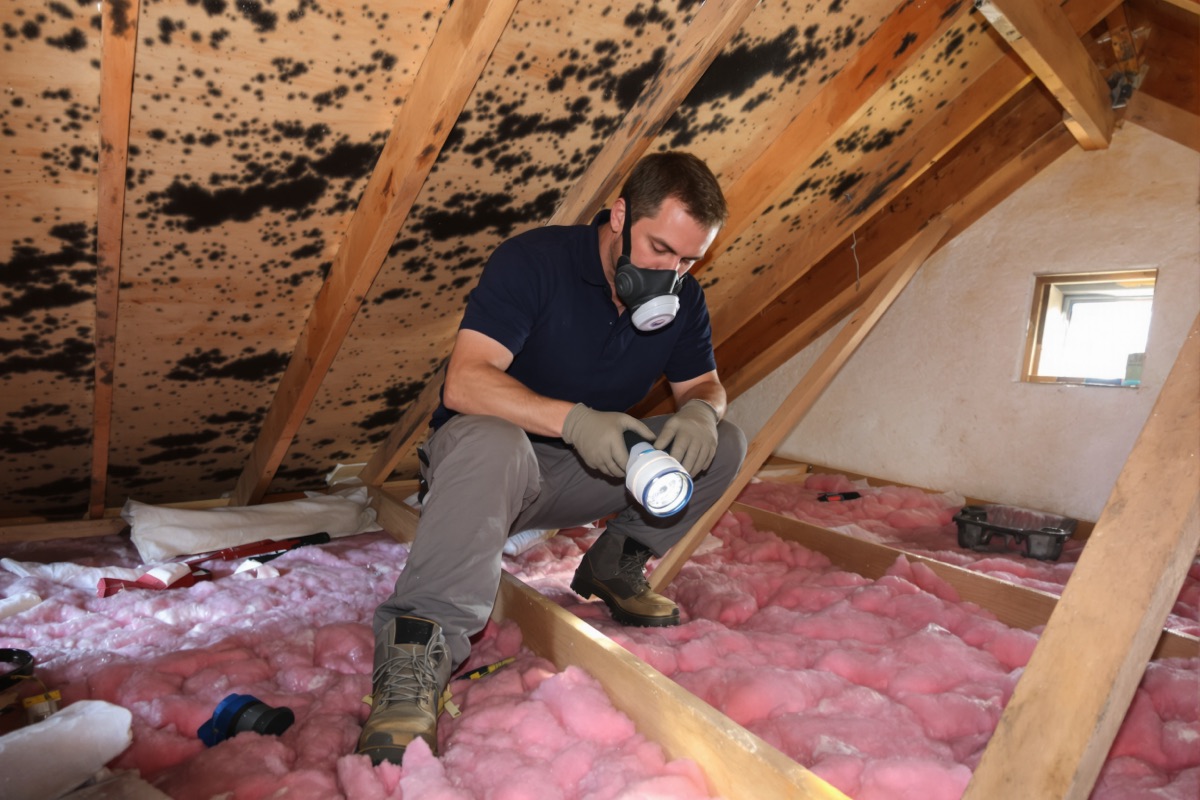
Big, older homes often have big attics, and attics hide moisture well. Bathroom fans that vent into the attic instead of outside, a slow leak around a plumbing vent, or warm, humid air rising from the living space can all wet the underside of the roof sheathing. Mold can grow there for a long time before anyone goes up to look.
Cathedral ceilings and finished third floors add another layer. There is little space between the ceiling and the roof, so water that gets in spreads along the rafters and shows up as a stain far from where it entered. Thermal imaging helps us trace that path.
When we find mold, mold remediation starts by sealing the space with plastic and putting it under negative air. HEPA scrubbers run while we cut out affected sheathing or drywall, then every remaining surface is HEPA vacuumed, wiped and dried. Thermal scans, photos and meter numbers confirm it. The EPA’s brief guide to mold, moisture and your home is a useful read if you want the basics.
Rebuilding so it still looks like your house
Once everything reads dry, the room needs to be rebuilt. Our remodeling carpenters and finishers take it from bare studs back to a painted, trimmed room, cabinets and floors included. In a newer home that is straightforward. In an older country home or a building in the historic district, it means paying close attention to what was there before.
We note trim profiles, plank widths, wall textures and paint colors during demolition, and we keep the pieces we removed when they can go back up. If original trim can be dried and reinstalled, it goes back on. If it cannot, we work to match it as closely as possible. The goal is a finished room that looks like it belongs to the house.
Having the same outfit dry and rebuild also keeps the schedule simple. You are not waiting for a second contractor to look at the job, and the people rebuilding already know what was wet and what was removed.
Mendham water damage restoration paperwork
Insurance claims run on records. We do not decide what your policy covers, and we will not guess. Coverage depends on the policy, and your adjuster makes the call. Our role is giving the adjuster a clear and complete file.
Your file will hold photos with dates, meter readings from each room and a log for each drying visit. Together they lay out how far the water reached, which materials it hit, the reasons anything came out and the slow return to dry. On older homes, photos of original materials also support matching replacements during the rebuild. You get a copy for your own files.
That same standard applies to every job, whether it is a small leak in a powder room or a full basement in a stone-walled house. It is part of how we approach Mendham water damage restoration and every other job across North Jersey.
Neighboring towns
Mendham Borough is surrounded by Mendham Township and borders Bernardsville to the south, and many of the same conditions carry over into nearby towns. We also provide water damage restoration in Chester, flood and leak cleanup in Morristown and drying and rebuild help in Harding. See all our towns on the service areas page.
Frequently asked questions for Mendham homeowners
Our house is in the historic district. Will you tear out the original plaster?
Only if it cannot be saved. We test plaster with moisture meters and check whether it is still attached to the lath. Clean water and firm plaster can often be dried in place. Anything loose or contaminated has to come out, and we explain why before we remove it.
Our basement has a fieldstone foundation and gets wet every spring. Is that normal?
It is common for old stone foundations, especially in an area where rivers start and the ground holds a lot of water. If the basement is finished, that seepage can soak framing and insulation behind the walls. A moisture check tells you whether materials are wet.
We are away a lot. How can we protect a big house from a slow leak?
Leak sensors near water heaters, washers and sinks, an easy-to-reach main shutoff, and regular checks by a neighbor all help. If you find water when you return, call us right away so drying starts before mold has time to grow.
Can you match old trim and floors when you rebuild?
We keep and reinstall original pieces when they can be dried. When they cannot, we record the profiles and widths and match them as closely as possible during the rebuild.
How do I prove the mold is gone?
We provide moisture readings, photos and thermal images that show the area is dry and the affected materials were removed and cleaned.
Will my insurance pay for this?
That depends on your policy and is the adjuster’s decision. Our part is a thorough file of pictures and readings to help them make it.
Call any hour
If water is coming in, shut it off if you can, keep clear of wet outlets, and reach us at (973) 992-4400. The phone is staffed every hour of the year, and a truck heads toward the Somerset Hills right after your call. DryMax, a locally owned company since 2018, works throughout Morris County and the four neighboring counties we cover. Learn more about DryMax.