
Harding Township has kept its country character on purpose. Large lots, old farmhouses, estates and wooded hillsides cover most of its twenty square miles, and part of the Great Swamp lies inside its borders. That setting is a big reason people love living here, and it also shapes how water damage happens. Our Harding water damage restoration team works with the size, age and setting of these homes, from the first emergency call through the final coat of paint.
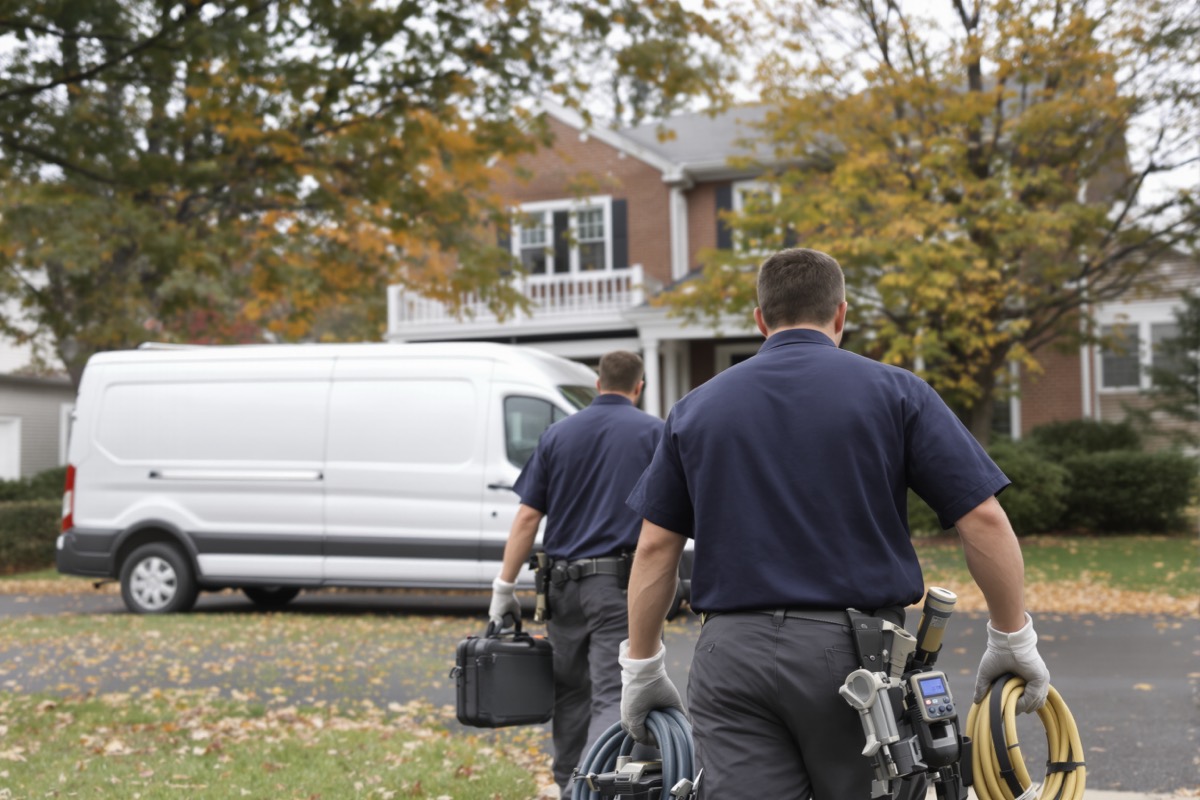
DryMax has been locally owned since 2018, and our technicians are IICRC certified. We pick up the phone ourselves at any hour, every day of the year, and dispatch a crew as soon as the call ends.
Harding water damage restoration across open, rolling land
The township’s landscape is open and rolling, shaped by nearly two centuries of farming. Fields, orchards and pastures once covered much of it. In 1928, estate owners signed the New Vernon Neighborhood Restrictive Agreement to keep the area rural, and that effort influenced the zoning that followed. The result is a township with far more open ground than most places this close to New York.
Open land drains differently from a dense suburb. There are fewer storm drains and more natural swales, low spots and wet meadows. Water that falls on a large property may travel a long way across lawns and fields before it reaches a house, and when it gets there, it often meets a foundation that was built long before modern drainage.
On rural lots, long gravel driveways and sloped lawns can steer runoff right toward a garage or the uphill side of a house. Larger rural properties often include outbuildings, detached garages and long service runs, which means more places for a pipe or a roof to fail where nobody looks every day.
Ground that was once a glacial lake
After the last glacier retreated, an enormous body of water called Glacial Lake Passaic covered this region. It stretched about 30 miles long and 10 miles wide before it drained when a blockage of the Passaic River opened. The Great Swamp is the remnant of that old lake bottom, and portions of the swamp lie within Harding.
Former lake beds and swamp ground tend to hold water close to the surface. Soils there drain slowly, and after a wet stretch the water table can sit just below the basement floor. That is when even a well-built foundation starts to show damp spots along the floor edge, or when a sump pump that runs twice a month in summer starts running every few minutes.
Homes on higher ground are not immune. Once the lake drained, the higher areas became wooded, and those slopes now send their runoff down toward the lower land. Properties in between catch water moving in both directions: down from the hills and up from the saturated ground beneath.
If you are not sure whether your property sits in a mapped flood area, a quick check is worth doing before the next big storm. Knowing that ahead of time also helps you decide what belongs in the basement and what should live upstairs.
For Harding water damage restoration on this kind of ground, the drying plan has to account for the soil outside as well as the room inside. If the water table is high, we expect the slab and the bottom of the walls to stay wet longer, and we keep pumps and dehumidifiers running until the readings settle, even after the floor looks dry.
Farmhouses that grew over the centuries
Much of the township was an agricultural community with roots in the early 18th century. Later, newcomers from Manhattan and Newark bought farmland, enlarged the old farmhouses and landscaped the grounds. Many of those houses still stand, with original sections, additions from different eras and a few modern updates on top.
An enlarged farmhouse is several buildings joined together. The original part may have a stone foundation and a low cellar. An addition from a later decade may sit on block. A newer wing may have a poured basement or a crawlspace. Water treats each part differently, and the seams between them are often the weakest points.
Where old meets new, roofs meet at valleys, foundations meet at joints and plumbing runs from one era into another. A leak at one of those junctions can travel along a beam or sill and appear in a room that seems to have nothing to do with it. Finding the true source is half the job.
Stone foundations deserve special mention. They were built to breathe, letting moisture pass through and evaporate. Once someone finishes the space, seals the walls or adds insulation, that moisture has nowhere to go. We see damp framing, peeling finishes and mold behind the new walls when the old wall can no longer dry out.
Estates handed down through generations
Many large country estates in the township have passed down through several generations with little change, and some are listed on the National Register of Historic Places. Homes like these hold more than square footage. They hold original woodwork, plaster, floors, built-ins and family belongings that cannot simply be replaced.
Big houses also mean many water sources. Several full bathrooms, a laundry room upstairs, multiple water heaters, a pool house, a guest cottage, a wet bar and irrigation lines are all common on large properties. Each is a place where a fitting can fail. When a home is closed for a season, or the family travels for a few weeks, a small leak has a long time to spread.
For larger homes and estates, we often suggest a few habits:
- Know where the main water shutoff is for every building on the property.
- Have someone walk through the house regularly when it is empty, especially in winter.
- Keep heat on in every building that has plumbing, including outbuildings.
- Replace rubber washing machine hoses with braided lines.
- Look at the ceilings below upstairs bathrooms every few months.
Winter is the hardest season on big properties. A pipe in a pool house or barn that freezes during a cold snap may not leak until the thaw, and by then nobody may be nearby to hear it. When we get those calls, the first job is to stop the flow and the second is to check every connected building, since a freeze rarely hits just one line. Fast Harding water damage restoration after a freeze often comes down to how quickly someone finds the leak.
Mount Kemble Lake and the old mill hamlets
Mount Kemble Lake is a private club community in the township and a former summer colony developed in the 1920s. Houses first built for summer use were not always designed to be lived in year round. Seasonal cottages are often winterized and expanded over the decades, and in that process some pipes end up in places that get cold, like crawlspaces and outside walls.
Lakefront and near-lake homes also sit close to water at all times. High groundwater, damp crawlspaces, and storm runoff headed for the lake are everyday concerns. In crawlspaces, standing moisture can quietly rot sill plates and feed mold on the floor framing above.
The township’s place names tell a story too. Baileys Mill, Dickson Mill, Olmstead Mills, Osborn Mill and Van Dorens Mill are among the localities in Harding, alongside Green Village, New Vernon, Logansville, Pleasantville and Glen Alpin. Those names hint at a long working history on the land. Any home near a brook or stream, here or anywhere, tends to see higher groundwater and more runoff during storms.
Water from a lake, brook or swamp that comes inside is treated as contaminated. We remove the materials it touched, clean and disinfect what remains, and dry the space.
Big houses and leaks you cannot see
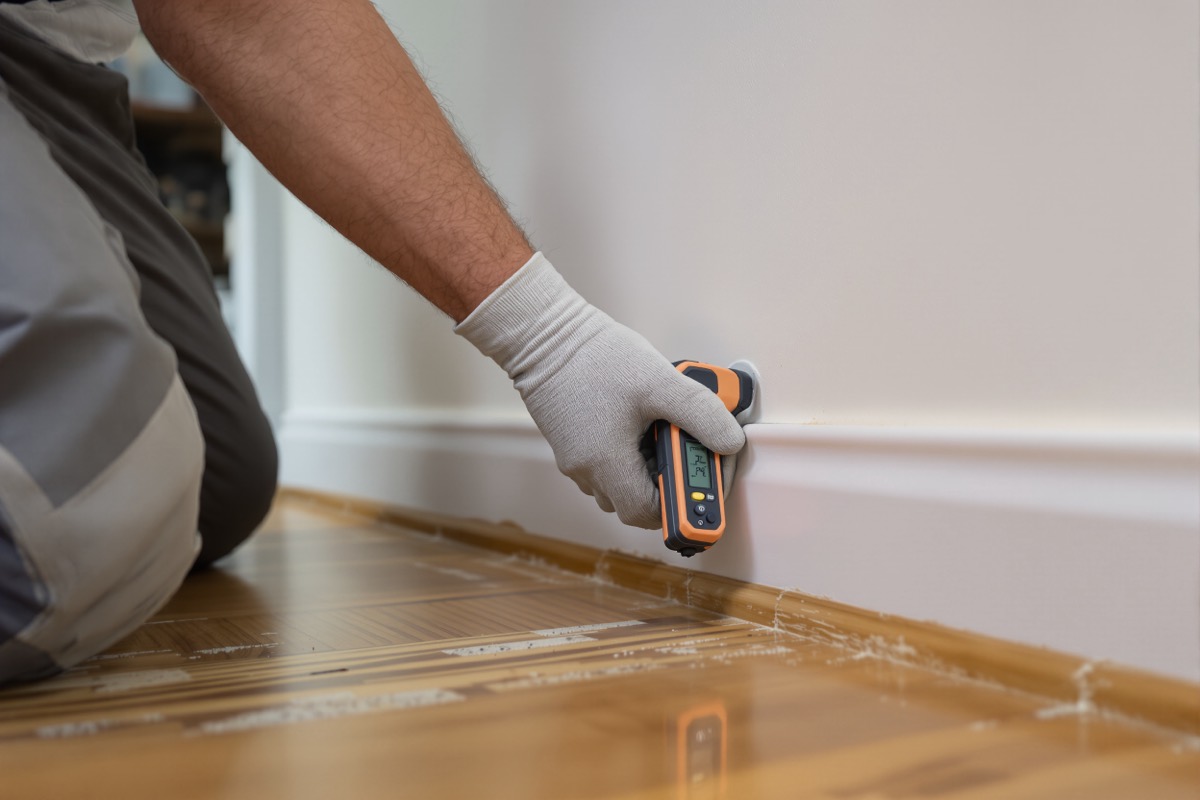
In a large home, water can spread quite a distance before anyone notices. Thick plaster walls, finished ceilings and heavy area rugs hide it well. That is why the most important tools we bring are the ones that see what you cannot.
Pin and pinless moisture meters measure water content in drywall, plaster, wood framing and subfloor. A thermal imaging camera shows temperature differences that often point to wet areas behind walls and above ceilings. Together they let us draw a map of the wet zone before opening anything. On a large property, that map is what keeps the job focused and keeps your finished rooms intact.
Once the map is done, extraction starts. Truck-mounted or portable extractors pull water out of carpet, rugs and hard floors. Submersible pumps handle deep water in basements. Then air movers and commercial dehumidifiers take over, and we return to check readings until every material is back in its normal range. For an overview of the full process, see our main water damage restoration page.
Attics, wooded slopes and mold
Wooded lots surround many homes in the township. Trees mean shade, leaves in the gutters and branches that rub on roofs. Shaded sides of a house stay damp longer after rain, and overflowing gutters dump water at the foundation or behind fascia boards.
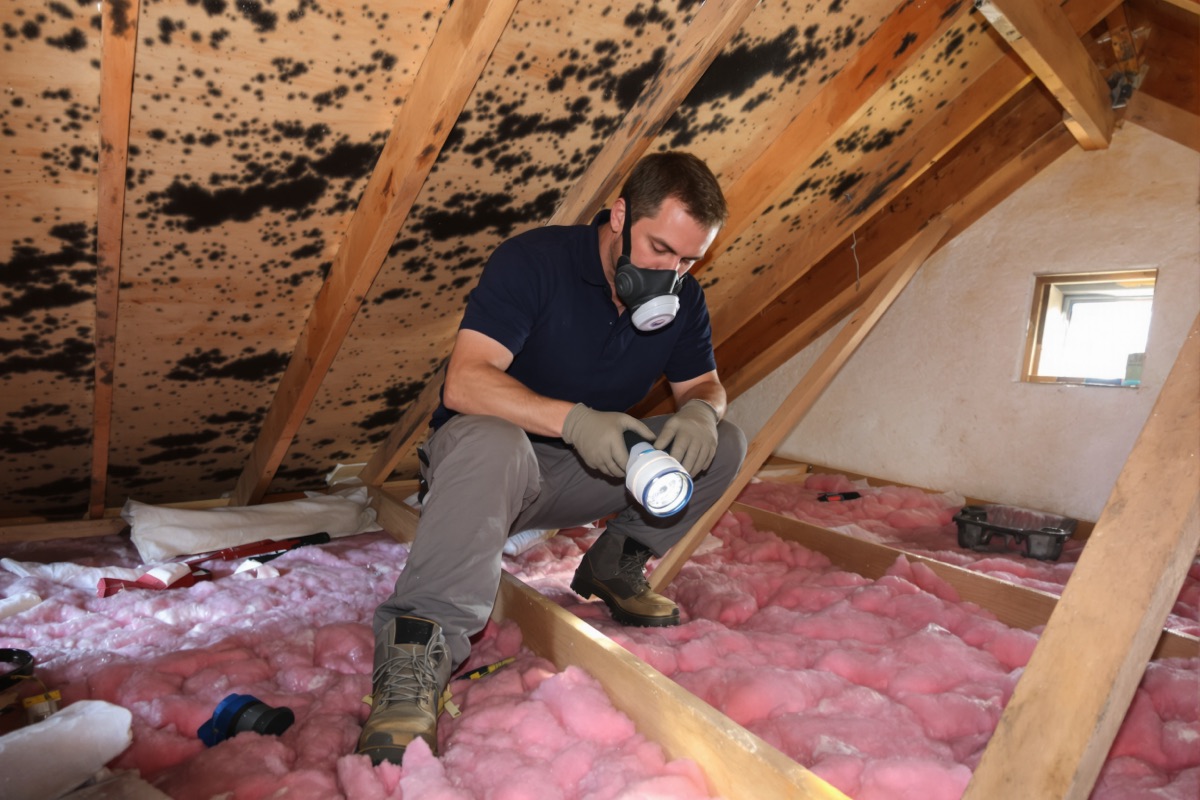
Attics in older houses can be a problem too. Poor ventilation, bathroom fans that vent into the attic instead of outside, and small roof leaks can all raise humidity under the roof. Over time, that moisture shows up as dark staining or growth on the roof sheathing. In a large attic over an old house, the problem can go unnoticed for years.
When we find mold, we contain the area with plastic sheeting, use a negative air machine and HEPA air scrubbers to control the air, and remove affected porous materials. Solid surfaces are HEPA-vacuumed and cleaned, and the space is dried. We confirm the results with moisture readings, photos and thermal images. The EPA’s brief guide to mold and moisture is a helpful read for any homeowner, and our mold remediation page covers our process in detail.
Protecting original finishes while we dry
Old wide-plank floors, plaster walls and original millwork are worth the extra care. Drying too fast can cup boards, crack plaster and open joints in trim. Drying too slowly invites mold. The right pace sits in between, and the only way to find it is to measure every day.
We start by moving or protecting furniture, rugs and belongings. Where trim or built-ins have to come off to reach wet framing, we remove them carefully and label them so they go back where they came from. Openings in walls are kept as small as the moisture map allows. And we talk with you before anything original is removed.
Equipment placement matters in a historic home. We set air movers and dehumidifiers so they work on the wet areas without blasting dry rooms, and we adjust the setup as readings change. This careful approach is a big part of what makes Harding water damage restoration different from a job in a newer subdivision.
Rebuilding after the drying
When the readings say the structure is dry, our crew moves into the rebuild. We handle drywall, insulation, flooring, paint, trim and cabinets, so you are not hiring a second company and starting over with someone new. One team takes the job from the first call to the finished room.
In an older or custom home, that rebuild means matching what was there. Profiles of trim, plaster textures and floor finishes all count. We walk through each choice with you before work starts. Our remodeling page shows the kind of rebuild work our team does.
Harding water damage restoration and your adjuster
Coverage depends on your policy and on the cause of the loss. We will not guess at what an insurance company will do, and nobody should promise you that ahead of time. Our role is to give your adjuster a clear and complete record.
Every job includes photos from start to finish, moisture readings for each affected material and a drying log that shows the readings dropping day by day. You get the full set to hand to your adjuster. Thorough records are a standard part of every Harding water damage restoration job we handle, whether it is a single bathroom leak or a flooded lower level in a large house.
While you wait for us, take photos and video of the damage before anything is moved. Keep damaged belongings until the adjuster has seen them, and write down when you first noticed the water.
Frequently asked questions from Harding Township homeowners
Why does my basement get wet when we have not had a big storm?
Part of the township sits on the old bed of Glacial Lake Passaic, where the Great Swamp remains today. Ground like that can hold water near the surface for long periods, so groundwater can seep in after ordinary rain or during spring thaw.
Our farmhouse has an old stone foundation. Can you dry it?
Yes. Stone foundations hold moisture and dry slowly, so we monitor them closely. We focus on getting the framing, finishes and contents dry, and we can point out where outside drainage is feeding water to the wall.
We were away and came home to a leak. How bad could it be?
In a large home, water can spread through several rooms and floors before it shows. We use thermal imaging and moisture meters to find every wet area, then build a drying plan for the whole affected zone.
Do you work on lake homes and older summer cottages?
Yes. Lake homes often have crawlspaces and pipes in cold spots. We handle extraction, drying and rebuilding, and we treat lake or brook water that comes inside as contaminated.
Can you match original trim and floors during the rebuild?
We take care to match profiles, finishes and textures, and we go over choices with you before work starts.
Do you serve the towns around Harding?
We do. Neighbors can read about water damage restoration in Morristown, Madison water damage cleanup and water damage help in Mendham, or see our full list of service areas.
Reach us any hour
A leak in a large house gets bigger every hour it runs. Call (973) 992-4400 any time of day or night. We will help you take the first steps by phone and get a crew headed your way. Harding water damage restoration starts the moment you call. You can also read about DryMax before you call.