
Mountain Lakes water damage restoration starts with two things that define the borough: water on almost every side and a large share of houses that are more than a hundred years old. The town was planned around its lakes beginning in 1910, and its first homes were big stucco houses that locals still call Hapgoods. Since 2018, DryMax Water Restoration has been a locally owned, IICRC certified restoration team working all over Morris County. When you call (973) 992-4400, a person answers, whatever the hour.
The sections below walk through what the lakes, the old stucco homes and the wooded lots mean for water damage, then explain exactly how we find, dry and repair it.
Seven lakes inside one small borough
Mountain Lakes covers about 2.91 square miles, and about 9 percent of that is water. The list includes Birchwood Lake, Crystal Lake, Mountain Lake, Shadow Lake, Sunset Lake, Wildwood Lake and Cove Lake, all man-made. The lakes set the borough apart as “the first year-round residential lake community in northwestern New Jersey.”
Living by water is a big part of the appeal here. It also shapes what goes on under the house. Properties near a lake shore often sit lower than the streets around them, and the ground close to open water tends to stay damp. When a long rain raises the water table, basements and crawl spaces near the lakes can take in moisture through the floor and walls even when no single pipe has failed.
We do not assume a lakeside home will have a wet basement. We do check it more closely. That means readings along the foundation walls, a look at the sump pit if there is one, and a check of the crawl space vapor barrier and insulation where we can reach them.
Living in a Hapgood: what a century-old house does with water
Herbert Hapgood founded Mountain Lakes as a planned community in 1910, influenced by the Arts and Crafts movement, and added colonial and craftsman features to his basic designs. He reversed floor plans and swapped details so that no two houses looked quite alike. By 1923 roughly six hundred stucco houses had been built.
A house that old has usually seen several rounds of updates. Kitchens and bathrooms move, plumbing gets rerouted, basements get finished, attics get converted. Each change adds joints, fittings and hidden runs of pipe. When we work in an older home, we expect surprises, such as a supply line that runs through a closet ceiling or a drain line abandoned in a wall.
Because Hapgood varied his layouts, we cannot rely on a standard floor plan. A thermal camera lets us follow the cool pattern of wet material across ceilings and walls without opening them first. That keeps demolition to a minimum, which matters in a house where the original woodwork is part of its value.
Common water sources we look for in houses of this age:
- Radiators and the valves and pipes that feed them
- Older bathroom supply lines, tub drains and shower valves
- Kitchen updates where new appliances tie into older lines
- Water heaters and washing machines in basements
- Pipes in porches, sunrooms and other additions that run colder in winter
Stucco walls and the water you cannot see
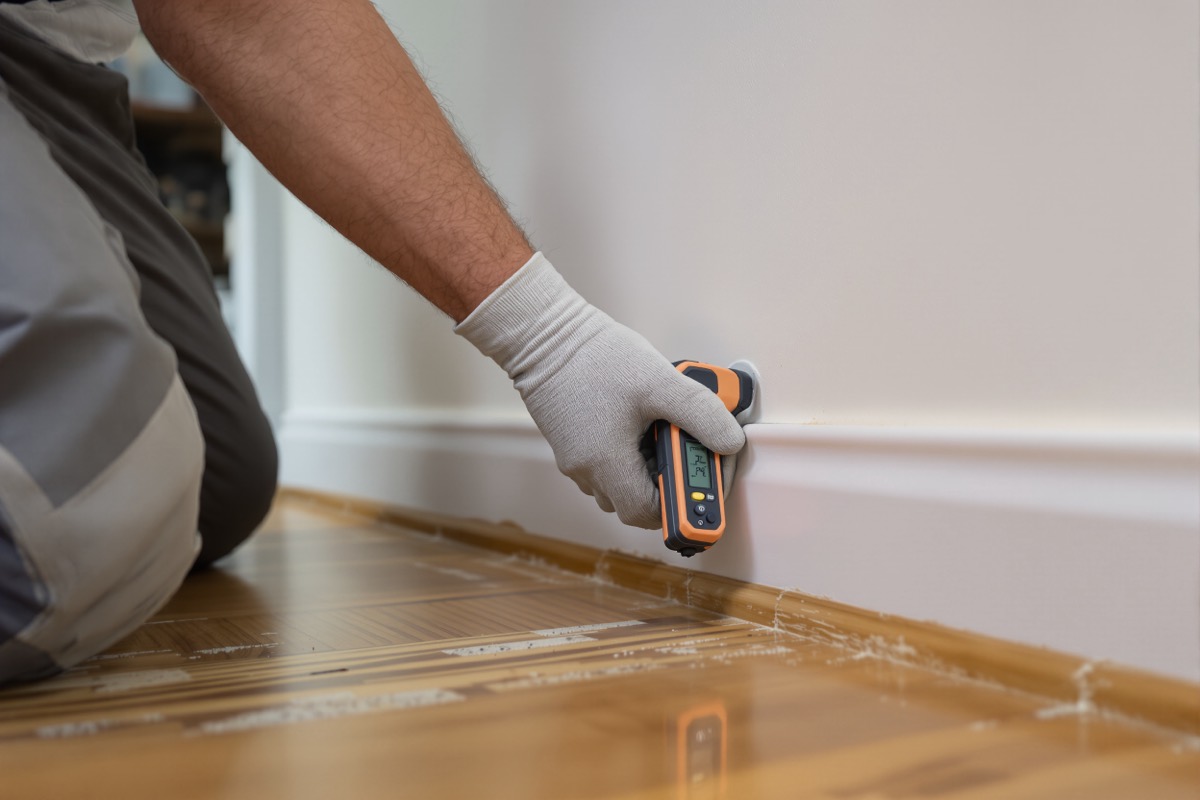
Stucco is tough and long-lasting, which is one reason so many Hapgoods are still standing. It is also porous. Over the years, small cracks open near windows, doors and the roof line. Rain driven against the wall can soak in through those cracks and run down behind the surface.
From inside, that kind of leak looks like peeling paint under a window, a stain at the corner of a ceiling or a musty smell in one room. The source may be well above the spot where the water shows. We trace it using moisture readings on the interior walls and thermal imaging, then tell you what we found so a qualified contractor can repair the exterior. We handle the inside: drying, mold removal if it is needed and the rebuild.
Window and door openings deserve special attention. Old flashing and sills may have been replaced or patched more than once. Water that gets past them usually wets the framing below the sill and the plaster or drywall beneath it.
Wooded lots and the edge of the Tourne
Part of the Tourne, a county park, lies inside Mountain Lakes, and homes on lots with tall trees are common in this part of Morris County. Trees add a lot to a property. They also bring a few water problems.
- Clogged gutters. Leaves fill gutters in the fall. Rain then spills over the edge and lands right against the foundation.
- Shade and slow drying. Walls and roofs that rarely see sun stay damp longer after a storm, which can feed moss on the outside and mold on the inside.
- Storm damage. High winds can drop limbs on a roof and open a path for rain. We dry the interior once the opening has been covered.
- Slopes toward the house. Wooded hillsides send water downhill during heavy rain. A lot below a slope can see water at the uphill wall of the basement.
Keeping gutters clear and extending downspouts away from the house costs little and helps a lot. When water does get in, the sooner we start drying, the less there is to remove.
The first hour after you find water
Finding water where it should not be is stressful, and it is hard to think clearly. These steps, in order, protect you and the house while our crew is on the way.
- Stay safe. If water is near outlets, a power strip or the electrical panel, stay out of it. Never walk into a flooded basement where the power is still on.
- Stop the water. Close the valve under the fixture, or shut the main valve where the water line enters the house. It is usually in the basement close to the spot where the line comes through the wall. If you do not know where yours is, finding it now, before anything goes wrong, is time well spent.
- Call us. A person answers at (973) 992-4400 every day of the year. We ask a few questions and send a crew as soon as you call.
- Photograph everything. Wide shots of each room, close-ups of the source and damaged items. Your phone camera is fine.
- Move what matters. Lift papers, photos, rugs and electronics to a dry room. Leave heavy, soaked items for us.
The sooner extraction starts, the more original material can stay in place. That is true in any house, and it matters even more in a century-old home with plaster and woodwork that are hard to replace.
Mountain Lakes water damage restoration, explained by the tools we carry
Homeowners often ask what all the equipment is for. Here is the gear we bring and what each piece does on a job.
Thermal imaging camera
Wet materials are usually cooler than dry ones. A thermal camera shows those differences as color, so we can see the shape of a leak behind a ceiling or wall before opening anything.
Pin and pinless moisture meters
Thermal images point us in the right direction. Meters confirm it. Pinless meters scan the surface without leaving marks, and pin meters measure deeper into wood and framing. We record readings on a sketch of each room and repeat them every visit.
Extractors and submersible pumps
Truck-mounted and portable extractors pull water out of carpet, pad and floors. In a basement with standing water, submersible pumps go in first. Removing water by extraction is far faster than waiting for it to evaporate.
Air movers
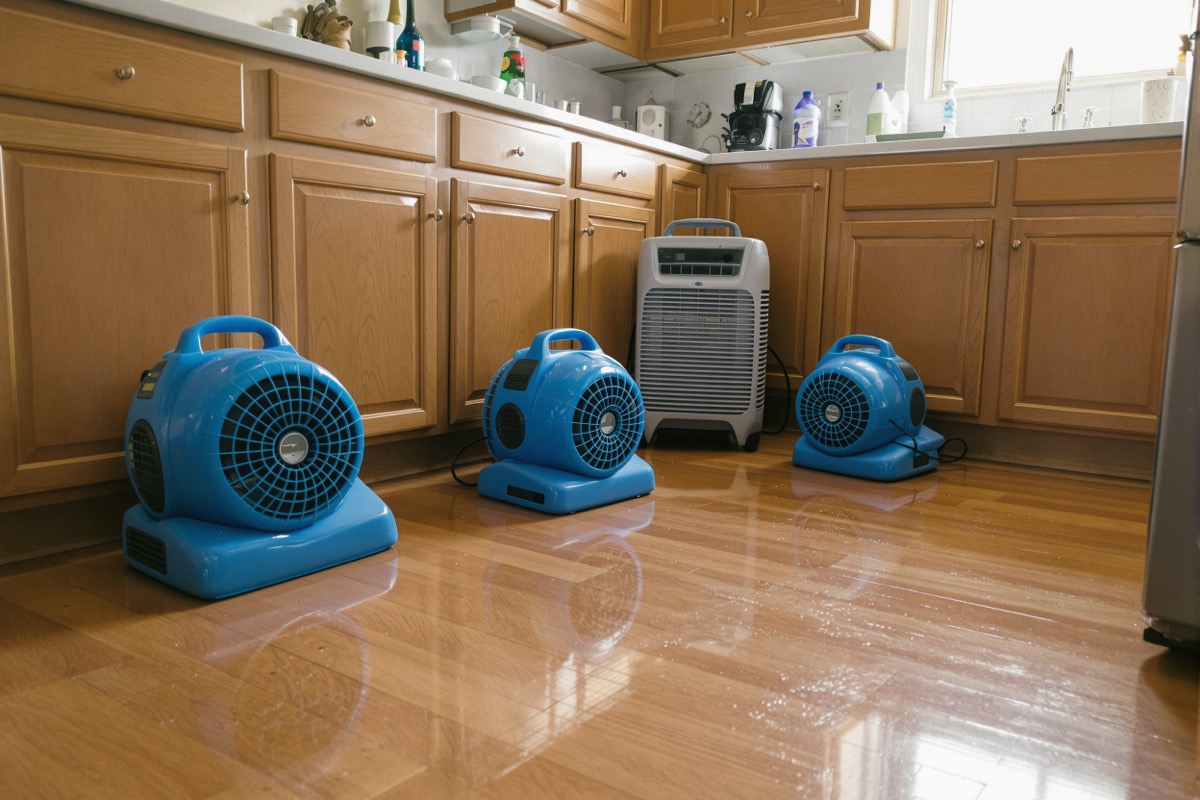
These low, angled fans push air across wet surfaces to speed up evaporation. We aim them along walls, under cabinets and into opened wall cavities.
Commercial dehumidifiers
Evaporation puts water into the air. Dehumidifiers take it back out so it does not settle into dry materials elsewhere in the house. In summer humidity, they make the biggest difference.
HEPA air scrubbers, negative air machines and containment
For mold or sewage work, plastic containment walls off the work zone. Negative air machines keep air flowing into that zone instead of out of it, and HEPA filtration captures fine particles.
To see how these fit together on a typical job, visit our water damage restoration page.
Attics, sheathing and mold
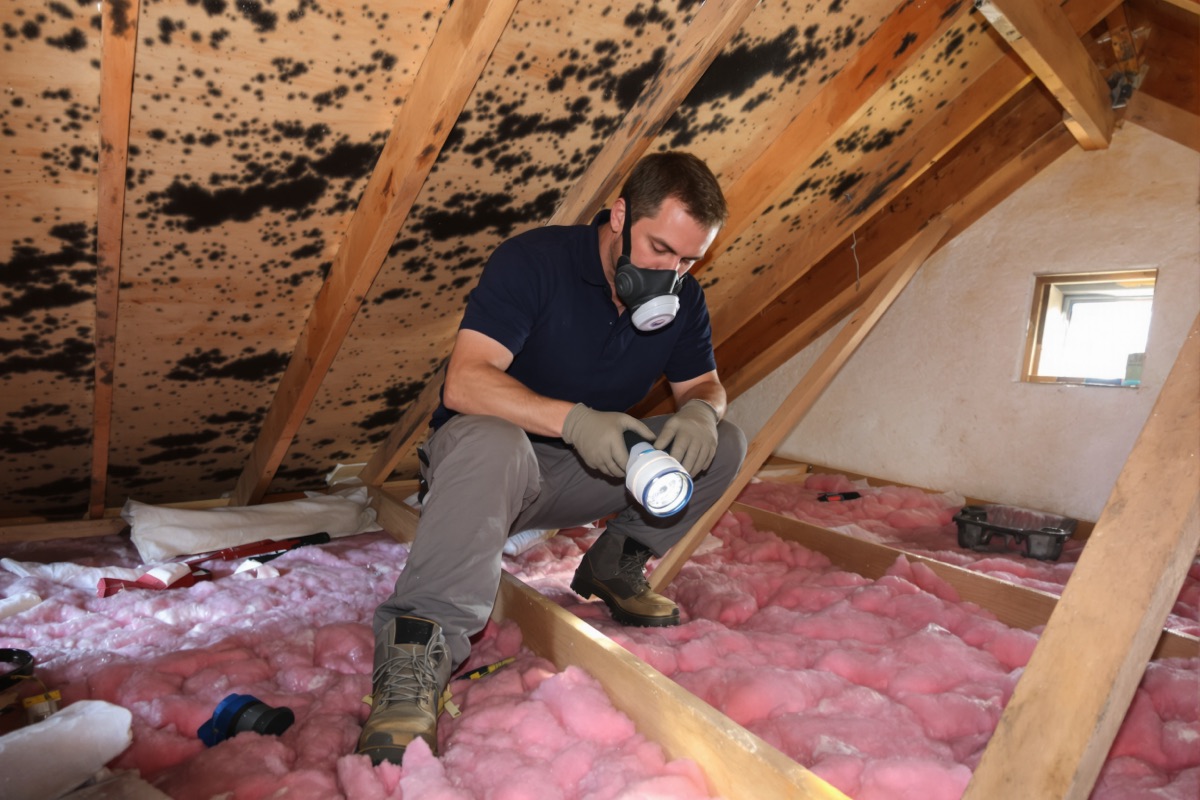
Older houses often have attics with limited ventilation. When warm, moist air from the house rises into a cold attic in winter, it can condense on the underside of the roof sheathing. Add a slow roof leak or ice at the eaves and the wood stays damp long enough for mold to grow.
The EPA advises that the key to mold control is moisture control, and its brief guide to mold and moisture is a helpful read. Our mold remediation process follows that thinking. We set up containment and negative air, run HEPA air scrubbers, remove affected insulation and other porous materials, HEPA vacuum and clean the sheathing and framing, then dry everything. At the end, meter logs, infrared images and photos record that the attic is dry and clean.
The source of the moisture has to be addressed as part of the fix, or the problem returns.
Frozen lines in winter, sticky air in summer
Winter in North Jersey is hard on old plumbing. Pipes that run through porches, sunrooms, outside walls and crawl spaces are the first to freeze when a deep cold settles in. A frozen pipe usually splits while it is frozen and leaks when it thaws, so the water often appears on a mild morning after a cold night. If a pipe freezes, shut off the water before it thaws if you can, and call us.
Summer brings the opposite problem. Warm, humid air slows drying and lets moisture linger in basements and closed rooms. A small leak in July can turn into a musty smell by August. When we dry a house in summer, commercial dehumidifiers run around the clock, and we keep doors and windows shut so the equipment is not fighting the weather outside.
For lakeside homes in particular, steady dehumidification in the basement through the warm months can help. Our crew can show you what your readings look like once the job is done, so you know what normal looks like for your house. That is one more way Mountain Lakes water damage restoration with us continues past the last day of drying.
Rebuilding with the house’s character in mind
Arts and Crafts houses are known for their woodwork, built-ins and solid trim. When water damage forces us to remove part of a wall or floor, we think about how the repair will look next to what stayed.
The full rebuild is ours to do, including wallboard, insulation, cabinets, floors, trim and paint. Where we can, we carefully remove and set aside trim and built-in pieces so they can go back after drying. When a match is needed, we talk with you about the options. You will not be juggling separate contractors. Our remodeling page shows the kind of work our crew does.
Your records for the adjuster
Your insurer reads your policy and decides what it covers. We make sure the adjuster has what they need to review it.
Every job file includes photos of the source and the damage, moisture readings from the first visit to the last, daily drying logs, thermal images and a list of materials removed with the reason for each. You get a copy to share with your insurance company.
Mountain Lakes water damage restoration and the rest of Morris County
Mountain Lakes borders Parsippany-Troy Hills to the east and south, Boonton to the northeast, Boonton Township to the northwest and Denville to the west. U.S. Route 46 is the main road through town. Our crews work throughout Morris County and also cover Essex, Bergen, Passaic and Hunterdon counties.
Elsewhere in Morris County we provide water damage restoration in Montville, Kinnelon water damage cleanup and water damage help in Morristown. You can see every town on our service areas page, and businesses along Route 46 can learn about our commercial water damage service.
Frequently asked questions about water damage in Mountain Lakes
We live near one of the lakes. Why does our basement feel damp even without a leak?
Ground close to open water often holds more moisture, and after long rains the water table can rise. That moisture can come through basement floors and walls. We take readings to see how much is coming in and dry what is wet. Grading, gutters and drainage repairs can help over the long term.
Our Hapgood has stucco walls and a stain under a window. Is that a leak inside or outside?
It can be either. Cracked stucco and worn window flashing often let rain behind the wall, while radiators and pipes cause leaks from inside. We use thermal imaging and moisture meters to trace it and tell you what we find.
Can you dry original woodwork and built-ins?
Often, yes. Where possible we remove trim carefully and set it aside so the wall can dry, then reinstall it. Built-ins can sometimes be dried in place with air movers and dehumidifiers.
A tree limb came through the roof in a storm. Do you handle that?
We handle the water damage inside: extraction, drying and rebuilding. The roof repair itself needs a roofer. Once the opening is covered, we can start drying right away.
We found mold in the attic. What do you do?
We set up containment and negative air, run HEPA air scrubbers, remove affected insulation and materials, HEPA vacuum and clean the wood, and dry it. Then we record the outcome on paper and in pictures for you.
Call for Mountain Lakes water damage restoration, any hour
If water is in your Mountain Lakes home right now, call DryMax at (973) 992-4400. Our phones are staffed 24/7/365, overnight and on holidays too, and help is dispatched as soon as you call. Want to know more first? Read about DryMax and how we work.