
The Passaic River runs along the whole eastern edge of this borough, and any honest look at Florham Park water damage restoration has to start there. The river marks the line between Florham Park and the Essex County towns of Livingston and Millburn. Add a population that grew by almost a third between 2000 and 2010, plus a long history as farmland and Gilded Age estates, and you get a town with three very different kinds of water problems.
DryMax Water Restoration is a locally owned company that has been serving Essex, Morris, Bergen, Passaic and Hunterdon counties since 2018. We are IICRC certified. Call (973) 992-4400 and a person picks up, whether it is two in the afternoon on a Tuesday or two in the morning on New Year’s Day. Here is how we think about water in this particular corner of Morris County.
Living along the Passaic River
Rivers rise. After days of heavy rain or a big coastal storm that stalls over North Jersey, the Passaic and the streams that feed it can climb over their banks and into low-lying yards, garages and basements. Homes closest to the eastern border of the borough feel this first, but rising groundwater can affect basements farther from the river too.
River water is a different category from a clean leak. It picks up soil, debris, fuel, lawn chemicals and sewage from upstream. Anything porous it touches, such as carpet, pad, drywall and insulation, usually has to come out. Hard surfaces need to be cleaned and sanitized before drying begins.
If you live near the river, it is worth knowing your flood zone before the water comes. Ready.gov has a plain-language flood preparedness guide that covers what to do before, during and after a flood, including when to leave and how to stay safe around floodwater. Never walk or drive through moving water, and stay out of a flooded basement until power to that area is off.
A fast-growing borough and its newer homes
The borough has grown quickly. It had 8,857 residents in 2000, 11,696 in 2010 and 12,585 in 2020, its largest population ever. A jump of more than 32 percent in one decade usually means a lot of new construction.
Newer homes are not immune to water. In some ways they create new risks. Many have second-floor laundry rooms, several full bathrooms, refrigerators with ice makers and dishwashers tied into kitchen islands. Every one of those is a supply line that can fail. A burst washing machine hose upstairs can release a large amount of water in a short time, and it flows straight down through the ceiling into the kitchen or family room.
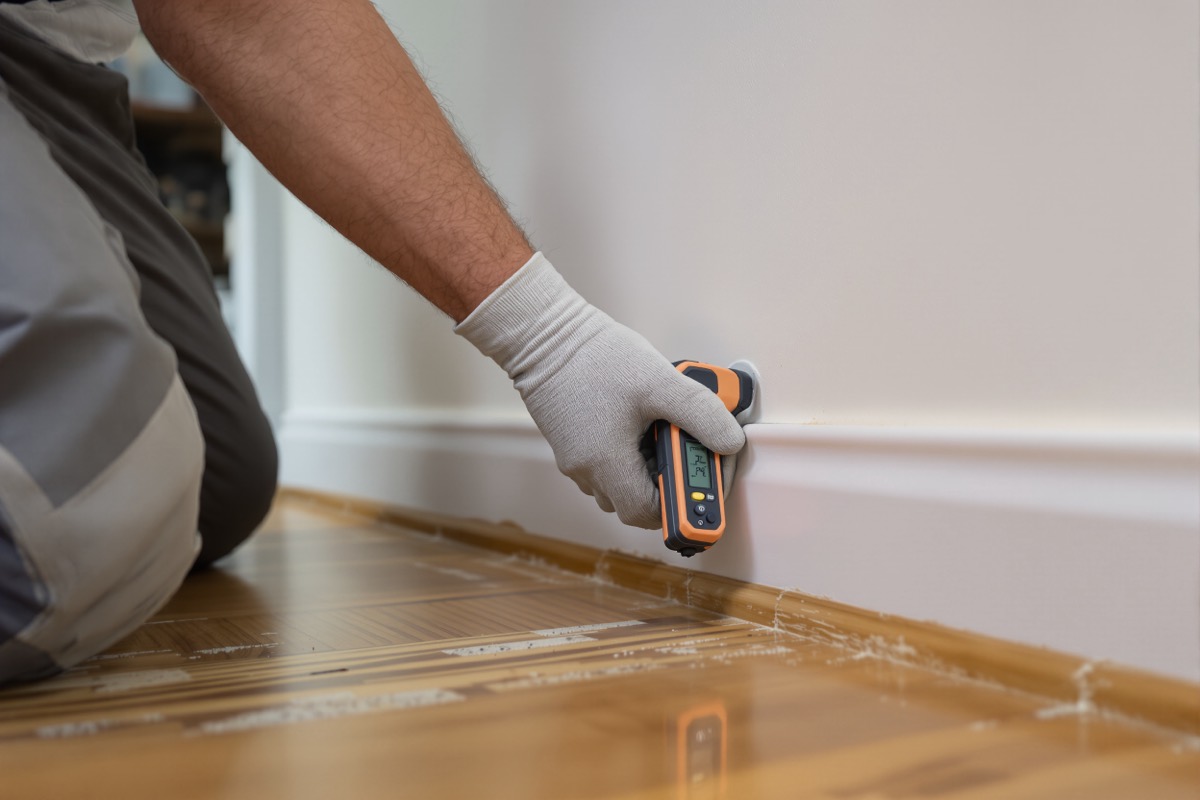
Newer construction also tends to use materials that hold water in tricky ways. Engineered wood flooring can cup and delaminate. Spray foam insulation can trap moisture against framing. Finished basements with sealed walls and a vapor barrier may keep water in once it gets behind them. Our thermal cameras and moisture meters are especially useful here, because the surface often looks fine while the layers beneath are wet.
If you live in a townhome or attached unit, a leak can cross into the unit next door. We can document both sides so each owner and each insurer has a clear record.
Old farmland, old estates, old foundations
Before the growth, this was country. The area was long recognized as a prime farming area and was once known for making brooms, which gave it one of its old names, Broomtown. In 1887, the Twombly family built the Florham estate on 840 acres, and a second estate called Brooklake Park, named partly for the lake on the property, covered about 1,000 acres where Brooklake Country Club is today.
Former farmland often has a high water table and soils that hold moisture. Older homes built on that land may have stone or block foundations, and some sit in spots that were simply fields when the house went up. Those foundations can let water in through mortar joints or the joint between the wall and the floor, especially during long wet stretches in spring.
Both families backed the push to make the area its own municipality, and the borough was incorporated in 1899. Some houses in town carry that longer history, with additions built in different decades by different builders. Where an old section of a house meets a newer addition, the roof lines, foundations and plumbing often join at an awkward seam. Those seams are a common spot for water to get in, and they are worth a close look after any storm.
Older homes also tend to have plaster walls, solid wood trim and original hardwood floors. Plaster dries more slowly than drywall and can hide moisture behind a sound surface. Original floors are often worth saving, and with careful, monitored drying, many can be.
Older houses also come with older plumbing. Galvanized supply pipes corrode from the inside and can spring pinhole leaks. Cast iron drain lines crack. A slow leak inside a wall in a house like this can go on for weeks before a stain appears. When we find one, we open only what we need to, dry the cavity and document everything so the plumber and the adjuster both know what happened.
Before the next big storm: a short checklist
Most of the damage we see from rising water and heavy rain could be smaller with a little planning. None of this replaces professional drying after a flood, but it can buy time and save belongings.
- Test your sump pump before spring and fall by pouring a bucket of water into the pit and watching it cycle.
- Think about a battery backup pump or a generator plan, since storms that raise the river can also knock out power.
- Keep gutters and downspouts clear and make sure downspouts discharge well away from the foundation.
- Store valuables, paperwork and photos in plastic bins on shelves, never in cardboard on a basement floor.
- Know where your main water shutoff and electrical panel are, and make sure everyone in the house does too.
- Look up your property on the FEMA flood map so you know your risk before an emergency.
If water does come in, put your own safety first. Do not enter a basement with standing water if outlets, cords or appliances are submerged. Call us, and if needed, call your utility to shut power to the house.
Florham Park water damage restoration: river water versus pipe water
The industry sorts water into three categories, and the category changes how we work. Clean water comes from a supply line, a sink overflow or rain that came straight in. Caught early, a clean water loss often lets us save floors and walls where they stand. Gray water has some contamination, like a washing machine discharge or a dishwasher drain. Black water, which includes river flooding, groundwater that rose through the soil and sewage backups, is heavily contaminated.
Clean water can turn into gray or black water if it sits. A pipe leak that soaks a basement for three days is no longer a simple drying job. That is one reason to call early, even if the water looks clear.
For black water, our crew wears protective gear. Porous materials that the water touched are removed and bagged. Hard surfaces are cleaned and sanitized. Only then do we set up air movers and dehumidifiers. In a river flood, this approach protects the people working in the space and the family that will live there afterward.
For homes near the Passaic, good Florham Park water damage restoration depends on identifying the water category on the first visit and planning the job around it.
The everyday leaks that catch people off guard
Not every call is about the river. Most water damage in any suburban house starts with something ordinary. A water heater rusts through at the bottom of the tank. A refrigerator ice maker line cracks behind the fridge and drips into the subfloor for weeks. A toilet supply line splits while the family is away for the weekend. A dishwasher drain hose comes loose and soaks the cabinet base.
These leaks are sneaky because they often happen out of sight. The first clue may be a soft spot in the kitchen floor, a buckled board near the refrigerator or a faint stain on the ceiling below a bathroom. By then the water has usually spread farther than the visible damage suggests.
For these losses, Florham Park water damage restoration is mostly a detective job. We trace the water back to its source with meters and thermal imaging, remove only what has to come out, such as a cabinet toe kick or a strip of flooring, and dry what is left in place whenever we can. Saving original materials keeps the rebuild smaller and keeps more of your home the way it was.
Our drying process in seven steps
- The call. We ask where the water is, what caused it and whether it has been stopped. A crew heads out as soon as you call.
- Safety and photos. We check for electrical hazards, photograph every affected room and take starting moisture readings.
- Water removal. Submersible pumps handle deep standing water. Truck-mounted and portable extractors pull water out of carpet, pad and hard floors.
- Moisture mapping. Thermal imaging and pin and pinless meters show where water traveled, including under floors and inside walls.
- Removal of what cannot be saved. Wet pad, swollen trim, soaked insulation and drywall above the wet line come out.
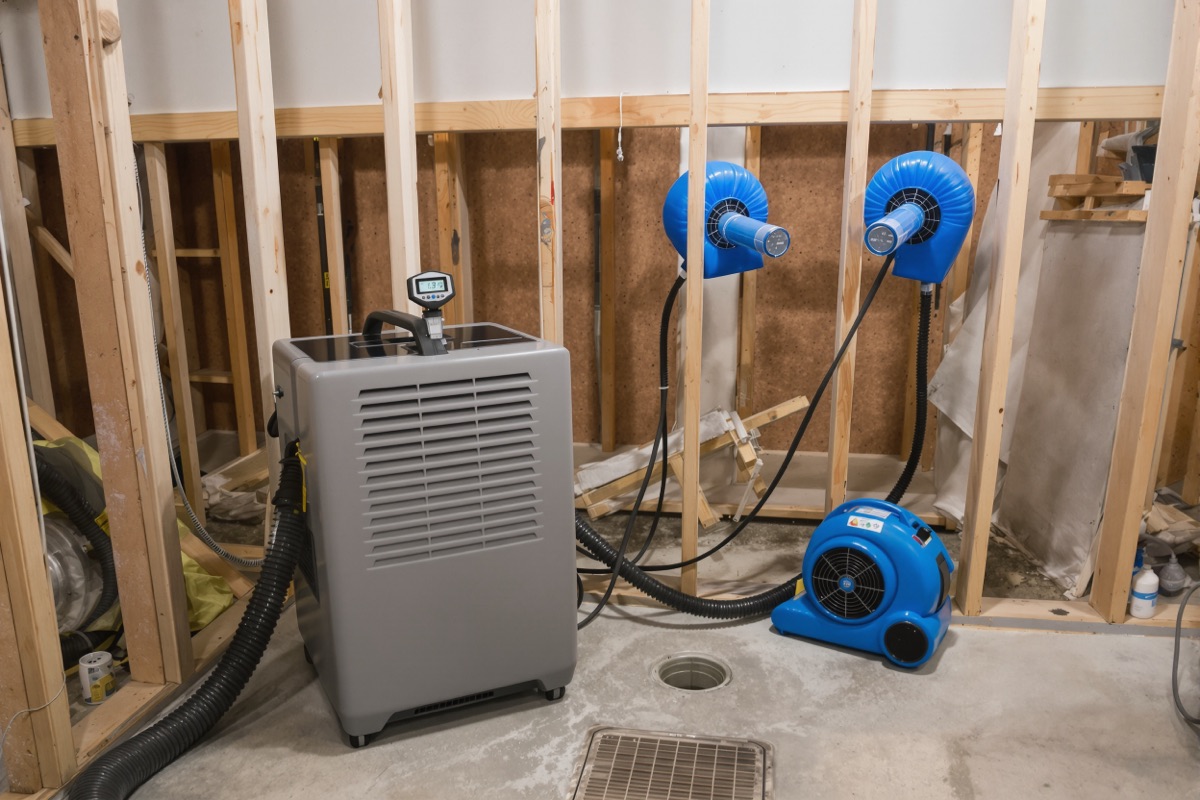
- Drying. Air movers and commercial dehumidifiers run around the clock, placed according to the moisture map.
- Daily checks. A technician comes back daily, records the numbers and repositions machines, and the job continues until wood, drywall and concrete all test dry.
You get copies of the photos, readings and drying logs at the end. Our main water damage restoration page goes into more detail on each step.
Offices, campuses and commercial space
This borough has more commercial and institutional space than its size might suggest. The New York Jets have run their main operations from the borough since 2008, and that parts of the Saint Elizabeth University and Fairleigh Dickinson University Florham campuses are within its borders. Route 24 runs through town and connects it with the rest of the region.
Large buildings bring large water losses. A sprinkler head that breaks, a roof drain that backs up or a frozen pipe in a loading area can wet thousands of square feet of carpet tile and drywall in one event. Our commercial water damage service brings the extraction and dehumidification capacity those spaces need, along with containment to keep the rest of the building working.
Large spaces also dry differently from homes. High ceilings, big open floors and commercial HVAC systems change how air moves. We size the number of air movers and dehumidifiers to the volume of the space and the amount of wet material, and we check readings across the whole footprint rather than one corner.
Business owners and facility managers want two things after a loss: a fast return to normal and a clean set of records. We plan the work around operating hours where we can and document every step the same way we do in a home. For property managers handling Florham Park water damage restoration across a building, those records make the insurance conversation much simpler.
Mold, rebuilding and getting the house back
Water that stays in a wall or under a floor past a day or two can let mold take hold. That is common after river flooding, when homeowners may not be able to get back into the house right away.
If you see spotting or smell mustiness, our mold remediation team walls off the area in plastic and keeps it under negative pressure so spores stay put. HEPA filtration scrubs the air while moldy drywall or insulation is cut out. Framing and other surfaces that stay get a HEPA vacuum pass and a cleaning, and then the space is dried down. Thermal images, photos and fresh meter readings show the finished state.
After the drying and any mold work are done, we can put the room back together. Our remodeling crews handle drywall, insulation, flooring, paint, trim and cabinets. Keeping demolition, drying and rebuilding under one roof means fewer phone calls for you and a consistent record for your adjuster.
A word on insurance: coverage depends on your policy and on the cause of the loss, and river flooding is a good question to raise with your agent ahead of time. We do not make that call. We give the adjuster the photos, readings and logs they need to make it.
Frequently asked questions about Florham Park water damage
Do you clean up after the Passaic River floods a basement?
Yes. River water is treated as contaminated. We pump out the water, remove porous materials it touched, clean and sanitize hard surfaces and then dry the space with air movers and dehumidifiers, documenting each step.
Our newer home had a washer hose burst upstairs. Can the ceiling below be saved?
Sometimes. If we get there quickly and the water was clean, ceilings and walls can often be dried in place. We use thermal imaging and moisture meters to decide what can stay and what has to come out.
My older home has a stone foundation that gets damp every spring. Can you help?
We can remove any water, dry the basement and document the moisture. We will also show you where the water appears to be entering, which helps you plan any outside drainage work with the right trade.
Do you handle water damage in offices and campus buildings?
Yes. Our commercial water damage service covers offices and other large buildings, with containment and scheduling to keep the rest of the space running where possible.
Will my policy pay for flood damage from the river?
That depends on your policy and the cause of the water, and only your insurer can decide. We provide the documentation the adjuster needs.
Can you work with my neighbor if a leak crosses into their unit?
Yes. In attached homes, we can document and dry both sides of a shared wall or ceiling, so each owner has photos and readings for their own insurer.
Call for Florham Park water damage restoration any time
Whether the water came from the river, a pipe or an appliance, call (973) 992-4400. We answer every hour of every day. We also serve the towns next door, including water damage restoration in Madison, Chatham water damage cleanup and water damage help across the river in Livingston. Learn more about DryMax or browse our service areas.