
Essex Fells is a small borough with a very particular housing stock, and that shapes how we approach Essex Fells water damage restoration. The borough had about 750 houses in 2000, most of them custom built and many sitting on lots of several acres. There are no apartment buildings and no office towers. When water gets loose here, it is almost always inside a single-family home that was designed one at a time, with its own quirks, its own plumbing runs and its own finishes.
We are DryMax Water Restoration, a locally owned company that has served Essex, Morris, Bergen, Passaic and Hunterdon counties since 2018. Our crews are IICRC certified, and our phone at (973) 992-4400 is answered by a real person every hour of every day, holidays included. This page walks through the water problems that tend to show up in a borough like this one and what we do about each.
Custom homes on big lots: why a leak travels far
A custom home rarely follows a tidy, stacked floor plan. Bathrooms end up over a library or a dining room. A second-floor laundry sits above a finished family room. Supply lines can run long distances through ceilings and wall cavities before they reach a fixture. That means a slow drip can start in one corner of the house and show up as a stain two rooms away.
Size works against you too. On a property with several acres and a long setback from the road, nobody walking by notices water at a basement window. A guest wing or a third floor that only gets used a few times a year can hide a failed toilet supply for days. By the time someone opens that door, the carpet pad is soaked, the subfloor has wicked moisture and the drywall below is soft.
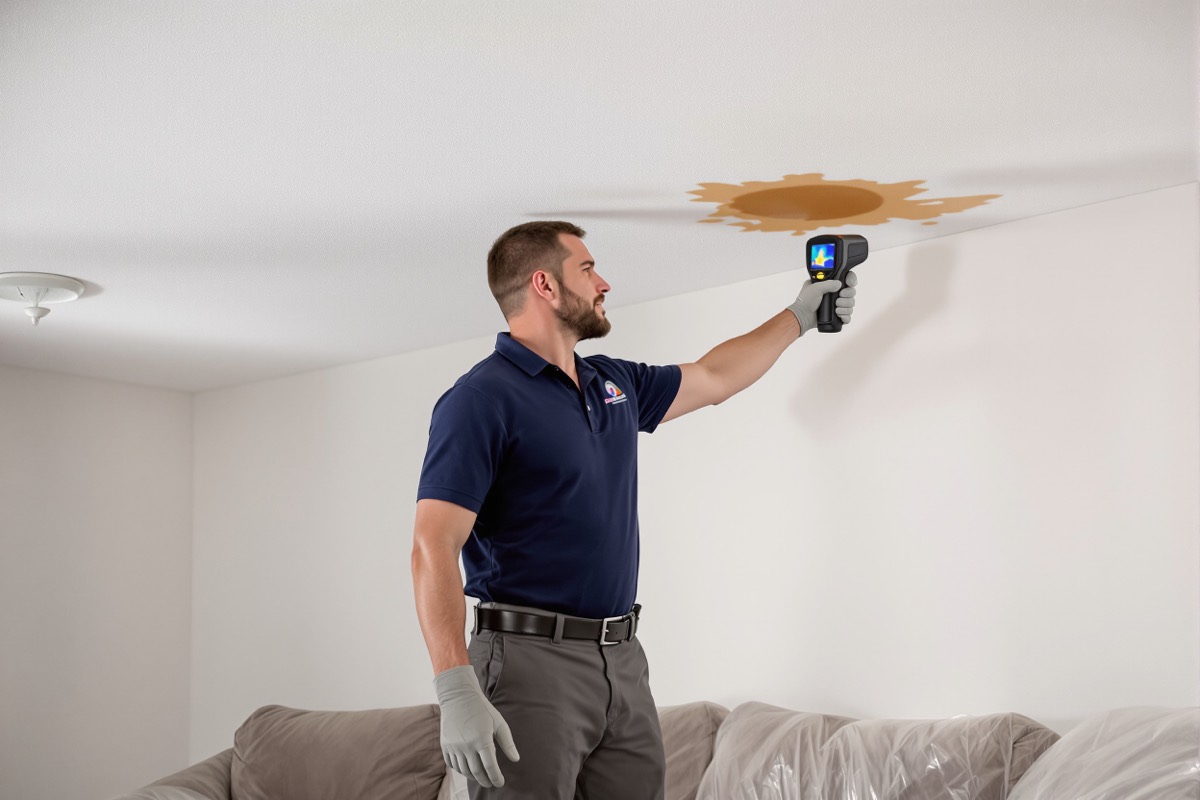
This is why we lean so heavily on measurement in homes like these. A thermal imaging camera shows us cool, damp patches behind paint and plaster that you cannot see with your eyes. Pin and pinless moisture meters then confirm how far the water actually went. We map every wet area before a single air mover is turned on, so the drying plan covers the whole affected footprint and nothing gets sealed up wet.
Carriage houses and outbuildings get forgotten
One local detail stands out to us: the only rental units in the borough are in carriage houses and other ancillary structures. Many properties here also have pool houses, garages with rooms above them and guest cottages. These buildings often have their own small plumbing systems, their own water heaters and sometimes their own heat.
Outbuildings are where we would expect trouble to hide. A tenant may be away. A pool house may be shut down for the season with water still in a line. A space heater that keeps a garage apartment warm can trip off on a cold night. Each of those is a burst pipe waiting to happen, and none of them are in the room you walk past every morning.
If you own a property with a second structure, it is worth checking it after every hard freeze and every heavy rain. If you find water, call us the same as you would for the main house. We treat a carriage house leak with the same moisture mapping, extraction and drying logs as any other job. If a tenant lives there, we can work around their schedule and keep the work area contained so their space stays usable where it can.
Pond season means pipe season
Locals know Essex Fells Pond as the place to skate. It draws people for ice skating and pond hockey, typically from December through March. A pond that stays frozen enough to skate for that many weeks tells you something about how cold the borough gets, and cold is what splits pipes.
The pipes most at risk are the ones near an outside wall, in a crawl space, above a garage or running to an outdoor spigot that was never shut off from the inside. Older custom homes may have added rooms over the decades, and the plumbing in an addition is sometimes less protected than the original. A frozen line does not leak while it is frozen. The flood starts when the ice thaws and the split opens up, which is often the warmest afternoon after a cold stretch.
When a pipe lets go, shut the main water valve and, if water is near outlets or fixtures, stay out of that area. Then call us. A licensed plumber handles the pipe itself. We handle the water: pumping or extracting it, pulling out wet materials that cannot be dried in place and setting up air movers and commercial dehumidifiers to bring the structure back to dry readings.
Wooded lots, full gutters and wet foundations
Grover Cleveland Park, a heavily wooded county park, sits along the Caldwell and Essex Fells border, and many lots in the borough carry mature trees of their own. Trees are part of why people love living here. They also drop a lot of leaves into gutters every fall.
When gutters clog, rain spills over the edge and lands right next to the foundation instead of going out through a downspout. On a big house with a long roofline, that adds up to a lot of water concentrated along one wall. It can push through block or stone foundation walls, seep in at a window well or overwhelm a sump pump that was sized for normal conditions. The name “Fells” itself refers to a hill, and any slope on a lot can steer runoff toward the house.
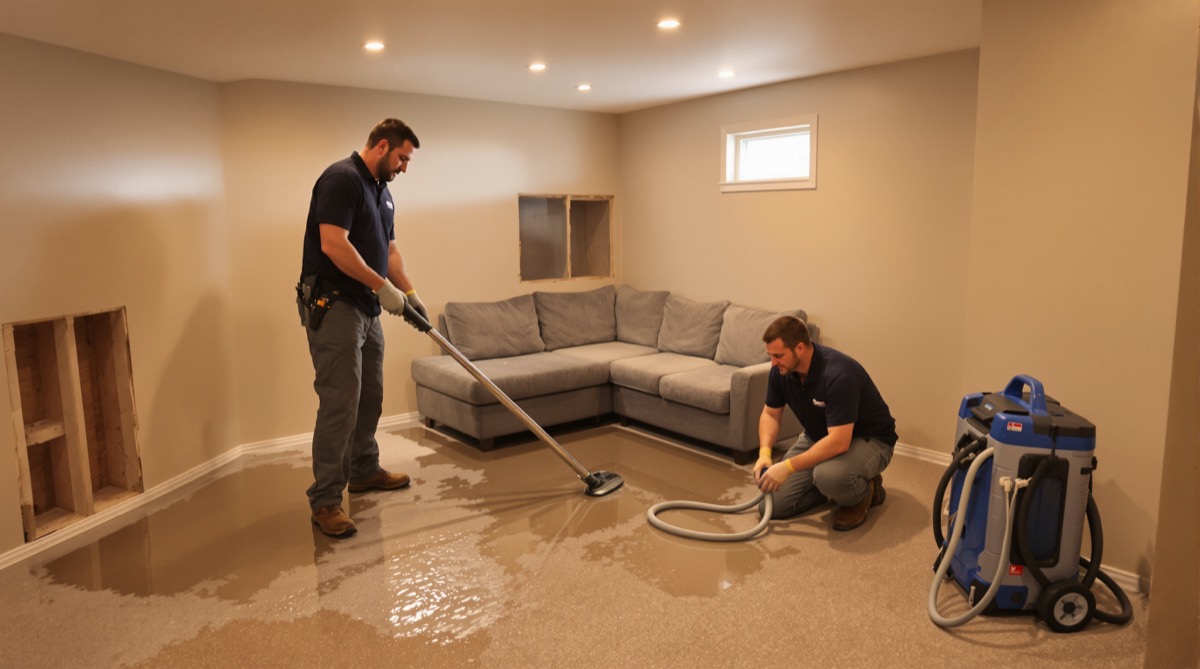
Basement water from outside usually shows up as a wet line along the bottom of a wall, damp carpet in one corner or water around the sump pit. We extract the standing water, check the walls and floor with moisture meters and dry the space with equipment sized to the room. If a finished basement has drywall that wicked water upward, we cut it above the wet line so the cavity can dry out instead of growing mold behind the paint.
A planned borough with houses of many ages
The borough did not grow by accident. In the late 1800s, a group of developers bought about 1,000 acres near the end of the Caldwell rail line and hired an architect to lay out a residential community. It was incorporated in 1902. Since then, houses have been built, rebuilt, expanded and renovated over more than a century.
That mix matters for drying. A home that went up early in the borough’s history may still have plaster walls, a stone or block foundation and old cast iron drain lines. A house built or gut renovated recently may have spray foam, engineered flooring and a finished lower level with a home theater or gym. Water behaves very differently in each. Plaster holds moisture longer than drywall. Engineered flooring can cup quickly. A finished basement over a stone foundation can stay damp at the bottom of the walls long after the carpet feels dry.
Good Essex Fells water damage restoration starts with understanding which kind of house we are standing in. We ask about past renovations, look at how the walls and floors were built and set our drying targets against unaffected materials in the same home. That comparison tells us when a wall is truly back to normal, not just dry to the touch.
Older drain lines are worth a mention too. When a main sewer line backs up, the water that comes up through a basement floor drain is contaminated. That is a different job from a clean supply line break. We treat sewage backups with protective gear, remove porous materials the water touched and clean and sanitize hard surfaces before drying, following the same documented approach as every other job.
Essex Fells water damage restoration, step by step
Here is what happens after you call us. The first thing is a short conversation. We ask where the water is, where you think it came from, whether it has been shut off and whether anyone is at risk. A crew heads out as soon as you call, with extractors, pumps, air movers and dehumidifiers on the truck.
On site, we walk the home with you, take photos and take baseline moisture readings. If there is standing water, we remove it first with truck-mounted or portable extraction, or a submersible pump for deep water in a basement. Then we map the moisture with meters and a thermal camera to find the edges of the wet area.
Next comes the drying setup. Fans called air movers sweep across damp floors and walls to lift moisture into the room, where commercial dehumidifiers capture it. Materials that hold water and cannot be saved, such as soaked carpet pad or swollen particleboard, come out. Drywall may be flood cut a measured distance above the wet line.
We come back to take readings every day and adjust the equipment until the materials reach dry standard. Only then does equipment leave. On an average house, the drying itself usually takes a few days, though a large or complicated home can take longer, and we tell you what we see as we go.
If the water sat too long: mold in a large home
A leak in a wing nobody visits or a carriage house nobody checked can sit long enough for mold to start. The EPA’s guidance is that wet materials should be dried within 24 to 48 hours to help prevent mold growth. Past that window, a musty smell or visible spotting on drywall, trim or the back of a cabinet is a sign the problem has moved on.
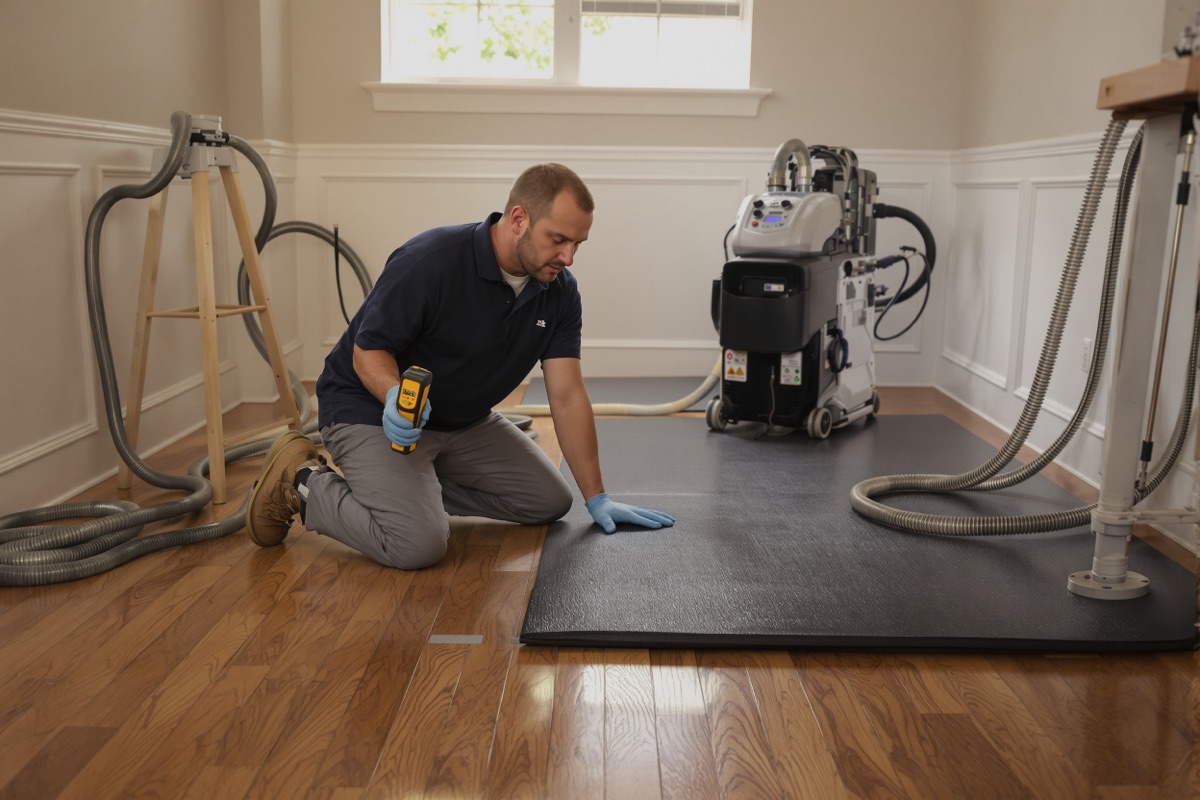
Our mold remediation work follows a clear sequence. We set up plastic containment to keep spores from spreading to clean rooms. Negative air machines keep the contained area under pressure, and HEPA air scrubbers filter the air. Materials that cannot be cleaned are removed, the remaining surfaces are HEPA vacuumed and cleaned, and the area is dried. Then we document the result with moisture readings, photos and thermal images.
In a big house, containment matters a lot, and it is a part of Essex Fells water damage restoration that people do not always expect. You may have family living in the rest of the home while one room is being treated. A good containment setup lets daily life continue in the clean areas while the work happens behind plastic.
Putting the custom finishes back
Homes in a borough like this are rarely finished with builder-grade materials. There may be detailed trim, custom cabinetry, plaster walls or wide-plank flooring. That is why it helps to have the same company drying the home and putting it back together.
Our rebuilding and remodeling crews replace drywall and insulation, patch and paint, install flooring and reinstall trim and cabinets after the water damage is handled. Because we did the drying, we already know exactly which materials came out and why, and the photos from day one help us match what was there. You deal with one company from the first phone call to the finished room, which keeps the job simpler for you and for your adjuster.
For a broader look at the process outside this borough, see our main page on water damage restoration, which covers each service in more detail.
Records for your adjuster
Every job we run is documented. That means photos at each stage, moisture readings from the first visit to the last and drying logs that show what equipment ran and how the readings dropped. You get copies to give your insurance adjuster.
We do not tell anyone what their policy covers. Coverage depends on the policy and on the cause of the loss, and that decision belongs to the insurance company. Our role is to hand the adjuster clear, organized evidence of what happened and what it took to dry the home properly. On a large custom house with fine finishes, that kind of record is worth having from the start, and it is built into every Essex Fells water damage restoration job we take on.
If you are curious about how flood risk is mapped for properties in this part of Essex County, FEMA keeps public flood maps you can search by address. It is a useful thing to know before you ever need us, and it says nothing about your homeowners policy, which is a separate question for your agent.
Frequently asked questions about water damage in Essex Fells
Do you handle water in a carriage house or pool house in Essex Fells?
Yes. Many properties in the borough have carriage houses and other outbuildings, and some are rented. We dry those structures the same way we dry a main house, with moisture mapping, extraction, air movers, dehumidifiers and daily readings.
A pipe split during a cold snap. Where do I begin?
Close the main valve, keep clear of water near outlets and phone (973) 992-4400. A plumber repairs the pipe. We remove the water and dry the house, and we start documenting the damage for your adjuster right away.
Can you find water that I cannot see in a big custom home?
Usually, yes. We use thermal imaging cameras and pin and pinless moisture meters to track moisture behind walls, under floors and above ceilings. In homes with long plumbing runs, that mapping is how we make sure the whole wet area gets dried.
Why is my basement wet after a heavy fall rain?
On wooded lots, clogged gutters are a common cause. Overflowing rain lands at the foundation and can seep through walls or overwhelm the sump pump. We extract the water, dry the space and point out where the water appears to be coming in.
Will my insurance cover this?
That depends on your policy and the cause, and only your insurer can decide. We give you photos, moisture readings and drying logs so the adjuster can see exactly what happened and what the drying required.
Can you rebuild the room after it is dry?
Yes. We handle drywall, insulation, flooring, paint, trim and cabinets, which means the crew that dried your room also finishes it.
Call DryMax for Essex Fells water damage restoration
If you have water in your home, a carriage house or a basement anywhere in the borough, call us at (973) 992-4400. Someone answers every hour of the day, every day of the year. We also serve the towns around you, including water damage restoration in Roseland, Caldwell water cleanup and water damage help in North Caldwell. You can see the full list on our service areas page or learn more about DryMax.