
Roseland covers only about 3.64 square miles, and almost none of it is open water. So when a Roseland home floods, the cause is usually inside the walls or under the floor. DryMax handles Roseland water damage restoration from the first extraction through the final rebuild, with IICRC certified technicians and a phone line answered 24 hours a day, 365 days a year.
Where the water comes from in a small borough
The borough’s water area is roughly 0.03 square miles, well under one percent of the total. There is no big lake or river running through the middle of town. That changes the conversation. Instead of rising water from outside, most of the calls we expect here start with a fixture, a supply line, an appliance or a pump.
Roseland began as Centerville and took its current name in 1874. It broke away from Livingston Township and was incorporated as its own borough in 1908. A town that has been growing for more than a century has a mix of house ages, and with that comes a mix of plumbing: some original, some updated, some patched over the decades by different owners.
Inside water damage has one advantage. It usually starts clean. A burst supply line or a split washer hose sends drinkable water across the floor, and if it is extracted and dried quickly, much of what it touched can be saved. Time is what turns a clean loss into a moldy one.
That is why we treat every call as urgent. We send a crew as soon as you call, and the first hour on site is spent stopping the source, protecting what is still dry and getting water off the floor.
Roseland water damage restoration for long-time homeowners
Roseland is a settled, established town, and many households have been in the same house for years. That steadiness is good for a neighborhood, and it also means a lot of homes have water heaters, washing machines, toilet valves and shutoffs that have been in service for years.
Older equipment does not always fail with a bang. A water heater can seep from the bottom for weeks before anyone looks behind it. A toilet supply line can weep inside a vanity. A dishwasher drain can leak only when it runs. By the time a stain appears, the subfloor or drywall may already be holding a surprising amount of water.
For homeowners who are not up for moving furniture or climbing into a crawl space, our crew does the heavy lifting. We explain what we are doing in plain terms, keep the work area tidy and show you the moisture numbers as they drop. Good Roseland water damage restoration should feel calm and organized, even on the worst day.
Adult children who live out of town often call us on behalf of a parent. We can walk them through what we found over the phone and send photos so the whole family understands the plan.
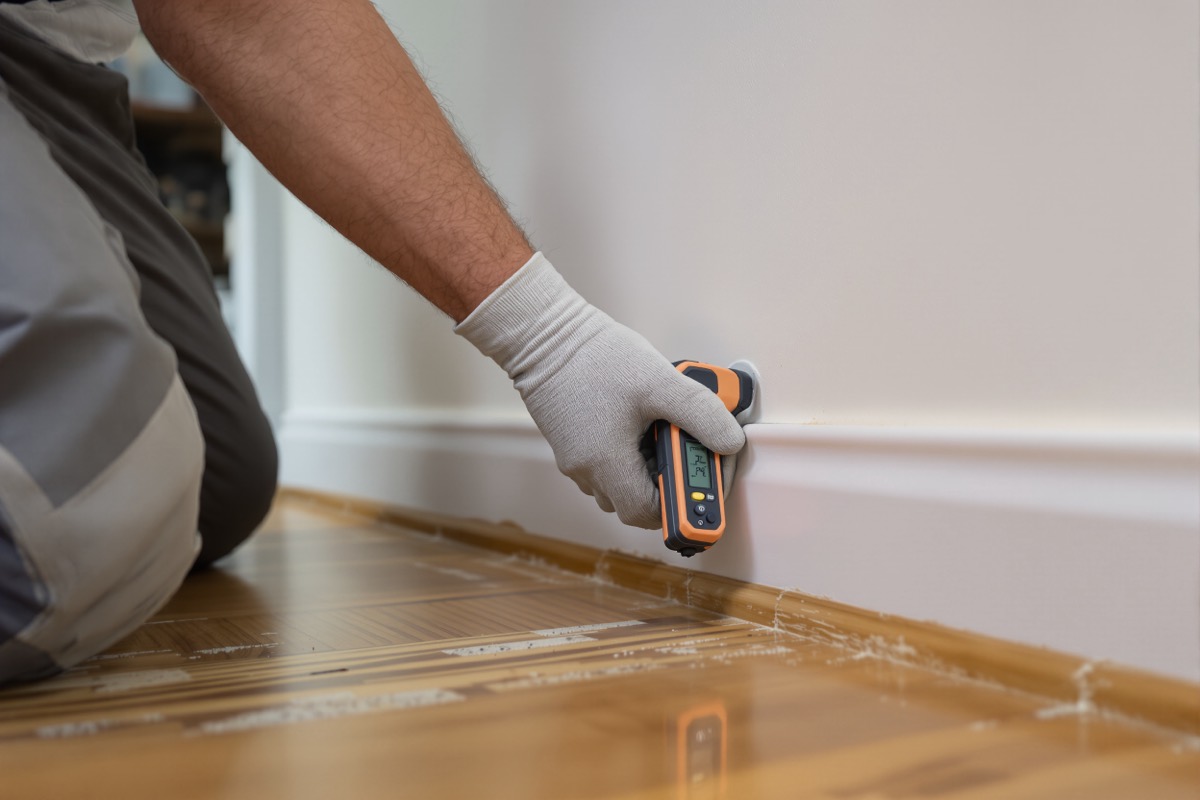
Water heaters, washers and the slow drip
Appliance leaks are some of the most common water losses in any suburban house. A tank water heater holds dozens of gallons, and when the bottom rusts through, it empties onto whatever is nearby. In a finished basement, that might be carpet, a storage room full of boxes or the drywall of a family room.
Washing machine hoses are another weak point. Rubber hoses can crack with age and pressure. When one splits while a load is running, water keeps coming until someone turns off the valve. If the laundry is on an upper floor, it flows down into ceilings below.
Refrigerator ice maker lines, dishwasher connections and sink drains round out the list. Each one is small on its own. Together they explain why so many water calls come from kitchens and laundry areas.
When we arrive, we confirm the leak is stopped, then use thermal imaging and pin and pinless moisture meters to follow the water under cabinets, behind toe kicks and into wall cavities. Cabinets that have soaked up water can sometimes be dried with targeted airflow, and sometimes they cannot. We tell you which is which based on readings, not guesswork.
Simple habits that help
- Know where your main water shutoff is and make sure it turns.
- Look at the base of your water heater once in a while for rust or dampness.
- Replace rubber washer hoses that look cracked or bulged.
- Turn off the water to the washer when you travel.
Stains overhead and floors underfoot
Water always moves down, and it rarely moves in a straight line. A slow leak at a tub drain or toilet seal can run along a ceiling joist, soak the insulation above a kitchen and finally show up as a yellow ring several feet from where it started. Homeowners often paint over the first small stain, only to see it return larger.
When we open a ceiling, we try to keep the hole as small as the moisture allows. A thermal camera usually shows the cool outline of the wet area before we cut anything. Wet insulation comes out, the cavity gets airflow, and a dehumidifier runs in the room below. Once the framing reads dry, the patch is closed, taped and painted.
Floors are a different challenge. Hardwood absorbs water from the bottom up, which is why boards start to cup along their edges. Engineered planks and laminate can swell at the seams. Tile usually survives, but the grout and the subfloor underneath may stay wet for days.
On hardwood, we sometimes use specialized drying setups that pull moisture through the boards instead of tearing them out. Whether that works depends on how long the floor was wet and how badly it has moved. We measure first, then recommend. Saving a floor is often possible when Roseland water damage restoration starts within the first day or so.
Cold snaps and pipes in outside walls
North Jersey winters can freeze a pipe that runs through an exterior wall, a garage ceiling or an unheated crawl space. The burst usually shows up when the ice thaws. If you come home to water running from a ceiling or wall after a cold night, shut the main valve right away and call us. A frozen line that splits can release a lot of water before you even hear it.
Keeping the heat on when you travel, opening sink cabinets on exterior walls during deep cold and disconnecting garden hoses in the fall all help. None of those steps is a guarantee, but each one lowers the odds.
When it does happen, the faster the water is out, the more of the house we can save. That simple rule is at the heart of every Roseland water damage restoration job we take on.
Sump pits and lower levels in western Essex
Roseland is part of the old Horseneck Tract, which stretched across much of western Essex County from the First Mountain to the Passaic River. Even without a river through town, heavy rain still has to go somewhere, and in many homes it ends up in a sump pit.
A sump pump only works if it has power and its float can move. A storm that knocks out electricity, a stuck switch or a pump that has simply worn out can let a pit overflow in hours. Groundwater then spreads across the slab and soaks the bottom of every wall it touches.
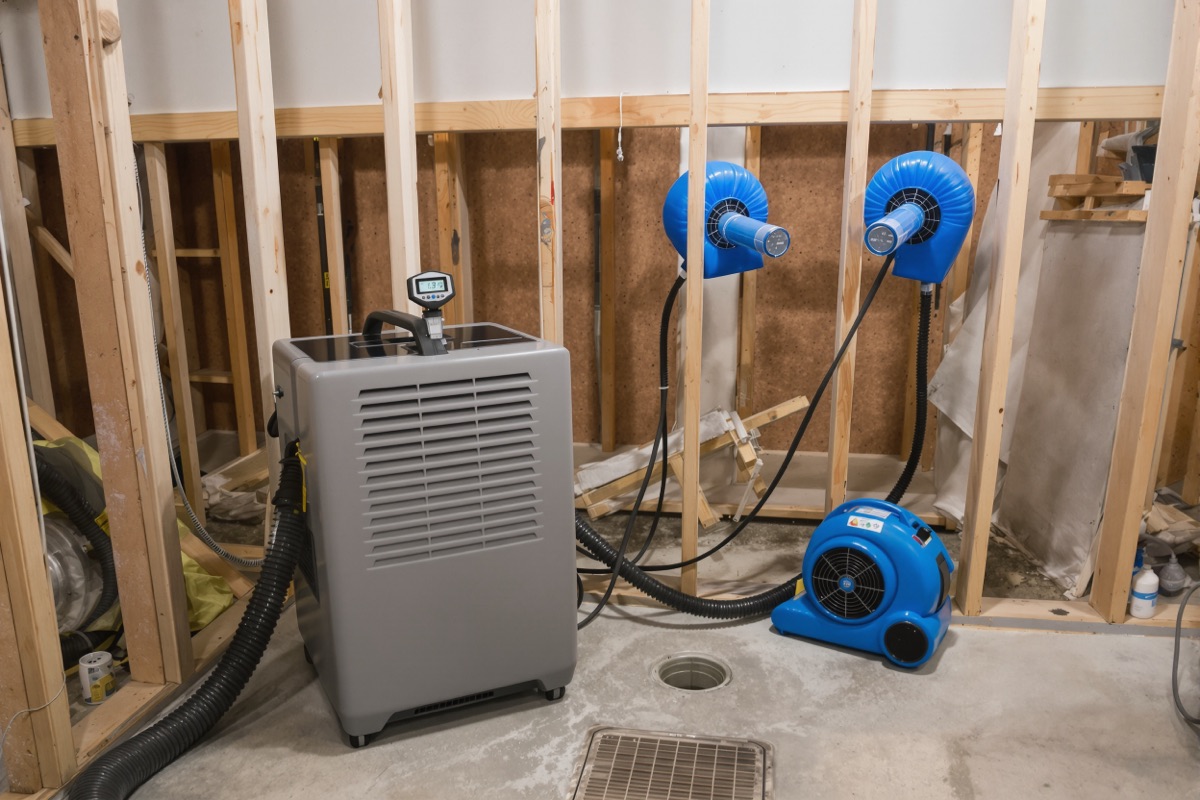
We bring submersible pumps for deep water and extractors for what is left on carpet and hard floors. After that, commercial dehumidifiers and air movers go to work on the slab, framing and finishes. In a finished lower level, we often cut drywall a short way above the wet line so the cavity can dry.
If you want to plan ahead for storm season, Ready.gov’s flood guidance has a practical checklist for before, during and after heavy rain.
Clean, gray or black: why the source matters
Not all water is equal. The industry sorts it into three broad categories, and the category decides how much has to be removed and how the space is cleaned. Here is the short version.
| Type of water | Common sources | What we usually do |
|---|---|---|
| Clean | Burst supply line, water heater, ice maker | Extract and dry; most materials can often be saved if we start fast |
| Gray | Washer or dishwasher overflow, sump overflow | Extract, clean surfaces, remove soaked pad and some porous items |
| Black | Sewer backup, outside floodwater | Protective gear, remove porous materials, sanitize, then dry |
Clean water does not stay clean forever. After a day or two in a warm house, it picks up bacteria from the materials it sits in. That is one more reason to call early rather than waiting to see if things dry by themselves.
Our drying method, one step at a time
- Stop the water. We find the source and make sure nothing more is coming in.
- Protect the house. Dry rooms get covered paths, and furniture is moved or blocked up off wet floors.
- Extract. Truck-mounted or portable extractors pull standing water out of carpet, pad and hard floors.
- Map the moisture. Meters and thermal cameras show how far the water traveled.
- Open what has to be opened. Wet insulation and drywall that will not dry in place are removed.
- Dry. Air movers and commercial dehumidifiers run until readings match dry areas of the home.
- Log it. Every visit adds readings and photos to the drying record.
Drying time depends on what got wet and for how long. Drywall can come back quickly. Hardwood, plaster and concrete take longer. We will not pull the equipment just because the surface feels dry. The readings decide. Read more on our water damage restoration page.
Offices and the old Becker Farm land
Roseland has an outsized business presence for its size. The Becker Farm once made up nearly half of the borough and is now mostly a large business complex, and several corporate offices are in town today. Interstate 280 runs about 2.5 miles through Roseland, linking it to Livingston and East Hanover Township.
Office buildings bring their own water risks: sprinkler line failures, roof drain backups, restroom overflows on upper floors and condensate leaks from mechanical equipment. A leak that starts on one floor can reach several tenant spaces below before anyone notices on a weekend.
For property managers and facility teams, we offer commercial water damage service with containment to separate work areas, documentation suited for owners and insurers, and scheduling that keeps as much of the building open as possible. Details are on our commercial water damage page.
After hours is when many building leaks are found. A security guard notices water under a door, or the first employee in on Monday finds wet carpet across a whole row of desks. Call us right then. Our crew can extract, move or protect furniture and equipment, and start drying before the workday gets going. We also keep a clean list of affected rooms, materials removed and daily readings, which makes it easier to sort out responsibility between tenants, owners and their carriers.
Mold, repairs and the paper trail
If water sat long enough for mold to start, we handle that as part of Roseland water damage restoration. The work follows a set pattern: plastic containment, a negative air machine to keep spores in the work zone, removal of affected materials, HEPA vacuuming and cleaning, and HEPA air scrubbing. Afterward, we confirm the area is dry with moisture readings, photos and thermal images. Our mold remediation page covers this in more depth.
The EPA notes that the key to mold control is moisture control. Removing growth without fixing the leak only buys time, so we always tie mold work back to the cause.
Once the structure is dry and clean, we rebuild. Drywall, insulation, flooring, paint, trim and cabinets are all part of what we do. Our remodeling team picks up exactly where the drying crew left off, so nothing gets lost between trades.
From the start, we keep a record of the job: photos, moisture readings and drying logs. You can hand that file straight to your insurance adjuster. What your policy covers is between you and your carrier, and a clear record helps the adjuster make that call.

Livingston, Essex Fells and West Caldwell
Roseland borders Essex Fells, Livingston, West Caldwell and West Orange in Essex County, and East Hanover Township across the line in Morris County. We cover all five counties in our area: Essex, Morris, Bergen, Passaic and Hunterdon.
If you have a relative or a second property nearby, we also handle water damage restoration in Livingston, water damage repair in Essex Fells and leak and flood cleanup in West Caldwell. The full list is on our service areas page, and you can read about how the company started on our about page.
Frequently asked questions about Roseland water damage restoration
Roseland has very little open water. Why do homes here still flood?
Most water losses in town start inside the house: a water heater, a washer hose, a supply line or a sump pump that stops working during a storm. Those can put a lot of water on the floor quickly.
My parent’s water heater leaked. Can you work with me if I live out of state?
Yes. We can talk you through what we found, send photos and keep you updated while the crew works at the house.
Do you handle water damage in Roseland office buildings?
We do. Our commercial service covers offices and larger buildings, with containment and scheduling planned around the people who work there.
How long will the drying equipment run?
It depends on what got wet. Drywall often dries faster than hardwood, plaster or concrete. We check readings on each visit and remove equipment only when the numbers match dry parts of the house.
Is Roseland water damage restoration covered by homeowners insurance?
Coverage depends on your policy and the cause of the damage. We document the job with photos, moisture readings and drying logs so your adjuster can decide.
Will you also do the repairs?
Yes. After drying, we rebuild drywall, insulation, flooring, paint, trim and cabinets, so one company handles the whole job.
Talk to a person tonight
A leak does not care what time it is. If water is spreading across your floor in Roseland, call (973) 992-4400. We answer nights, weekends and holidays, and we will get a crew headed your way.