
Ridgewood takes its name from the shape of its land, and that land still decides where water goes. Ridges send rain downhill toward brooks and low neighborhoods, and older homes on both the high and low ground each have their own weak spots. When something goes wrong, DryMax handles Ridgewood water damage restoration from the first phone call through the final rebuild, at any hour of the day or night.
We are a locally owned company, working since 2018, with IICRC certified technicians. A person answers our phone every hour of the year. Once you describe what you are seeing, a crew loads up and heads out.
A village named for its terrain
The village name comes straight from the character of its terrain. Spend a day driving its streets and that makes sense. The land rises to ridges and falls toward brooks, with a business district in between. At about six square miles, the village packs a lot of elevation change into a small area.
Terrain like this creates predictable water patterns. On the high side of a lot, water soaks into the soil and moves downhill underground. It meets the uphill foundation wall of the next house and builds pressure there. On the low side, runoff from upstream yards and streets gathers, and the water table sits closer to the basement floor. Houses on a slope get some of both.
Understanding where a house sits on that slope is the first thing we think about on the drive over. It tells us whether to expect seepage along one wall, water rising through the slab, or an interior leak that has nothing to do with the weather at all.

Ridgewood water damage restoration near the brook and the river
Two waterways shape the lower ground here. The Ho-Ho-Kus Brook forms one edge of Scrabbletown, the neighborhood between East Glen Avenue, Franklin Turnpike and the brook. The Saddle River forms one boundary of the Paramus Reformed Church Historic District, and the Ridgewood Wild Duck Pond is part of Bergen County’s Saddle River County Park on East Ridgewood Avenue.
Homes near brooks and rivers live with water that rises and falls with every storm. After heavy rain, groundwater climbs, sump pumps run hard, and floor drains that sit quiet most of the year can start to bubble. A neighborhood named Brookside also appears on the list of Ridgewood neighborhoods, and the name alone tells you where its builders found water.
For houses on the lower ground near the Ho-Ho-Kus Brook or the Saddle River, the usual problems in areas like these are wet finished basements, failed sump pumps and water entering at the joint between the wall and the floor. When outside water comes in, we treat it as contaminated, because it has carried whatever was on the ground into the house.
Good preparation helps. Keep the sump pump tested, add a battery backup if you can, extend downspouts well past the foundation, and store important items on shelves. The federal Ready.gov flood page has a good checklist for before, during and after a storm, including the reminder never to walk through water that may be in contact with electricity.
The View and other high ground
The neighborhood known as The View sits on and to the west of Ridgewood’s highest point, an unnamed ridge on Crest Road known for its views of the New York City skyline. Salem Ridge, east of Route 17, carries the landform in its name as well.
High ground does not mean dry houses. On a ridge, most water damage starts inside. Burst supply lines, failed water heaters, overflowing tubs, leaking dishwashers and washing machine hoses all cause just as much damage at the top of a hill as at the bottom. The difference is that water from an interior leak has no exit. It soaks into the floor, runs into the walls and drops into the ceiling below.
Wind-driven rain is the other high-ground issue. Exposed houses on a ridge catch more of it, and rain blown sideways can get behind siding, around windows and under flashing. The first sign is often a stain on an interior wall below a window or a soft spot in the drywall near a corner.
On these calls, a thermal imaging camera and moisture meters do the detective work. They show us how far the water traveled inside the wall without opening it, which keeps the repair small.
The Heights, Upper Ridgewood and houses from 1890 to 1930
The Heights developed between the 1890s and 1930 between West Ridgewood and West Glen avenues. Upper Ridgewood lies north of West Glen Avenue and west of the NJ Transit Main Line tracks. Houses from that era have a lot of character, and also a lot of age in their pipes, roofs and foundations.
A house built a century ago has likely been through several rounds of updates. One bathroom may have new supply lines while the next still runs on the old ones. The basement may have been finished in the 1970s and refinished again later. Each layer adds risk, because older materials sit hidden behind newer ones.
Here is what we pay attention to in older homes:
- Plaster walls and ceilings that hold water longer than drywall
- Old cast iron drain lines that can crack or rust through
- Radiator and boiler piping that can leak at joints
- Older masonry foundations that let moisture through
- Finished basements built over walls that were never waterproofed
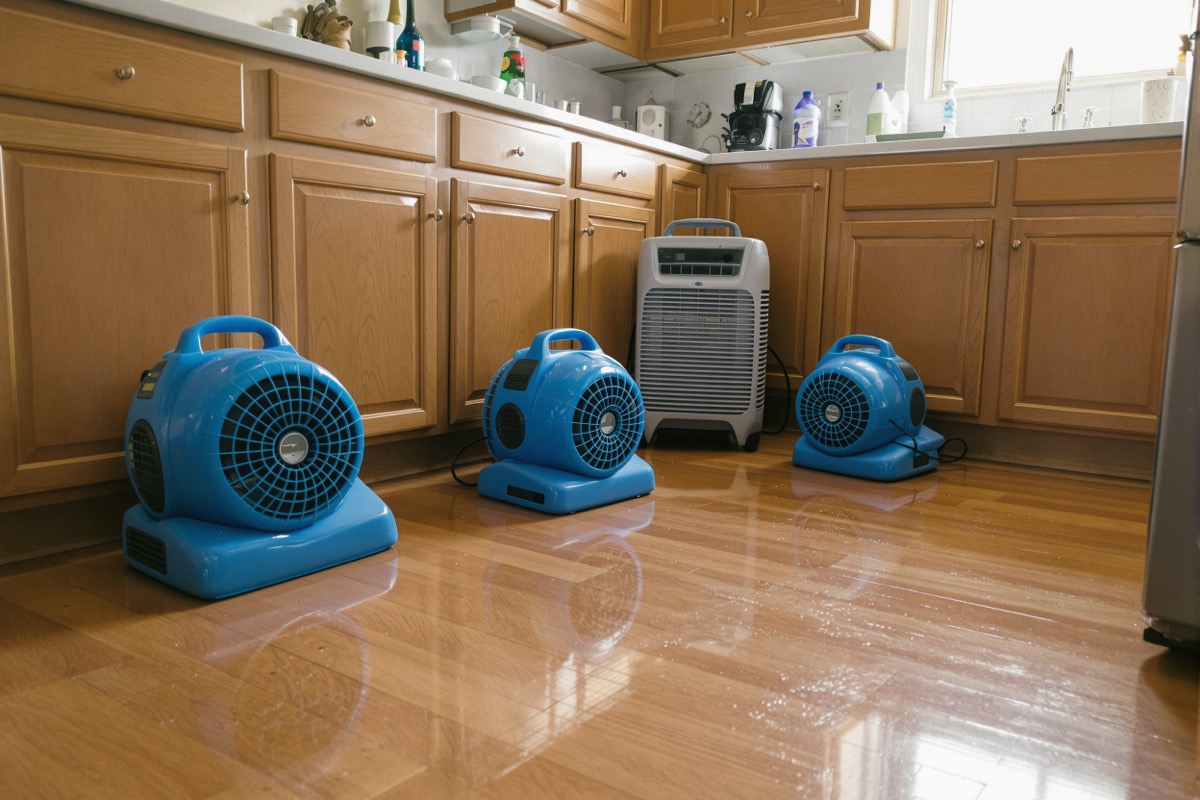
Drying these homes calls for patience. Plaster and old hardwood can crack or cup if dried too quickly. We set air movers and commercial dehumidifiers to work steadily, take readings every visit, and adjust as each material comes down.
Stone houses from the 1700s and 1800s
Ridgewood keeps a number of very old houses. The first home in the village went up in 1700, and the National Register list includes several Ackerman houses, among them one built around 1787 on Doremus Avenue and a stone house built around 1810 on Lincoln Avenue, along with the Westervelt-Cameron House from about 1767 on East Glen Avenue.
Historic stone buildings need a specific approach when they get wet. Stone walls are thick and absorb water slowly, then release it slowly. They were built to breathe. Sealing them in, or drying them with too much force, can cause more harm than the original leak.
On an older house of any kind, we focus on what can be saved. We dry wood framing, floors and finishes in place whenever the readings allow it. When material has to come out, we remove the smallest amount necessary and keep anything original that can be reused, like trim pieces and doors. And we talk through every decision with the owner first. On a historic property, careful Ridgewood water damage restoration means protecting the house as much as drying it.
Floral Park, The Lawns and the Old Country Club
Several more neighborhoods are known by their boundaries. Floral Park sits between Grove Street, South Pleasant, East Ridgewood Avenue and South Van Dien Street. The Lawns is a loosely defined area in the southern part of the village. The Old Country Club lies between Goffle Road, Rock Road, Lincoln Avenue and Godwin Avenue, near the Midland Park border.
We do not assume anything about a house from its neighborhood name alone. Two homes on the same block can have very different basements, plumbing and roof histories. What we do know is that every one of these areas mixes houses of different ages, and age changes the questions we ask. When was the water heater replaced? Is the basement finished? Has the sump pump ever run dry? Those answers shape Ridgewood water damage restoration far more than a map does.
Ice dams, frozen pipes and winter leaks
The hardiness zone listed for Ridgewood sits at 7a bordering on 6b, which means real winters with hard freezes. Two winter problems account for many of the cold-weather calls any North Jersey restoration crew handles.
The first is the ice dam. Heat escaping into the attic melts snow on the roof. That meltwater runs down to the cold eaves and refreezes, building a ridge of ice. More melt pools behind it and backs up under the shingles. The water drips into the attic, soaks the insulation and shows up as a stain on the top-floor ceiling or a damp spot high on an exterior wall.
The second is the frozen pipe. Supply lines in exterior walls, over garages and in crawlspaces are most at risk. A split pipe often leaks very little while frozen, then lets go when it thaws. If you come home to water pouring from a ceiling in January, shut the main valve first and call us second. Our Ridgewood water damage restoration crew will extract the water, trace how far it spread with thermal imaging and set up drying on every affected floor.
Clean water, gray water and black water
The kind of water in your house changes how we handle it. The restoration industry sorts water into three broad categories, and the category decides what can be dried and what must be removed.
Clean water comes from a supply line, a water heater or rain that came straight in. If we reach it quickly, carpet, drywall and wood can often be dried in place.
Gray water comes from a dishwasher, washing machine or toilet overflow without waste. It carries some contamination, so pad and some porous materials usually come out, and everything is cleaned before drying.
Black water means sewage or outside floodwater. It can carry bacteria and other harmful material. Porous items it touched, such as carpet, pad, insulation and the lower part of the drywall, must be removed. Hard surfaces are cleaned and disinfected, and the crew works in protective gear.
Clean water also turns worse with time. A clean leak that sits for a couple of days in a warm basement starts to grow bacteria and can become gray water. That is one more reason to call early. If the water has been sitting long enough to smell, our mold remediation process may be part of the plan, with containment, negative air, HEPA filtration and removal of affected material.
Downtown shops and offices
Ridgewood’s central business district, known locally as “Town,” centers on East Ridgewood Avenue and includes some of the village’s best-known buildings. Older commercial blocks often share walls, roofs and plumbing between storefronts. A leak in one unit can reach the next, and a roof drain problem can affect a whole row.
For businesses, every day closed is lost revenue. We work to keep as much of the space open as possible, set up containment around the work area, and plan noisy work around your hours when we can. We document everything so the property owner, the tenants and each adjuster can see what happened. Our commercial water damage page explains how we handle restaurants, retail and office space.
Ridgewood water damage restoration from first call to finished room
Every job moves through the same basic stages. Here is what Ridgewood water damage restoration looks like from start to finish.
The call
You tell us what you see: where the water is, what it might be coming from and whether it is still running. We help you find the shutoff and tell you what to move before the crew gets there.
Day one
The crew checks for electrical hazards, identifies the type of water and stops the source if it is still flowing. Submersible pumps handle deep water. Truck-mounted or portable extractors pull water out of carpet, pad and hard floors. Then we map the moisture with pin and pinless meters and a thermal imaging camera, photograph each reading, and remove whatever cannot be dried. Air movers and dehumidifiers go in before we leave.
The drying days
We come back to take readings and adjust the setup. Most clean water jobs dry in a few days. Dense materials, plaster and old hardwood take longer. The equipment stays until the readings say the structure is dry, and each visit goes into the drying log.
The rebuild
Once the structure is dry, our crew rebuilds what was removed: drywall, insulation, flooring, paint, trim and cabinets. You do not need to find a second contractor. Our remodeling page has more on this phase, and our main water damage restoration page goes deeper on drying.

The paperwork
Throughout the job, we keep photos, moisture readings and drying logs. Coverage depends on your policy and on the cause of the loss, and the adjuster makes that decision. We give you a complete record so the adjuster has the facts in hand when deciding.
Frequently asked questions about Ridgewood water damage
My house is near the Ho-Ho-Kus Brook. Why does the basement get wet after every big storm?
Homes on lower ground near a brook sit closer to the water table. After heavy rain, groundwater rises and pushes through floor cracks and wall joints. A working sump pump with a backup, good grading and extended downspouts all help.
We live on high ground in The View. Can we still get serious water damage?
Yes. Most water damage on high ground comes from inside the house: burst pipes, water heaters, washing machines and appliance lines. Wind-driven rain on exposed houses can also get behind siding and around windows.
Can you work on a historic stone house?
Yes. Stone walls absorb and release water slowly, so we dry at a careful pace and protect original materials whenever the readings allow.
What is the difference between clean water and sewage damage?
Clean water from a supply line can often be dried in place. Sewage and outside floodwater are contaminated, so porous materials they touched must be removed and hard surfaces cleaned and disinfected.
Do you work on businesses downtown?
Yes. We handle stores, restaurants and offices, and we work to limit downtime with containment and careful scheduling.
Do you cover the towns near Ridgewood?
We do. Read about water damage restoration in Wyckoff, Saddle River water damage cleanup and water damage help in Franklin Lakes, or see every town on our service areas page.
Call now, day or night
Water damage spreads by the hour. Call (973) 992-4400 and a real person will answer, whatever the time. We will walk you through the next few minutes and send a crew right away. Prompt Ridgewood water damage restoration saves more of your home, and it starts with one call. Learn more about DryMax anytime.