
A ceiling that starts to drip at dinner or a lower level that smells damp after a heavy rain can feel like the whole house is at risk. This page explains Short Hills water damage restoration the way we actually do it: how the local terrain and the age of the housing affect where water goes, what our crew does when we arrive, and how one company carries the job from the first pump-out to finished paint. Our technicians hold IICRC certification, the company has been locally owned since 2018, and someone picks up (973) 992-4400 at any hour of the year.
Short Hills sits inside Millburn Township in Essex County. It is a community with a long memory, and the houses reflect that. Some date back to the original planned village, many were added over the following century, and a lot of them have been expanded since. Each of those eras handles water a little differently, so we start every visit by reading the house before we start the machines.
Why the hills shape every leak in Short Hills
The name is literal. When the village was laid out, it was named for the rolling topography, and the Lenape used the same name for the area long before that. Hills are lovely to live on. They also send rainwater downhill toward whatever foundation sits lowest on the slope.
On a sloped lot, the uphill side of a house usually takes the pressure. Water soaks into the soil, finds the footing, and pushes through the joint where the wall meets the slab or through small cracks in older masonry. Homeowners often notice it first as a dark line along the base of a finished wall or a carpet that feels cool underfoot in one corner.
Surface water is scarce in Short Hills. Only a sliver of the area, about 0.29 percent, is open water. That means most problems here come from rain, groundwater and plumbing rather than a river rising over its banks. It also means a lot of basements rely on a sump pump to stay dry, and a pump that quits during a long storm can flood a lower level in a few hours.
If you are unsure how your street sits relative to mapped flood zones, you can enter your address on the FEMA flood map service. Even outside a mapped zone, runoff from higher ground can still find its way inside.
Good Short Hills water damage restoration starts with knowing which side of the house faces uphill. We look at grading, downspouts and the low corner of the lower level before placing a single air mover, because drying a wall that will get soaked again in the next storm wastes your time.
Older village houses and half-acre lots
Short Hills began as a planned community in the late 1800s. The founder bought land in Millburn, built a railroad station on the Morris and Essex line in 1879, and kept most plots that he did not own himself to half an acre or less. The first 17 houses went up before he turned to shared buildings for the village.
That history matters for drying. Many older houses here have plaster walls, stone or block foundations, and framing that has been opened and closed by several renovations. Water behaves unpredictably in those assemblies. It can travel along an old beam, skip a floor and appear two rooms away from the actual source.
Half-acre lots also put houses fairly close together, with driveways and patios covering a good share of the ground. Hard surfaces shed water fast. When a gutter overflows or a downspout empties against the house instead of away from it, the soil next to the foundation can become saturated quickly.
We approach these homes slowly at the start. Thermal imaging shows temperature differences that often line up with wet materials, and moisture meters, both pin-type and pinless, confirm what the camera suggests. Only after we have mapped the wet area do we sort out which materials can dry where they are and which have to be opened up.
Renovated older houses add one more wrinkle. A newer addition might sit on a poured foundation while the original section rests on stone, and water likes to travel along the seam between the two. Short Hills water damage restoration in a house like that means checking both sides of the seam, not just the room where the puddle showed up.
Cold winters, frozen lines and spring thaw
The area has a humid continental climate: hot, sticky summers and cool to cold winters. Both ends of that cycle cause trouble.
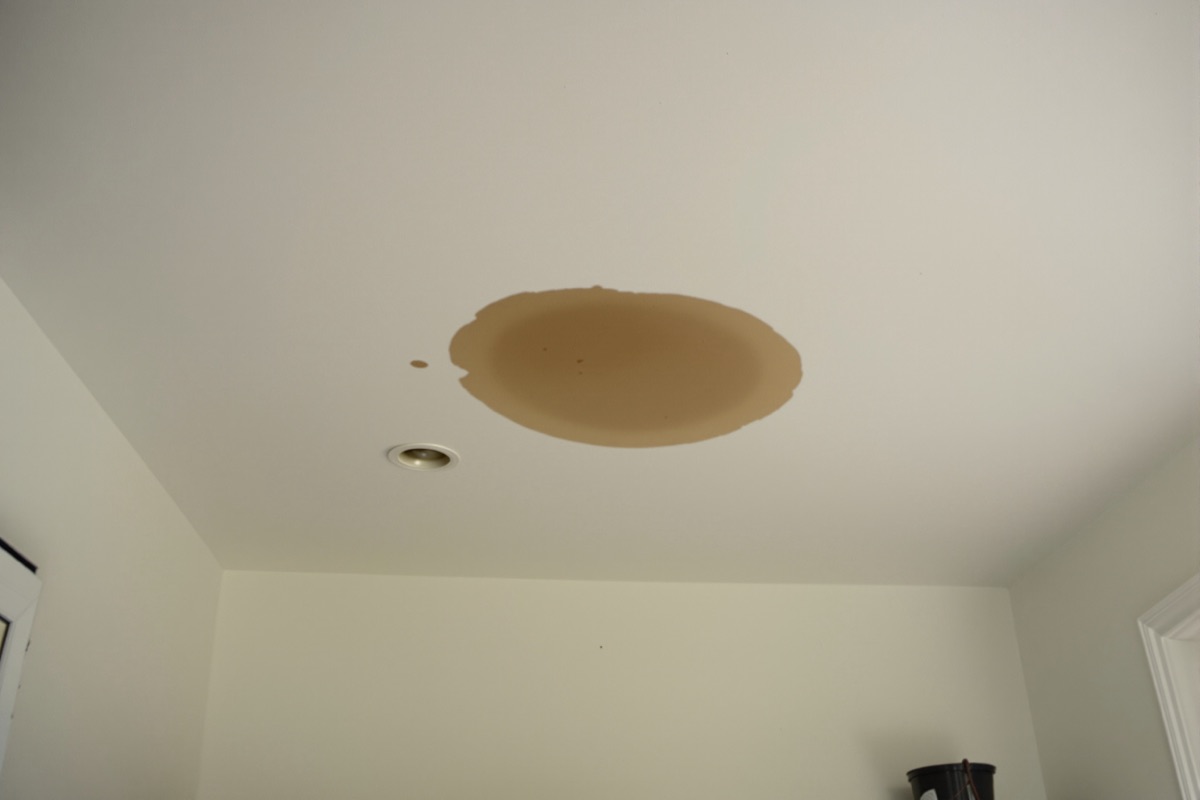
In January and February, pipes that run along an exterior wall, through an unheated garage, or out to a hose bib can freeze. The ice itself rarely does damage. The break shows up later, when the line thaws and pressurized water sprays into a wall cavity. Many homeowners find the leak days after the cold snap, once a stain spreads across a ceiling or water pools under a kitchen sink.
Ice dams are the other winter pattern. Snow melts on a warm roof, refreezes along the eaves, and the trapped melt backs up beneath the shingles. The water then seeps into the attic, wets the insulation and finally shows as a brown patch on the ceiling. Our crew handles drying and documentation for the attic and ceiling, and a roofer handles the roof.
Spring brings the opposite problem. Melting snow plus spring rain saturates the slopes, and the groundwater pushes on foundations for weeks. Summer humidity then keeps a damp basement from drying on its own, which is when musty smells and mold growth tend to appear.
A little preparation helps through every season. Find your main shutoff before you need it, keep heat on in rooms with plumbing when you travel, and listen for your sump pump cycling during long rains. If you hear it running nonstop or not at all, that is the moment to look downstairs.
Short Hills water damage restoration for upstairs leaks
Many homes here have grown over the years, with second-floor laundry rooms, several full bathrooms and primary suites stacked over finished living space. Convenient, yes. It also means a failed washer hose or a cracked toilet supply line can send water through two floors before anyone notices.
Upstairs leaks have a few common sources:
- Washing machine supply hoses that burst or slowly weep behind the machine.
- Toilet fill valves and supply lines that crack under pressure.
- Shower pans and tub surrounds where grout or caulk has failed.
- Water heaters and boilers installed in upper-floor closets or attics.
- Refrigerator ice-maker lines in second-floor kitchenettes or bars.
The visible damage is usually the ceiling below. The hidden damage is in the joist bays between floors, where insulation holds water like a sponge. Our crews remove only the ceiling sections needed to get air into those bays, then set air movers and dehumidifiers to pull the moisture out. Thermal images taken before and after help show that the cavity is dry, which matters when the ceiling gets closed back up.
The first step for you is simple: shut the water off at the main if you can find it, kill the breaker for wet rooms if you can reach it safely, and call. Your plumber handles the repair to the line itself. We handle everything the water touched.
Day one in your home
When you call (973) 992-4400, a real person answers, day or night. We ask what happened, where the water is, and whether the source has been stopped, and then a crew is dispatched to your door.
On site, the first job is getting standing water out. We use truck-mounted and portable extractors for carpet and hard floors and submersible pumps when a lower level has more than a few inches. Extraction removes far more water than air movers ever could, so this step shortens the whole job. Short Hills water damage restoration moves fastest when the extraction is thorough, since every gallon pulled out by hand-held wands is a gallon the dehumidifiers never have to deal with.
Next comes moisture mapping. We check every affected room with moisture meters and infrared imaging, mark the boundary of the wet materials, and photograph it. That map tells us where to place equipment and gives you and your adjuster a clear picture of the damage on day one.
Then we set up drying. Air movers sweep air over damp floors and walls, while commercial dehumidifiers capture the evaporated moisture so it cannot settle back into the house. In most homes, we check readings daily and move or remove equipment as each area reaches its dry goal. Our water damage restoration overview walks through the full process.
Protecting hardwood, plaster and custom millwork
Many Short Hills homes have finishes worth saving: wide-plank hardwood, original trim, built-in cabinetry, plaster ceilings. Tearing everything out is easy. Saving what can be saved takes patience and careful monitoring.
Hardwood is the most common question. When water gets under the boards, they cup as the bottom absorbs moisture faster than the top. If we reach the floor early, specialized drying can often pull moisture out from below and let the boards settle. If the wood has buckled or the subfloor is saturated for too long, replacement may be the honest answer, and we will tell you so.
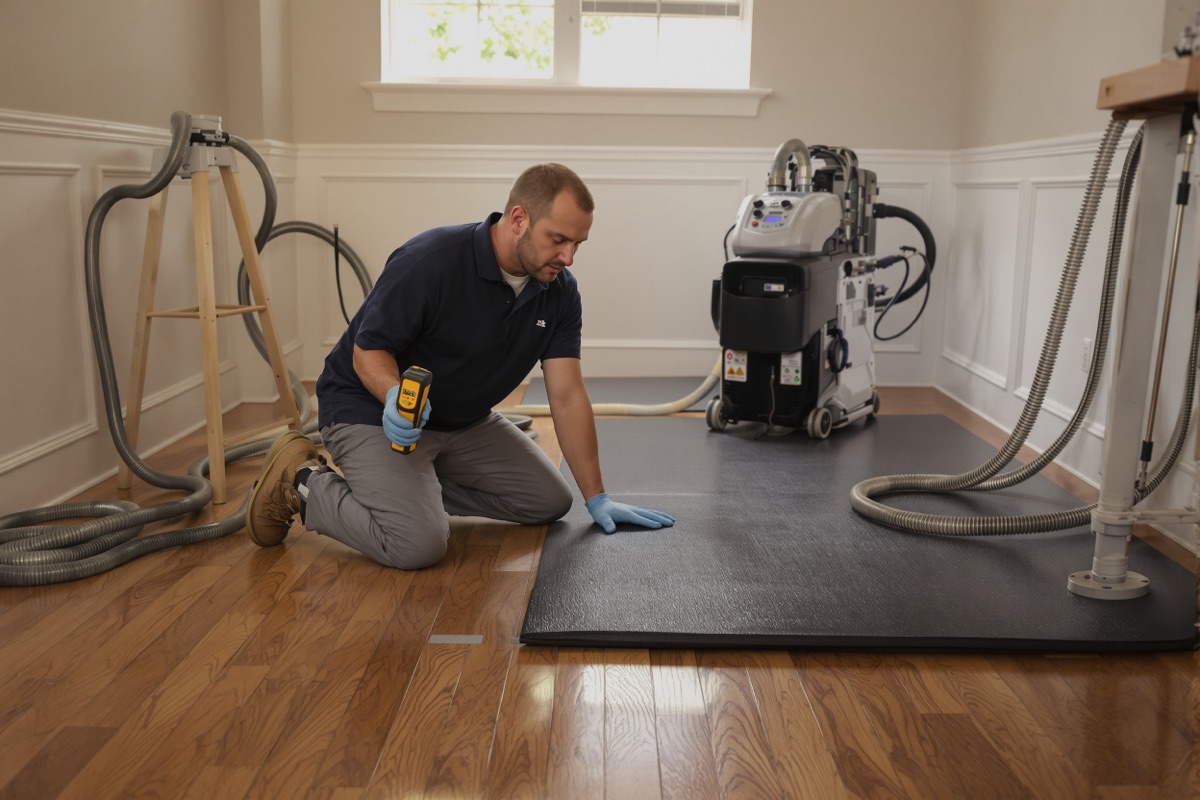
Plaster dries more slowly than drywall and does not wick the same way. We take readings at several heights and leave equipment in place longer when needed. Painted millwork and built-ins can trap moisture behind them, so we sometimes pull a baseboard or a toe-kick to get air in rather than removing an entire cabinet run.
Every decision about what stays and what goes is photographed and explained. You will never find a room gutted without a clear reason backed by readings.
Keeping mold out of the picture
Mold grows when three things line up: moisture, something to feed on, and time. Drywall paper, wood framing and carpet backing are all food. In a humid summer, wet materials left alone for a couple of days can start to grow.
Fast, thorough drying is the best prevention. When growth has already started, our mold remediation team builds a sealed plastic work zone, keeps it under negative pressure, and filters the air through HEPA scrubbers so spores stay put. Moldy drywall or trim gets cut out and bagged, the framing behind it is HEPA-vacuumed and wiped down, and then the space is dried thoroughly. Before any wall is closed, you get thermal images, meter numbers and pictures showing the cavity is dry.
The EPA has a plain-language guide to mold and moisture in the home that is worth reading if you have had a leak. Its main message matches ours: manage the moisture and mold has nothing to work with. In practice, drying and mold prevention are the same job done in the right order.
Putting the room back together
A lot of homeowners are surprised that the drying company can also handle the rebuild. We can. When the meters say the framing is dry, our carpenters and finishers take over: new insulation and wallboard, refinished or replaced floors, matching trim, cabinets where needed, and fresh paint, so the room looks like it did before.
Keeping one company on the job from start to finish avoids the gap that often happens when the drying crew leaves and you start calling contractors. We already know what was removed, where the moisture was, and what the adjuster has seen. The remodeling work picks up where the drying left off.

For finished basements and lower levels, that might mean new drywall, insulation and flooring. For an upstairs leak, it might be a ceiling, a vanity and some trim. Either way, you deal with one team and one point of contact.
Records your adjuster can use
Your policy and your insurer decide what is covered. We focus on handing the adjuster a complete, easy-to-read file.
From the first hour on site, we photograph the source and every damaged surface, log meter readings by room, and record how those numbers fall each day. We hand those records to you so you can share them with your adjuster. That paperwork is part of every Short Hills water damage restoration project, from a single wet closet to a fully flooded lower level.
Good records reduce back-and-forth. When the adjuster can see the starting moisture levels, the materials that had to come out and the daily progress, there are fewer questions about why the work was needed.
Short Hills water damage restoration beyond Millburn
Leaks and storms ignore township lines, and so do our crews. Our crews cover all of Essex County plus Morris, Bergen, Passaic and Hunterdon.
Close by, we handle water damage restoration in Livingston and water damage restoration in Maplewood. Over the county line in Morris, our crews also cover water damage restoration in Chatham. For the full list of towns, visit our service areas page.
If your property is a business, a medical office or a building with tenants, our commercial water damage team works around your schedule to keep the space open whenever conditions allow. You can read more about how we work on our about page.
Frequently asked questions about Short Hills water damage
My Short Hills basement only gets wet in heavy rain. Is that worth a call?
Yes. Water that comes in with every big storm is often hillside runoff or groundwater pushing on the foundation. Each event wets the same materials again, and repeated wetting is how mold gets started behind finished walls. We can dry what is wet now and show you with moisture readings where the water is entering.
A pipe froze and burst while we were away. What should I do first?
Close the main valve, flip the breaker for wet rooms if you can reach it from dry ground, and phone (973) 992-4400. A few phone pictures help. Our crew pulls up the water, marks how far it spread and gets drying started, while your plumber fixes the broken line.
Can you save the original hardwood floors in an older home?
Often, if we start early. Hardwood that is dried promptly with the right setup can settle back down. If the boards have buckled badly or the subfloor stayed wet too long, we will explain why replacement makes more sense and document the reasons.
Do you work with plaster walls?
Yes. Plaster gives up water slowly, so it gets extra monitoring. We meter it high and low and leave the dehumidifiers on until it matches dry reference readings, no matter how dry the surface feels to the touch.
Does my insurance cover water damage?
Your insurer makes that call based on the wording of your policy. Our part is the evidence: a dated photo set, meter readings room by room, and a log of each drying day, all handed to you for the adjuster.
Who handles repairs once everything is dry?
Yes. Ceilings, walls, floors, cabinetry and finish painting are all in-house, so the people who dried your home can finish it.
Call us now
If water is coming in or has already done damage in your Short Hills home, do not wait for it to dry on its own. Pick up the phone and dial (973) 992-4400. A real person answers on nights, weekends and holidays too, and help heads to Short Hills right away.