
Wayne is a township shaped by water. Lakes anchor whole neighborhoods, the Passaic River runs along part of town, and more than five percent of its twenty-five square miles is water. When that water ends up inside your house or business, Wayne water damage restoration from DryMax gets it out, dries the building properly, handles any mold and rebuilds the damaged rooms. Our crew is IICRC certified, and we answer (973) 992-4400 around the clock, every day of the year.
Wayne water damage restoration when the Passaic River rises
Locals know it well: the Passaic River flows through a portion of Wayne and often floods near Willowbrook Mall and riverside neighborhoods. For people who live or work near the river, high water is a real and recurring risk, and it tends to arrive after the same kinds of long, heavy rain events that also overload sump pumps across the rest of town.
River flooding is different from a pipe leak. The water comes from outside, it carries soil, debris and whatever it picked up along the way, and it can sit in a building for hours or days before it drains. That makes it contaminated water. Carpet, pad, insulation and the lower part of the drywall it touched generally come out, and hard surfaces have to be cleaned before anything is dried.
The FEMA flood map service shows mapped flood zones by address, which is a good starting point if you are not sure where your property stands. The Ready.gov flood guide covers how to prepare and how to stay safe while water is still high. Never walk or drive through floodwater, and wait for officials to say it is safe before going back into a flooded building.
Once it is safe, call us. Wayne water damage restoration after a river flood is a bigger job than most leaks, and getting the crew and equipment in early makes a real difference in how much of the structure can be saved.

After the water goes down: a step-by-step plan
Flood cleanups follow a clear order. Skipping steps or doing them out of sequence is how mold and lingering odors get started. Here is how we handle it.
- Make it safe. We check for electrical hazards, structural damage and anything that makes the building unsafe to enter. Power to flooded areas stays off until it is checked.
- Record the damage. Photos of every room and moisture readings across walls, floors and the slab, before anything is moved.
- Pump and extract. Submersible pumps remove deep water. Extraction wands, truck-mounted and portable, lift water out of the flooring and off the slab.
- Remove what cannot be saved. Contaminated carpet, pad, insulation and porous materials come out. Drywall gets a flood cut above the water line.
- Clean. Hard surfaces, framing and the slab are cleaned to remove silt and contamination.
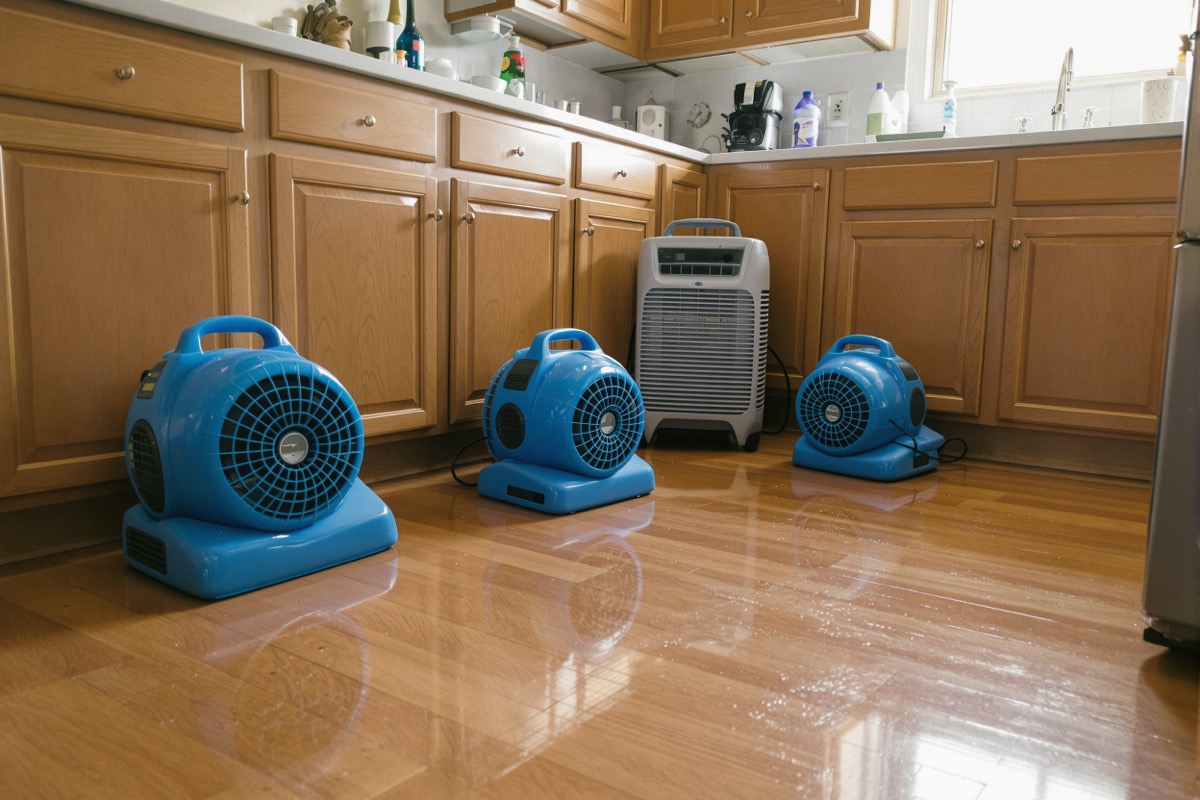
- Dry. Air movers and commercial dehumidifiers are set up throughout the space. We check readings daily and adjust.
- Confirm dry. Once each material matches the numbers from an unaffected area, the dry-out is finished and logged.
- Rebuild. Our crews replace what was removed and finish the rooms.
The timeline depends on how deep the water was and how long it sat. A flooded lower level in a house usually takes several days of drying after the cleanup. Commercial spaces vary more. We give you an honest estimate of the schedule at the start and update it as the readings come in.
What you can do while you wait: photograph your belongings, make a list of damaged items, call your insurance company to open a claim and keep receipts for anything you buy because of the flood. Throw out food and medicine that touched floodwater.
Living around Packanack, Pines and the other lakes
Wayne has a number of lakes with their own communities around them. Among them are Packanack Lake, Pines Lake, Lions Head Lake, Tom’s Lake and Pompton Lake, half of which sits in Wayne. Lake neighborhoods are some of the most loved parts of town, and they come with their own water issues.
Homes near a lake often sit on lower ground with a high water table. Basements and crawl spaces in those homes may stay damp much of the year, and long rains can bring groundwater in through the floor and walls. Lots that slope toward the water also send roof and yard runoff past the house, sometimes right along the foundation.
Humidity is the quieter problem. Air near water tends to be moist, especially in summer. In a basement or crawl space without good dehumidification, that moisture condenses on cool surfaces like foundation walls, pipes and ductwork. Over time it can lead to musty smells, rot in wood near the floor and mold on stored items.
A few steps help lake-area homes. Run a dehumidifier in the basement through the humid months and empty or drain it regularly. Keep stored items up off the floor and away from outside walls. Make sure sump pumps are working and discharge well away from the house. And watch for damp spots, white mineral streaks on walls or a smell that does not go away.
Wayne water damage restoration in a lake home usually means more than one round of drying. We dry the event that caused the call, then talk with you about the everyday moisture that will keep coming back if nothing changes. That might be a better dehumidifier, a vapor barrier in the crawl space or regrading that sends water away from the house.
Summer bungalows that became year-round homes
Part of Wayne’s history explains its houses. In the early 1900s, New Yorkers came by train to spend summers in bungalows along the area’s lakes. During World War II, many of those summer bungalows were converted to year-round homes for people moving here to work in war-related industries.
A building designed for summer use and later adapted for winter can have weak points. Plumbing may run through spaces that were never meant to be heated, like crawl spaces, enclosed porches or exterior walls with little insulation. Foundations may be shallow piers or low block walls. Additions over the decades often tie new construction to old in ways that leave seams where water can get in.
Frozen pipes are the classic winter call in homes like these. A cold snap freezes a line in a crawl space or outside wall, the pipe splits, and when it thaws, water pours into the floor system or wall cavity. If a faucet stops running on a frigid morning, shut off the main valve and call us before the line thaws.
Crawl spaces in older lake homes deserve a regular look. Standing water, wet insulation hanging from the floor above, or wood that looks dark and stained are all signs of a moisture problem that will keep getting worse.
Postwar neighborhoods and aging plumbing
After World War II, Wayne suburbanized as farmland was turned into housing developments, and Interstate 80 was later built through the southern part of the township. Named sections like Preakness, Lower Preakness, Mountain View, Point View, Pompton Falls and Two Bridges all hold homes from many different decades.
Many houses from the postwar decades are now old enough to have original or second-generation plumbing that is near the end of its life. Water heaters, washing machine hoses, dishwasher lines, toilet supply lines and the shutoff valves under sinks are the parts that fail most often. A burst washing machine hose can release a lot of water in a short time, and if the laundry is on an upper floor, it comes down through the ceilings below.
Finished basements are common in these neighborhoods too, and they are where most of the damage from a sump pump failure ends up. Carpet, pad, drywall and insulation all soak up water. We use thermal imaging cameras and moisture meters to find how far the water traveled, remove what cannot be dried, and set up drying for the rest.
Wayne water damage restoration in a finished basement often comes down to speed. Clean water from a supply line can turn into a bigger problem if it sits for a few days, so the sooner drying starts, the more of the room can be saved.
Water heaters, laundry rooms and the leaks you can stop
Not every call is a flood. Most of the water damage in any big township comes from inside the house: a water heater tank that rusts through, a washer hose that bursts, a refrigerator water line that splits or a toilet supply that lets go while everyone is at work.
These leaks are clean water at the start, which is good news. Caught quickly, much of the drywall, flooring and cabinetry can be dried in place. The trouble is time. Water that runs for hours spreads under flooring, into wall cavities and down through ceilings, and after a day or two it can start feeding mold.
A few cheap habits cut the risk. Swap rubber washer hoses for braided steel ones. Look at the base of the water heater a couple of times a year for rust or drips. Teach everyone at home where the main valve is. Leak sensors near the heater, washer and dishwasher can warn you on your phone before the water reaches the next room.
When one of these leaks does happen, Wayne water damage restoration works the same careful way we work every job. A thermal scan and meter checks outline the wet area, pull out what cannot be dried, set up air movers and dehumidifiers, and track the readings every day until the structure is dry.
Stores, offices and the commercial side of town
Wayne is a regional commercial hub of North Jersey, home to Willowbrook Mall, Wayne Towne Center and William Paterson University. That means many stores, offices, restaurants and other commercial spaces, and a lot of potential for water damage beyond homes.
Commercial losses come from sprinkler line breaks, roof drains that back up into ceilings, restroom and kitchen leaks, and, near the river, flooding. Each one puts a business at risk of lost days. Our commercial water damage service runs overnight shifts or phased schedules, contain the work area and keep the rest of the space open where it is safe to do so.
We document commercial jobs the same way we document homes: photos, moisture readings and drying logs for every area. Property managers, tenants and adjusters all work from the same record, which keeps everyone on the same page about what happened and what was done. Commercial Wayne water damage restoration also means planning around customers, deliveries and security, so we work out access and timing with you before the equipment goes in.
Mold after a flood
Mold growth can start within a day or two on wet materials, and floods leave a lot of wet materials. That is the biggest reason to start drying fast. With mold remediation, the moldy zone is walled off in plastic and kept under negative air while HEPA scrubbers clean the air. Growth-covered materials are cut away, the framing is HEPA vacuumed and wiped, and the space is dried until the meters agree.
Proof the job is done comes from moisture readings, photos and thermal images that you keep. In lake homes and basements with a long history of dampness, we also look for the moisture source so the mold does not come back once the room is rebuilt.
Wayne water damage restoration and the rebuild
When the drying is finished, the room still has open walls, missing flooring and bare framing. Our remodeling crews close it back up with new board and insulation, then flooring, cabinets, trim and a fresh coat of paint. Because we handle both halves, the people rebuilding already know exactly what was wet and what was replaced.
Insurance questions are part of nearly every job. What gets paid is set by your policy and decided by the adjuster. Our file of pictures, readings and drying notes gives the adjuster an accurate account to work from. If river water was involved, ask your agent early how your policies treat flood damage, since that answer comes from the policy and not from us.
For flood-prone areas, the rebuild is also a chance to make the next event less damaging. Some owners choose materials that handle water better in lower levels or raise key items off the floor. We can talk through options as we plan the work.

Other towns nearby
Wayne borders many communities, and we work across all of them. We also offer water damage restoration in Fairfield, leak and flood cleanup in Franklin Lakes and Kinnelon flooded basement help. Our service areas page lists every town we cover.
Frequently asked questions about water damage in Wayne
Our Wayne home is near the Passaic River and flooded. When can you start?
As soon as it is safe to enter. Call us while the water is still going down so we can be ready, and we start with safety checks and documentation before cleanup.
We live by Packanack Lake and the basement always feels damp. Is that a problem?
It can be. Lake-area homes often have high humidity and groundwater. Persistent dampness can lead to rot and mold. A moisture check shows whether materials are wet, and running a dehumidifier helps a lot.
Our house started as a summer bungalow. Why do our pipes keep freezing?
Converted bungalows often have plumbing in spaces that were never meant to be heated. Insulating those lines, sealing drafts and keeping heat steady in cold weather all help. If a pipe bursts, shut the main valve and call us.
Is river floodwater treated differently than a pipe leak?
Yes. Floodwater from outside is contaminated, so porous materials it touched are removed and surfaces are cleaned before drying. A supply-line leak is cleaner, and fast drying usually means less needs tearing out.
Can you handle water damage in a store or office?
Yes. We work in commercial spaces, often after hours or in phases, and document every area for property managers and adjusters.
Does homeowners insurance cover a flood?
That depends on your policies, and only your agent or adjuster can answer it. Ask them how flood water is treated under what you carry. We document everything so your adjuster has the full picture to decide.
One call starts the work
Water in the house or the shop? Stay safe, shut off the source if you can, and call (973) 992-4400. Our phones are live every hour of every day, holidays too, and a crew starts loading the truck as soon as we know the address. DryMax is a locally owned company, working since 2018 in Wayne, across Passaic County and in the neighboring North Jersey counties. Read more about our company.