
West Orange sits on the slopes of the Watchung Mountains, and that one fact explains most of the water calls we get from the township. Rain that lands on the ridges has to go somewhere on its way down, and a lot of it ends up pressing against foundation walls in the neighborhoods below. DryMax handles West Orange water damage restoration around the clock for homeowners and building owners across the township, from the low basin downtown to the houses along the face of the Second Mountain.
We are a locally owned, IICRC certified crew that has worked across Essex, Morris, Bergen, Passaic and Hunterdon counties since 2018. Our phone is answered every hour of every day, including holidays. When you call, a real person picks up, asks what happened, and we send a crew as soon as you call.
West Orange water damage restoration on a mountain town
The township covers about twelve square miles, and it breaks into four distinct neighborhoods that roughly follow the lay of the land. That matters to us because the cause of a wet basement on Main Street is rarely the same as the cause of a soaked ceiling in a house up on the ridge. Elevation, age of the house and the kind of foundation it sits on all change how water gets in and how we pull it out.
Down low, groundwater and runoff from uphill streets tend to be the problem. Up high, the issues are more often inside the house: a supply line under a vanity, a cracked toilet tank, an ice dam that backs meltwater under the shingles and into an attic. On the slopes in between, hillside drainage can push water sideways through a block wall even when the yard looks dry.
Our job on any of those calls is the same in principle. Stop the water, get it out, measure how far it traveled, dry the structure to normal readings, and then rebuild what had to come out. How we get there changes from street to street, and the sections below walk through what we tend to see in each part of town.
Good West Orange water damage restoration starts with that local picture. A crew that knows whether a house sits in the basin, on the slope or near the reservation can guess the likely source before the first meter reading, which saves time and saves walls that would otherwise be opened on a hunch.
Downtown and the Valley: the low basin
Downtown West Orange is the oldest and most densely built part of the township. It lies in a low basin along the eastern border with Orange and Montclair. Water runs downhill, and in a basin it collects. During a heavy storm, the streets and lots that drain toward this area can send far more water past a foundation than the gutters on any one house ever would.
Older masonry foundations are common in older sections of most North Jersey towns, and many of the houses near Main Street date to a time when basements were built for coal and storage, with no thought of carpet or drywall. When those spaces are later finished, the walls hide the moisture that used to simply evaporate. We see efflorescence, peeling paint and soft drywall at the bottom few inches of the wall long before anyone notices a puddle.
The Valley, once home to dozens of hat factories in the late 1800s, is now being redeveloped as an arts district. Converted industrial buildings bring their own water problems: long runs of old pipe, roof drains that pass through interior walls, and tenants on several floors who all feel it when one line fails. Our commercial water damage team works with owners and managers to keep tenants informed while the drying runs.
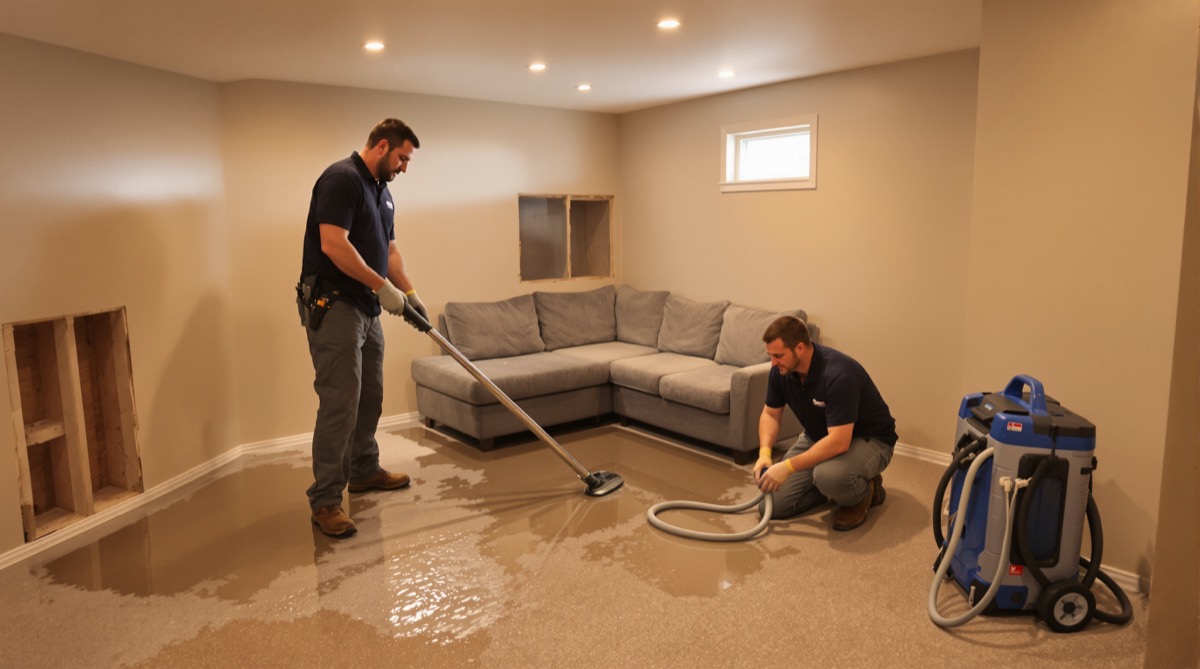
For downtown basements, we usually start with a submersible pump if there is standing water, then switch to truck-mounted or portable extractors to pull water out of carpet and pad. After that, the moisture meter tells us how high the water wicked up the drywall, and we cut only as high as the readings require.
The First Mountain and its older houses
West of downtown, the streets climb steeply up the First Watchung Mountain along Northfield, Mount Pleasant and Eagle Rock avenues. Housing in Hutton Park and Gregory is a mix of Victorian, Jazz Age and Tudor-style houses, large estates, garden apartments and post-World War II homes. Llewellyn Park, one of the first planned residential communities in the country, sits on this mountain too.
Big older houses on a slope bring two patterns we watch for. The first is the uphill wall of the basement. Water moving down the hill through the soil hits that wall first, and if the drainage around the footing has failed, it seeps through mortar joints and around old pipe penetrations. The second pattern is height. A house with three floors and plaster walls can carry a leak a long way before it shows. A slow drip from a third-floor bathroom may travel along a joist and appear as a stain in a first-floor dining room.
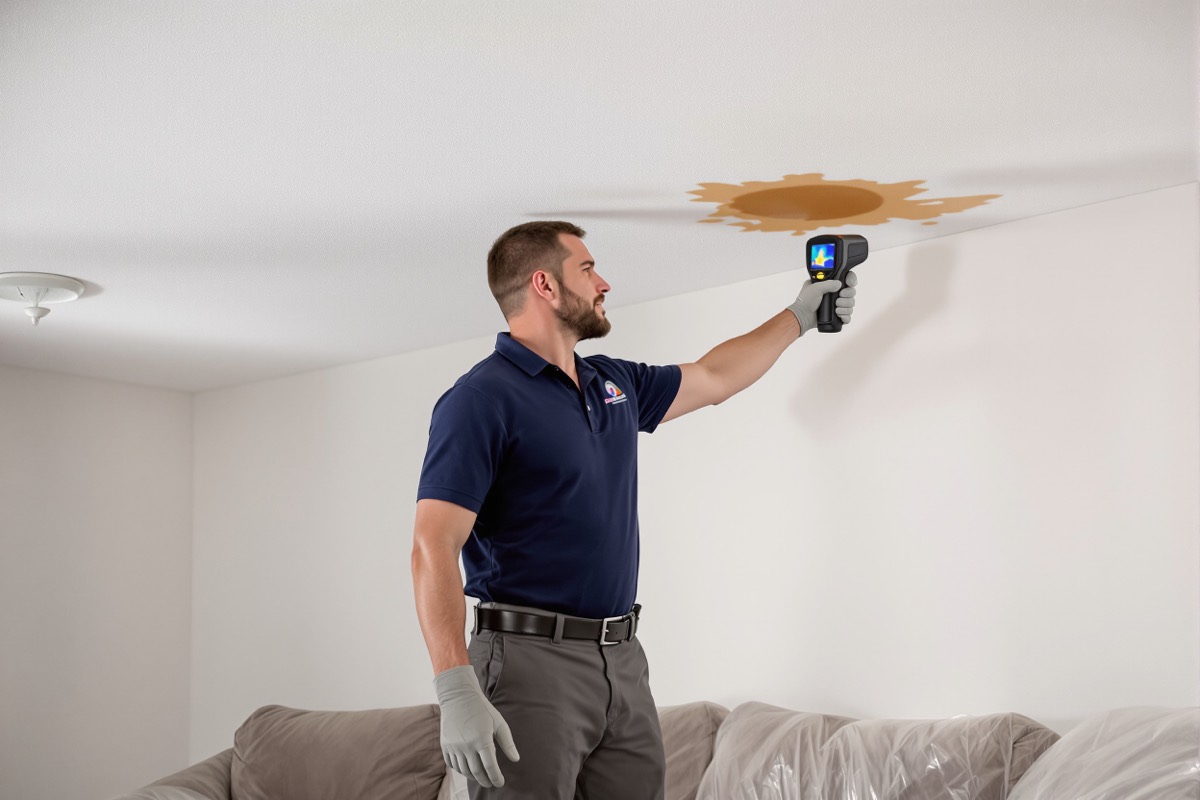
Plaster and lath dry differently from modern drywall. Plaster holds water longer, and it can crack or let go of the lath if it is dried too aggressively. We use pinless meters to scan large areas without marking finished walls, and a thermal imaging camera to find the cool, wet pattern behind the surface. Then we set air movers and commercial dehumidifiers at a pace the material can handle.
Garden apartment buildings on the First Mountain present a different problem. One failed water heater or washing machine hose on an upper floor can reach the units below in minutes. In those buildings, speed and clear documentation for every affected unit are the priorities.
Pleasantdale and the postwar neighborhoods
Beyond the high ridge traced by Prospect Avenue, the township turns into a patchwork of post-World War II suburban neighborhoods with pockets of older Victorian homes. The postwar building boom and the 1970 opening of Interstate 280 brought a lot of families here, and many of the houses from that era have since gained finished basements, family rooms and second-floor laundry.
Postwar houses tend to have poured or block foundations, sump pits and copper supply lines that are now decades old. The most common calls we take from this part of town involve sump pumps that quit during a storm, water heaters that reach the end of their life, and washing machine hoses that burst while nobody is home. None of those are dramatic until you walk downstairs and find an inch of water across a finished floor.
If your sump pump stops, take a minute to check whether the breaker tripped or the float is stuck before the water rises further. If it still will not run, call us. We bring submersible pumps to take over while the pit is wet and the basement is being dried. For more on what we do in a flooded lower level, our main water damage restoration page explains each step.
The Second Mountain, Crystal Lake and the Rahway
The westernmost section of West Orange runs along the eastern face of the Second Watchung Mountain and includes large parts of South Mountain Reservation. The West Branch of the Rahway River starts at Crystal Lake and passes through the township in the reservation, and the Canoe Brook headwaters sit atop the second ridge.
Homes near wooded parkland and stream headwaters deal with damp soil, leaf-clogged gutters and downspouts that empty too close to the foundation. A wooded lot also means shade, and shaded north walls stay wet longer after a storm. Over a few seasons that dampness can find its way into a basement or crawlspace and settle in as a musty smell that never quite goes away.
Housing in this section looks a lot like Pleasantdale and the neighboring townships. If you live near the border, you may also find our pages on water damage restoration in Livingston and water damage cleanup for Verona homes useful, since the houses and the drainage patterns are similar on both sides of the line.
What the first visit looks like
When the crew arrives, the first questions are about safety. Is the power off to any wet area? Is the water clean, like a supply line, or could it be contaminated, like a sewer backup or floodwater from outside? The answer changes the protective gear we wear and what can be saved.
Next comes the source. If it is a pipe, we help you find the shutoff. If it is groundwater or a failed sump, we get a pump running. Then extraction starts, because removing liquid water is far faster than evaporating it later. We pull water from carpet, pad, tile and hardwood with extractors sized for the job.
Once the standing water is gone, we map the moisture. Pin and pinless meters, plus a thermal camera, tell us where the water went inside walls, under cabinets and beneath flooring. That map becomes the drying plan. We set air movers to move air across wet surfaces and commercial dehumidifiers to pull that moisture out of the room.
We return to take readings until every material is back in its normal range. Some jobs dry in a few days. Dense materials, like plaster or old hardwood, take longer. We do not pull equipment until the numbers say the structure is dry.
- Stop the source and make the area safe
- Extract standing water from floors and carpet
- Map hidden moisture with meters and thermal imaging
- Remove only the materials that cannot be dried
- Dry with air movers and dehumidifiers, checking readings daily
- Rebuild the room when the structure is confirmed dry
Mold in a hillside house
Mold needs moisture, a food source and time. A basement wall that stays damp because of hillside seepage gives it all three. So does a slow leak inside a wall that nobody found for a month. The EPA guide to mold and moisture makes the same point we make to homeowners: the key to mold control is moisture control.
When mold is part of the job, we set up plastic containment so spores stay in the work area, run a negative air machine to keep air flowing out of the space, and filter it through HEPA. Affected drywall, insulation and other porous materials come out. Framing and other solid surfaces are HEPA-vacuumed and cleaned, then dried.
We prove the result with moisture readings, photos and thermal images that show the area is dry and clean. Our mold remediation page covers the process in more depth, including what we do in attics where poor ventilation causes the same kind of growth on roof sheathing.

Putting rooms back together
A lot of restoration companies stop when the fans leave. We keep going. Our crew handles the rebuild too: drywall, insulation, flooring, paint, trim and cabinets. One company from the first phone call to the finished room means you are not chasing a second contractor while your basement sits open. For most families, that is the part of West Orange water damage restoration that makes the biggest difference to how fast life gets back to normal.
In older West Orange houses, matching what was there matters. A Tudor living room with original trim or a Victorian hallway with tall baseboards deserves more than builder-grade replacements. We talk through finishes with you before work starts. For a finished basement, it is also a chance to make the space hold up better next time, with materials that tolerate moisture closer to the floor. See our remodeling page for the kind of rebuild work we do.
West Orange water damage restoration paperwork for your adjuster
Whether a loss is covered depends on your policy and on what caused the water. We do not make that call and neither should anyone selling you a service. What we do is document everything so your adjuster has what they need to decide.
Every job gets photos before, during and after the work, moisture readings for each affected area and a daily drying log. Those records show where the water went, what had to be removed and how long the drying took. You can hand the whole set to your adjuster.
A few tips while you wait for the crew: take your own photos of the water before anything is moved, keep damaged items until the adjuster says you can discard them, and write down when you first noticed the problem. If floodwater came in from outside, FEMA’s flood map service shows the mapped flood zones for your address.
Frequently asked questions about West Orange water damage
My house is up on the First Mountain. Why is my basement wet if I am not in a low area?
On a slope, water moves through the soil from uphill, and the uphill basement wall takes the pressure. Failed footing drains, clogged gutters and downspouts that empty near the house can all push water through mortar joints even on high ground.
Can you dry plaster walls in an older home without tearing them out?
Often, yes. Plaster holds water longer than drywall, so the drying runs at a slower pace with careful monitoring. If the plaster has let go of the lath or the water was contaminated, some removal may be needed, and we will show you the readings that support that.
Do you work in apartment buildings and converted buildings in the Valley?
Yes. We handle multi-unit buildings and commercial spaces, including converted industrial buildings. We document each affected unit separately so owners, tenants and adjusters can see exactly what happened in each space.
My sump pump stopped during a storm. What should I do first?
Check the breaker and see if the float is stuck. Keep everyone away from water near outlets or appliances. If the pump still will not run, call us and we will bring submersible pumps to take over while we dry the basement.
Do you also handle the rebuild after the drying?
Yes. We replace drywall, insulation, flooring, paint, trim and cabinets, so one crew takes the job from the first call to a finished room.
Do you serve the towns around West Orange?
We do. Along with West Orange, we cover all of Essex County and parts of four more counties. Homeowners nearby can read about water damage help in South Orange or browse our full list of service areas.
Call us tonight or any hour
Water keeps moving until someone stops it. If you are dealing with a flooded basement, a burst pipe or a leak you cannot find, call DryMax at (973) 992-4400. We answer 24/7, every day of the year, and we will talk you through what to do while the crew is on its way. Fast, careful West Orange water damage restoration begins with that one call. You can also read about our company before you call.