
South Orange is a village of gaslit streets and houses that span well over a century of building. It also has a river running straight through it. When water gets into one of these homes, the fix has to respect both the age of the house and the way water moves through the village. That is what South Orange water damage restoration from DryMax is built around: fast extraction, careful drying and a full rebuild, all from one crew.
We are IICRC certified and have been locally owned since 2018. Call at midnight on a holiday and a person still answers. We get a crew on the road right after we hang up.
The Rahway River runs the length of the village
The East Branch of the Rahway River starts in West Orange and flows through the entire length of South Orange. Most of the time it is a trickle. After heavy rain, the flow can get strong. In the past, the river would sometimes overflow and flood low-lying parts of town, a problem the U.S. Army Corps of Engineers addressed with flood control projects in the mid-1970s.
Those projects changed how the river behaves, and the village is far less exposed than it once was. Still, homes on the lower ground near the river corridor sit closer to the water table, and saturated soil does not need a river overflow to push water through a foundation. A long, heavy rain is enough.
There is also Stone House Brook, which runs west along the north side of South Orange Avenue past the historic Stone House before joining the Rahway. Small brooks like this one are easy to forget until a storm fills them. Properties nearby can see groundwater rise quickly after a downpour.
If you want to know whether your address falls inside a mapped flood zone, the FEMA flood map service lets you search by street address. It is worth checking before you finish a basement or store anything valuable below grade.
From the South Mountain slope to the valley floor
The western part of the village sits on the eastern slope of South Mountain and levels into a small valley near the central business district. At the top of the slope, the village edge runs along South Mountain Reservation. The high ground west of Wyoming Avenue was the only large area still undeveloped by 1930.
That slope shapes basement water in two ways. Houses on the hillside face runoff and subsurface water moving downhill toward their uphill walls. Houses at the bottom receive whatever the slope sends their way, on top of their own rain. Neither position is automatically worse, but each points us toward a different likely cause when we arrive.
On the hillside, we look first at the uphill foundation wall, window wells, and the grading and drains on that side of the house. In the valley, we look at the floor slab, the sump, and whether water is entering from more than one direction. That early read saves time and keeps us from opening walls that are actually dry.
If you live near the western edge, our page on water damage restoration in West Orange covers the same mountain from the other side.
Every style of house, and how each one gets wet
Village architecture is extremely varied. Most homes are single-family wood-framed houses, ranging from brick English cottages to giant Mansard-roofed mansions, with Tudor, Victorian, Colonial, Ranch and Modern houses mixed in. The Montrose neighborhood was built up with large houses on generous lots between 1870 and 1900. In the 1920s, large houses went up around the Orange Lawn Tennis Club, while more modest foursquare houses were built south of South Orange Avenue.
Each type of house tends to show its own weak points. The table below is a general guide based on how these styles are usually built, and any one house can differ.
| House type | Where water often shows up |
|---|---|
| Victorian and Mansard-roofed | Complex rooflines and box gutters, old supply lines inside plaster walls, ceilings below third-floor baths |
| Tudor and English cottage | Masonry walls that hold moisture, valleys and dormers on steep roofs, older basements with stone or block foundations |
| 1920s foursquare | Original cellar walls, kitchens and baths stacked over each other, radiator and pipe leaks |
| Colonial and Ranch | Finished basements, washing machines and water heaters, sump pump failures |
| Condos and townhouses | Leaks that cross from one unit into another through shared walls and ceilings |
Knowing the style does not replace measuring. But it tells us where to point the meter first, and in an old house that can mean the difference between one small opening in a wall and five.
South Orange water damage restoration when a pipe fails upstairs
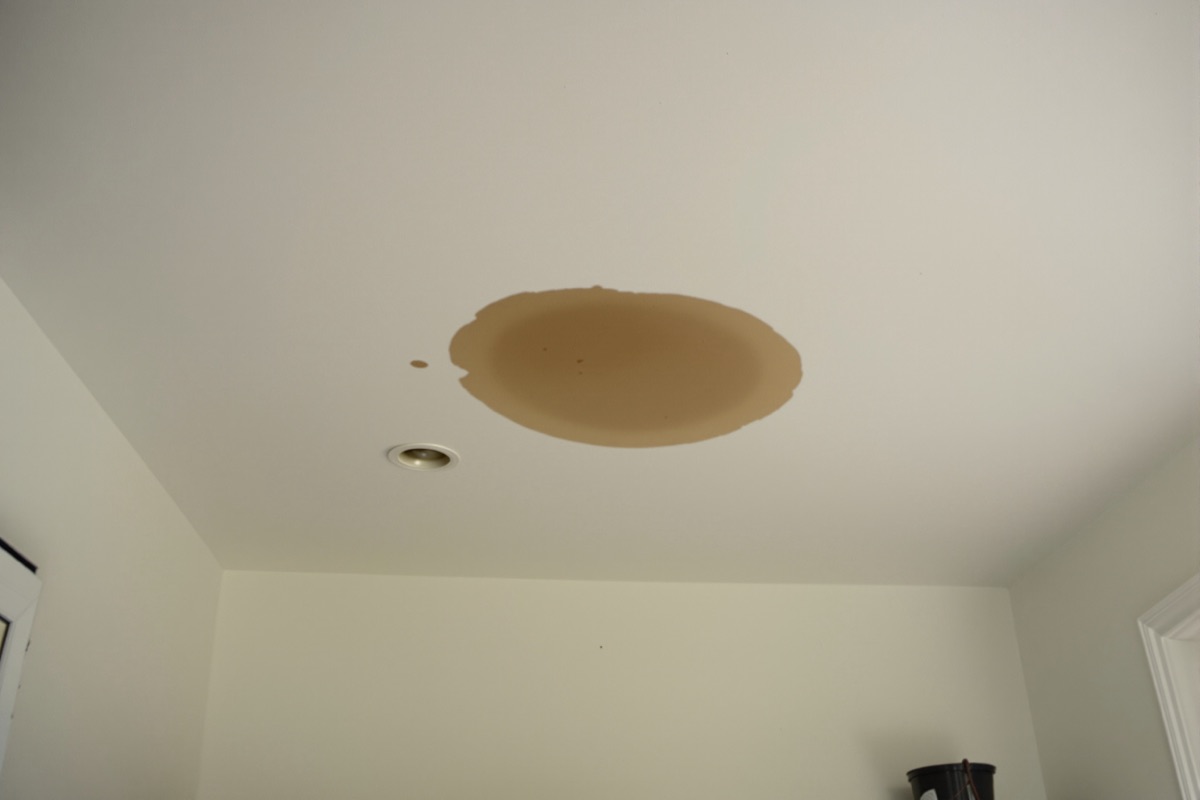
Large old houses often have bathrooms on the second and third floors, sometimes added decades after the house was built. Supply lines, shutoff valves and drain connections from those remodels age at different rates. When one fails, water follows gravity through flooring, subfloor and plaster ceilings, and it can turn up two floors down.
The first priority is shutting off the water. If you cannot find the valve under the fixture, shut the main. Then move anything you can away from the wet ceiling below. A plaster ceiling that is sagging or bulging should be treated as dangerous, because it can come down without much warning. Keep people out of that room.
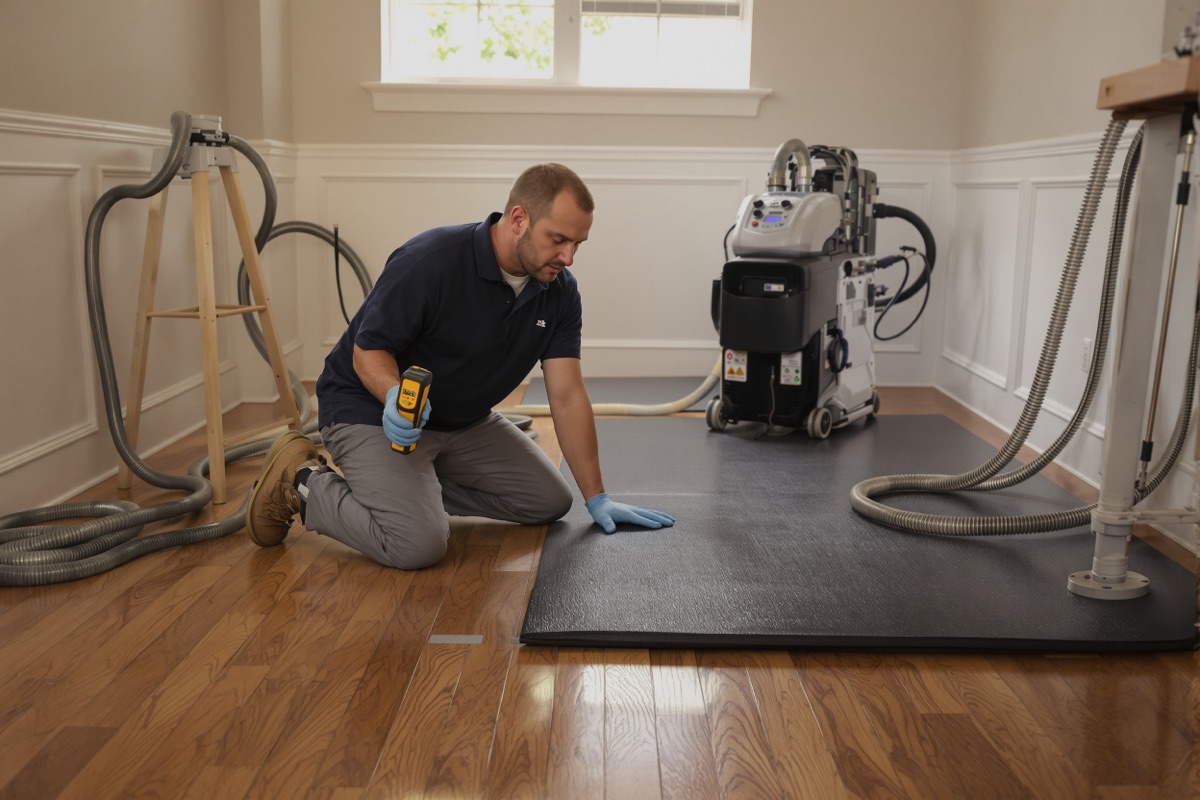
When we arrive, a thermal imaging camera lets us follow the path of the water from floor to floor without tearing into finished surfaces. Pinless meters scan large areas of wall and ceiling quickly. Pin meters confirm readings in the framing and subfloor. From there, we build a drying plan floor by floor.
Frozen pipes cause a similar pattern in winter. Pipes in exterior walls, unheated porches and old additions are the most vulnerable. A pipe can split during a cold night and leak slowly, then open fully when the ice melts.
Drying a wood-framed house the careful way
Wood framing, old-growth flooring and plaster walls can all be dried in place far more often than people expect. The key is pace. Dry old hardwood too fast and it can cup, crack or gap. Dry plaster too aggressively and it can loosen from the lath. Too slow, and mold gets a foothold.
We set air movers to keep air moving across wet surfaces and commercial dehumidifiers to pull moisture out of the room. On hardwood, we keep a close eye on the boards and the subfloor beneath them, since the wood can hold water long after the surface feels dry. Every day, we take readings and adjust the layout so each material comes down to its normal range at a safe rate.
Sometimes material has to come out. Wet insulation does not dry well inside a closed wall, and drywall or plaster that took on contaminated water cannot be kept. When cuts are needed, we make them clean and straight so the rebuild goes smoothly. Our crew handles that rebuild too, from drywall and insulation to flooring, trim, paint and cabinets. You can see examples of that work on our remodeling page. Matching original trim, moldings and floor patterns is part of good South Orange water damage restoration in a house this old.
When the water coming in is sewage
A backup through a floor drain or basement toilet is a different kind of job. Sewage carries bacteria and other contaminants, and it calls for protective gear, careful removal and thorough cleaning. Older neighborhoods often have long lateral lines between the house and the street, and roots or age can narrow them over the years. A heavy storm or a blockage can then send water back up into the lowest drain in the house.
Keep children and pets away from the area, and do not try to mop it up yourself. Turn off the HVAC system if it pulls air from the basement. When we arrive, we extract the water, remove porous materials that contacted the sewage, such as carpet, pad and the lower part of drywall, and clean and disinfect the hard surfaces before drying. A licensed plumber should clear and inspect the line itself, and we will keep the space safe and drying while that happens.
Floodwater from outside is treated the same way. Water that has crossed a yard, a driveway or a street has picked up whatever was on the ground, so we handle it as contaminated from the start.
Your first hour, step by step
What you do before the crew gets there can limit the damage. A short checklist:
- Shut off the water at the fixture or at the main valve.
- Turn off power to wet areas at the panel, but only if you can reach it without standing in water.
- Move rugs, furniture legs and boxes off wet floors. Slip foil or wood blocks under furniture you cannot move.
- Take photos and video of everything before cleanup begins.
- Stay out of rooms with sagging ceilings.
- Call us, and keep the phone nearby so the crew can reach you.
Skip the shop vacuum on a large flood. It wears you out and removes very little compared with an extractor, and a crew can do in minutes what would take you the whole night. Your time is better spent getting valuables, papers and photos up and out of the way. Speed is the whole point of South Orange water damage restoration, and the first hour sets the tone for the rest of the job.

That musty basement smell
In an older village, plenty of basements have a familiar damp smell. People get used to it. But a persistent musty odor usually means moisture is staying in materials long enough for mold to grow somewhere, often behind finished walls, under carpet, or on the wood framing near the sill.
Our first step is to find the moisture. Meters and a thermal camera show which walls and floors are wet and where the water is coming from. If there is mold, we set up plastic containment, run a negative air machine with HEPA filtration, remove the affected porous materials, and HEPA-vacuum and clean the framing and other solid surfaces. Then the area gets dried properly so the problem does not return.
We confirm results with moisture readings, photos and thermal images. More about the process is on our mold remediation page.
Condos, apartments and the business district
South Orange has a few apartment buildings from various eras, townhouse-style condominiums of more recent vintage, and a central business district in the blocks just east of the train station. Seton Hall University sits in the southeast part of the village.
Water in a multi-unit building rarely stays in one unit. A washing machine leak in an upper condo can reach the ceiling of the unit below within minutes. In those cases we document each unit separately, so owners, the association and each adjuster can see exactly what happened in each space.
For shops, restaurants and offices, downtime is the real cost. We plan around business hours when possible, contain the work area to keep part of the space usable, and keep clear daily records. Our commercial water damage page explains how we approach those jobs.
South Orange water damage restoration records for your claim
We cannot tell you what your policy covers. That depends on the policy itself and on what caused the water, and the adjuster makes that decision. What we can do is give the adjuster a clear record of the loss.
On every job, we photograph the damage before work starts, during the drying and after. We log moisture readings for each affected area and keep a drying log that shows how the readings came down day by day. You receive those records to share with your adjuster. Thorough documentation like this is part of every South Orange water damage restoration job we take on.
Before the crew arrives, take your own photos and short videos of the water and the damaged rooms. Hold on to damaged belongings until the adjuster says they can go. And note the time you first noticed the problem, since that detail often comes up.
Readers in the neighboring village can learn more about Maplewood water damage restoration, and families toward Millburn can read about our work in Short Hills water damage cleanup.
Frequently asked questions about South Orange water damage
Does the Rahway River still flood parts of South Orange?
Flood control projects in the mid-1970s addressed the overflow problem in low-lying parts of town. Heavy rain still raises the river and the groundwater around it, so basements on lower ground can take on water during big storms even without the river leaving its banks.
Can you dry plaster ceilings and walls without replacing them?
Often you can. Plaster takes longer to dry than drywall and needs a careful pace. If the plaster has pulled away from the lath, is sagging, or took on contaminated water, it may need to come out. We will show you the readings either way.
My Victorian has a leak but I cannot see where it starts. How do you find it?
We use a thermal imaging camera to follow cool, damp patterns behind walls and ceilings, then confirm with moisture meters. In tall old houses, water often travels along joists before it shows, so the stain and the source can be far apart.
Do you work in condos and apartment buildings in the village?
Yes. We handle multi-unit buildings and document each affected unit separately so every owner and adjuster has their own record.
Will my original hardwood floors have to be torn out?
Not necessarily. If drying starts quickly and the water was clean, hardwood can often be saved. Floors that sat in contaminated water or were wet too long may need replacement.
Which other towns do you serve?
We cover Essex, Morris, Bergen, Passaic and Hunterdon counties. Our service areas page lists every town, and you can read more about our company there too.
Call when the water starts
The sooner drying starts, the more of your house we can save. Call (973) 992-4400 any time, day or night. We will tell you what to do in the next few minutes and get a crew to you. For more on our full process, visit our water damage restoration page.