
A town with lakes in its name has water close at hand, and so do many of the homes around it. DryMax provides Franklin Lakes water damage restoration with phones staffed through every night, weekend and holiday. IICRC certified technicians pump out the water, dry the framing, deal with any mold and then rebuild, all under one company name.
A borough named for its lakes
Franklin Lakes covers just under 10 square miles in northwest Bergen County. About 0.47 square miles of that is water, close to 5 percent of the borough. That is a much bigger share than most towns in the area.
The place names tell the same story. Bakers Pond, Blauvelt Lakes, Crystal Lakes, Hopper Lake and Shadow Lake are all communities and localities inside the borough, along with Campgaw, Ferdinands Mills and Pulis Mills. Several of those names point to water, and two of them point to old mills, which were usually built where water could do work.
The borough itself was formed in 1922 from parts of the old Franklin Township and named for William Franklin, the last colonial governor of New Jersey. Passenger trains once stopped at Crystal Lakes and Campgaw stations, from the late 1800s until 1966.
All of this matters for one simple reason. Where there are lakes and ponds, there is often a high water table nearby, soft ground after heavy rain, and slopes that send runoff toward the water. A house in that setting can face groundwater pressure that a hilltop house never sees.
Franklin Lakes water damage restoration near the water
Homes near a lake or pond often deal with damp basements during wet seasons. The ground between the house and the water can stay saturated for days after a storm. That water pushes against foundation walls and up through slabs, and it looks for any weak point: a crack, a cove joint, a pipe penetration or a window well.
Sump pumps work hard in this kind of setting. When one fails, whether from a power outage, a worn motor or a stuck float, the pit can overflow and spread water across the floor in a short time. A finished lower level with carpet, drywall and furniture absorbs it quickly.
Deep water gets a submersible pump; the remaining inch or two comes up with a truck-mounted or portable extractor. A technician then scans walls and floors with a thermal camera and confirms with pin and pinless meters, which tells us the real footprint of the loss. Dehumidifiers and air movers run from there, and nobody calls it dry until the numbers agree.
Franklin Lakes water damage restoration near a lake often takes a little longer, because the ground outside keeps feeding moisture toward the house. We plan for that and do not rush to pull equipment before the numbers say it is time.
Curious how your lot is mapped? Type your address into the FEMA flood map service.
Fine finishes and what water does to them
Many homes in Franklin Lakes are large, custom built and carefully finished. Plenty of them have the kind of finishes that cost real money to replace: wide plank hardwood, custom cabinetry, natural stone, built-in millwork and finished lower levels with home theaters or gyms.
Those finishes respond to water in different ways. Hardwood cups and crowns as it absorbs moisture from below. Custom cabinets made with particle board or MDF can swell at the base and never fully recover. Natural stone may survive the water itself, but the subfloor and setting bed underneath can stay wet for a long time.
Because of that, the first job is always to measure. Our technicians use meters and thermal cameras to find out what is actually wet, how wet it is and how far the moisture goes. Those numbers let us sort the salvageable from the pieces that will have to be swapped out.
In a high-end home, saving materials is often worth extra effort. Targeted drying, careful removal of toe kicks to reach under cabinets and specialized floor drying setups can make the difference between a repair and a full replacement.
Finished lower levels deserve a special mention. In many larger homes, the basement holds a media room, a gym, a guest suite or a wine cellar. Rubber gym flooring traps water underneath it. Upholstered theater seating wicks moisture from the carpet. Built-in shelving often sits on a bottom plate that soaks up whatever crosses the floor. We pull those pieces away from the wall early so air can reach the hidden surfaces behind and beneath them.
How different materials dry
Every material in a house holds water differently. This short table gives a general idea of what we see. The actual result always depends on how long the material was wet and what kind of water reached it.
| Material | What water does | How we usually approach it |
|---|---|---|
| Drywall | Wicks water upward and softens | Dry in place if caught early, otherwise cut above the wet line |
| Hardwood | Cups or crowns as boards swell | Focused floor drying, then assess once readings settle |
| Cabinet bases | Swell and delaminate | Pull toe kicks, dry underneath, replace parts that will not recover |
| Carpet and pad | Hold large amounts of water | Extract; pad is often replaced, carpet sometimes saved |
| Concrete slab | Absorbs and releases water slowly | Dehumidify for an extended period and monitor readings |
The leak you hear about last
Big houses have more plumbing, and more plumbing means more places a leak can hide. Picture five or six baths, laundry upstairs, a bar sink and a kitchen with an ice maker and pot filler: dozens of fittings, any one of which can let go. Some of them are in rooms that are not used every day.
Take a guest shower valve that weeps a little each time it is used. Months can pass while the subfloor under it rots quietly. Or a washer hose bursts mid-cycle and the water drops straight through to the lower level. A failed water heater in a basement mechanical room can flood an area nobody visits until something smells wrong.
When we arrive, we trace the water from its source along every path it took. That includes ceilings, wall cavities, the space under cabinets and the lower level. We open only what the readings say needs opening.
Warning signs in a larger home
- A faint musty smell in a room that is normally closed off.
- Baseboards that look darker or feel soft at the bottom.
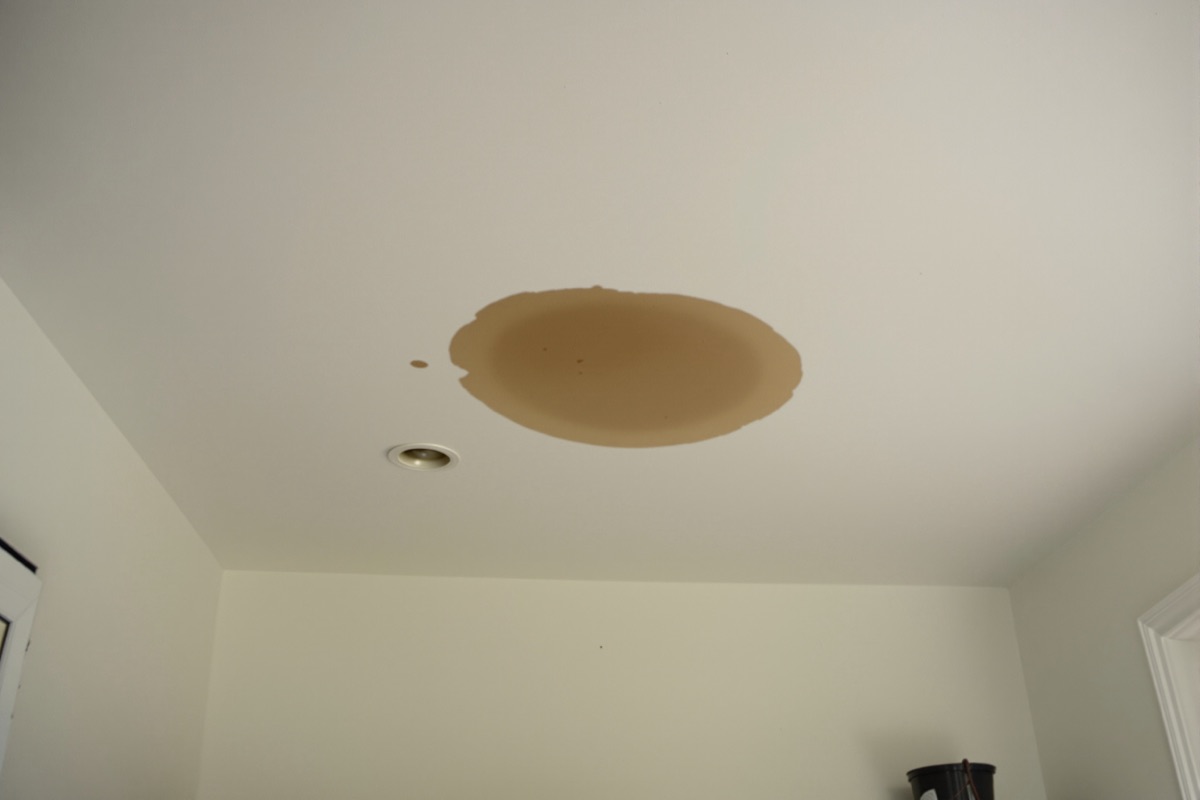
- Bubbling or peeling paint on a ceiling below a bathroom.
- Hardwood boards that have started to lift at the edges.
- A water bill that suddenly climbs for no obvious reason.
The first day and the first week
Below is the usual rhythm of a residential job.
Day one begins with your call and a truck rolling right after it. Technicians make sure nothing is still leaking, lay down floor protection, lift furniture onto blocks and vacuum up the water. Scanning and metering come next, ruined materials come out, and the drying gear is placed. Opening photos and baseline numbers go into your file that afternoon.
Days two through four or so, someone returns to read the meters and move fans where they will do more good. A wall that stays stubborn may get a few more inches cut away. Every stop adds a line to the log.
Around the end of the week, the wet zone usually reads the same as untouched rooms. Final pictures are taken, equipment is loaded out and we go over the numbers with you. Big losses, thick slabs and soaked hardwood can stretch past that. Read the full outline on our water damage restoration page.

Frozen pipes and winter trips
North Jersey winters are hard on plumbing. Lines running through a pool house, over a garage or along an outside wall can freeze solid on a January night. Nothing drips while they are frozen. The flood arrives with the thaw.
Families who travel in winter face extra risk. If the heat fails or a line splits while the house is empty, water can run for days. Coming home to a soaked ceiling and a flooded lower level is one of the most stressful calls we take. A steady thermostat setting, a neighbor who checks in and a water shutoff you can reach quickly all help.
Irrigation systems and outdoor kitchens add more lines to winterize. Hose bibs, sprinkler backflow devices and outdoor sinks should be drained before the first hard freeze. Missing one can send water into a basement wall when spring arrives.
Once a line has split, close the main, cut power to soaked rooms from a dry spot, and phone us. Fresh supply water carries little contamination at first, which gives quick drying a real chance to save cabinets and floors.
Before the next heavy rain
Lakeside owners can tilt the odds with a few chores. Each spring and fall, dump a pail of water in the sump pit and confirm the pump kicks on and empties it. Consider a battery backup if your power goes out during storms. Keep gutters clear and extend downspouts so roof water lands well away from the foundation.
Inside, move valuables, documents and family photos off the lower level floor and into sealed bins. Keep a flashlight near the basement stairs. Show teenagers and house sitters the main valve and the breaker box.
Should water win anyway, snap pictures first and then call. The sooner we start, the smaller the job usually is.
Storm runoff and sewer backups
Not all water is clean. Rainwater that crosses a lawn and enters through a window well brings mud and microbes with it. Anything rising out of a floor drain or lower level toilet is sewage, plain and simple.
Those jobs call for respirators, gloves and suits. Padding, the bottom foot or two of wallboard and any soaked batts are normally torn out and bagged. Tile, concrete and framing get scrubbed and disinfected ahead of the dehumidifiers.
Close the door on that room, keep the dog out, and leave your box fans unplugged so nothing gets blown around. A list of every item removed, with photos, goes in the file for whoever looks over the claim.
When mold has already started
Sometimes the water has been there long enough for mold to begin. That is especially common with hidden leaks and damp lower levels near the lakes. Franklin Lakes water damage restoration in those cases includes mold remediation as part of the same job.
Poly sheeting goes up around the affected space, and a negative air unit pulls air out of it so spores stay put. Stained or rotted material is cut away, exposed wood is HEPA vacuumed and wiped down, and HEPA scrubbers keep filtering the room. Meter readings, photos and thermal scans at the end show the space is dry and clean. Our mold remediation page goes deeper.
Federal guidance agrees on the basic rule. The EPA brief guide on mold and moisture says growth will come back unless the water source is handled, so we point out the likely culprit.
Back to a finished room
A dry shell still needs walls. Our rebuild crew handles board, batts, floors, paint, millwork and cabinet boxes, and in custom homes they chase the exact casing profile and paint sheen. Examples are on the remodeling page.
A photo log, daily meter numbers and drying charts build up from the first hour. Pass the whole folder to the adjuster. The policy decides coverage, and the folder gives that decision a factual base.

Corporate campuses and commercial buildings
Franklin Lakes is home to the main corporate offices of Becton Dickinson, the medical technology company founded in 1897. Offices and shops around the borough see a different mix of losses, including fire sprinkler line breaks, clogged roof drains, overflowing restrooms and dripping HVAC units.
Facility managers can lean on our commercial water damage team for sealed-off work zones, off-hours scheduling and paperwork their owners will recognize.
A leak in a commercial building rarely stays in one suite. Water from an upper floor can reach ceilings, server rooms and storage areas below in a matter of hours. We separate wet zones with plastic, protect equipment and records, and keep a room-by-room log of readings and removed materials. That log helps building owners, tenants and their carriers sort out what happened.
Wyckoff, Wayne and Ridgewood
Franklin Lakes borders Mahwah, Oakland and Wyckoff in Bergen County, and North Haledon and Wayne in Passaic County. We cover both counties, plus Essex, Morris and Hunterdon.
Our crews also handle water damage restoration in Wyckoff, flood and leak cleanup in Wayne and water damage repair in Ridgewood. The service areas page lists every community, and the about page tells our story.
Frequently asked questions about Franklin Lakes water damage restoration
We are close to Shadow Lake or Crystal Lakes. Is a damp lower level normal?
Lakeside soil drains slowly, so after a big rain it can push moisture through slab cracks and wall joints for days. It is common, and it is still worth drying properly. We remove the water, dry the room and mark where the readings spike.
Can you save custom cabinets and hardwood floors?
Often, if we start quickly. We measure first, then use targeted drying under cabinets and focused floor drying where the readings show it can work. Materials that will not recover are replaced during the rebuild.
How fast can you start Franklin Lakes water damage restoration?
A person answers at any hour and a truck leaves right after the call. Extraction and drying both begin on that first trip.
Can you help an office building in town?
Yes. Commercial jobs get sealed work areas and a schedule built around the tenants.
Will the carrier pay?
Your policy language and the cause of the leak decide that. We hand over a complete photo and reading record so the adjuster can rule on it.
Who handles the repairs afterward?
Our own rebuild crew. No hunting for a second contractor once the fans are gone.
Call when you see water
A wet basement by the lake, a ceiling stain under a guest bath or a leaking water heater all get worse with time. Pick up the phone and dial (973) 992-4400. You will reach a live person, and help will be on its way.