
Water in the house almost never arrives at a good time. It shows up on a Sunday night when the sump pump quits, or on a weekday morning when a washer hose splits on the second floor. When it happens here, Livingston water damage restoration from DryMax means one IICRC certified crew that pulls the water out, dries the structure, deals with any mold and then puts the room back together. Call (973) 992-4400 any hour, any day of the year, and a real person picks up.
Livingston is a township in southwestern Essex County, about fourteen square miles, with Roseland to the north, West Orange to the east and Millburn to the south. That much ground covers a lot of different houses and a lot of different ways for water to get in. This page walks through the ones we think about most in this town.
Livingston water damage restoration for postwar homes
Livingston saw many housing developments after World War II, with the population topping thirty thousand by 1970. That building wave shaped the town. A large share of houses on any given street were built in the same few decades, and many of them are now old enough that their original plumbing, water heaters and foundation drainage have been replaced once already or are due.
Houses from that era tend to share a few soft spots. Copper supply lines sweat and pit over time. Galvanized drain pipes, where they still exist, rust from the inside and start to weep at the joints. Poured or block foundations from the period were often waterproofed with a thin coat on the outside that has long since worn thin.
None of that means a house is in trouble. It just means that when water damage does happen, it often traces back to one of these aging parts. Good Livingston water damage restoration starts by finding that part, because drying a room without fixing the cause only sets up the next call.
Additions are the other pattern. Many owners have built out over the decades, putting a family room on the back or a primary suite over the garage. Where an addition meets the original house, roof lines and foundation walls join, and that seam is a common entry point when rain is heavy and blowing sideways. We check those transitions closely with a moisture meter before calling a job dry.
The Passaic River side of town
The western edge of Livingston is the Passaic River, which forms the boundary with Morris County communities Florham Park and East Hanover. Homes on that side of the township sit closer to lower, wetter ground than houses up toward the eastern hills. After long rainstorms, the water table near a river can rise high enough to push water through floor slabs and wall cracks even when no surface water reaches the house.
That kind of seepage is sneaky. It often shows up as a damp line along the bottom of a basement wall, a musty smell in a storage room, or carpet that feels cool and slightly wet near one corner. Owners sometimes live with it for weeks before calling. By then the bottom of the drywall has wicked moisture upward and the padding under the carpet is holding water against the slab.
If you live on the river side and you are not sure what your flood risk is, the FEMA flood map service lets you look up your address. Knowing your zone helps you decide whether a battery backup on the sump pump or a flood policy makes sense. We can help with the drying either way, and we will tell you plainly what we find.
Groundwater jobs need patience. Concrete holds moisture for a long time, and a slab that looks dry on top can still read wet an inch down. Our approach to Livingston water damage restoration on the river side includes checking the slab, the bottom plates of the walls and any wood sitting directly on concrete, then running dehumidifiers until those numbers drop where they belong.
Finished lower levels take the first hit
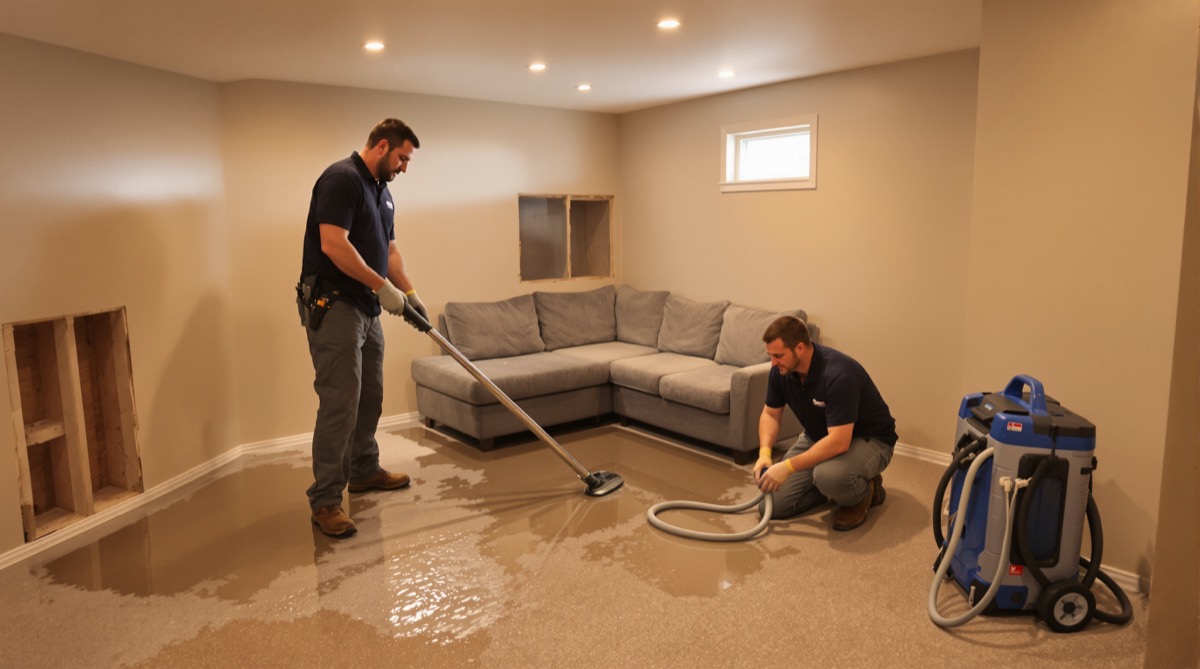
Across Livingston, from Cedar Ridge to Northfield to West Livingston, finished basements are common. Owners turn them into playrooms, gyms, offices and guest suites. That is great until the sump pit overflows. A finished room holds far more water than a bare concrete basement because every layer soaks it up: carpet, pad, the bottom of the drywall, insulation behind it and the wood framing at the base of the wall.
When we get there, the first goal is to stop the source and get standing water out fast. Our extraction units, both the truck-mounted kind and smaller portable ones, draw the water out of carpet and off the slab. Submersible pumps handle deeper water. Then we decide what can be dried in place and what has to come out. Wet carpet pad nearly always goes. Carpet itself can sometimes be saved if the water was clean and we get to it quickly.
Drywall gets a flood cut, which means we remove the bottom section, usually a couple of feet, so air can reach the wall cavity and the wet insulation can be pulled. Air movers push air across the opened walls and floors, and commercial dehumidifiers pull the moisture out of the room. We take readings every day until the framing and slab read dry.
Sump pumps and backups
A failed sump pump is the most common reason we see finished basements underwater in this part of Essex County. Pumps wear out, floats stick, and power goes out during the same storms that fill the pit. Sewer backups are a different and dirtier problem. Anything that rose out of a floor drain or toilet counts as contaminated, so, keep kids and pets out, and let a trained crew handle the cleanup.
Upstairs laundry rooms and extra bathrooms
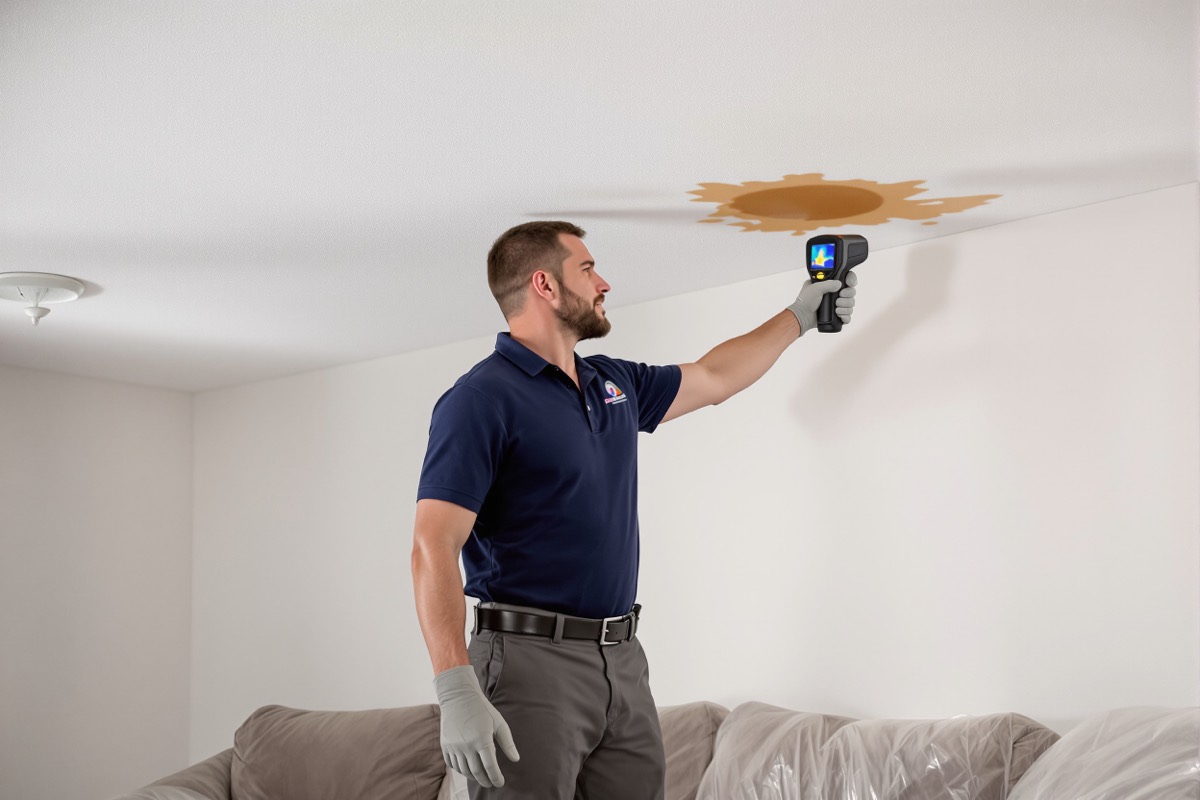
Bigger homes bring more fixtures. A house with four bathrooms, a second-floor laundry room and a wet bar has many more connections that can fail. When a supply line under an upstairs vanity bursts, water runs along the subfloor, finds a seam and comes down through the ceiling below, sometimes two floors down.
The ceiling stain you can see is usually smaller than the wet area you cannot. Water spreads across the top of drywall and along joists before it drips. We use thermal imaging cameras to map the cooler, wet zones in ceilings and walls, then confirm with pin and pinless moisture meters. That map tells us exactly where to open up and where we can dry without cutting.
Water heaters belong in this section too. Tank units in the garage, basement or a closet near the kitchen typically last about a decade or so. When the bottom of the tank rusts through, it can empty forty or fifty gallons onto the floor in a few minutes and keep running from the supply line. Shut the cold water valve on top of the heater, turn off the gas or the breaker, and call us.
Cold snaps, garages and exterior walls
Winter brings its own calls. When temperatures drop hard for several days, pipes that run through outside walls, over garages or in crawl spaces can freeze. Ice expands, the pipe splits, and nothing happens until it thaws. Then water pours out, often inside a wall where nobody can see it.
Rooms over attached garages are a classic spot. So are kitchen sinks on outside walls and hose bib lines that were never shut off for the season. If you lose water pressure at one fixture on a frigid morning, that line may be frozen. Shut the main valve before it thaws and call us so we can be ready when the water starts moving again.
Once a frozen pipe lets go, we treat it like any other clean water loss: find the wet area, open only what needs opening, and dry the cavity. Insulation inside the wall usually has to be replaced once it is soaked, because it holds water against the framing and stops drying.
What happens on the first day
The first visit sets the tone for the whole job. Here is roughly how Livingston water damage restoration goes when we pull up to a house in town.
- Safety check. We look for electrical hazards, sagging ceilings and contaminated water before anyone walks through.
- Stop the source. If water is still running, we help find and close the right valve.
- Photos and readings. We record the damage as it is, room by room, before anything is moved.
- Extraction. Standing water comes out of carpet, hard floors and the slab.
- Removal of ruined materials. Wet pad, soaked insulation and swollen baseboards come out.
- Drying setup. Air movers and dehumidifiers go in, sized to the space.
- A plan. We explain what we found, what we expect over the next few days and what rebuild work may follow.
Drying usually runs a few days, depending on the materials and how long they were wet. We come back to check readings and move equipment as areas dry. Hardwood floors and plaster take longer than drywall and carpet, and we will tell you up front if we expect a slower dry.
When a leak turns into mold
Mold can begin growing on wet building materials within a day or two if moisture is not controlled. That is the main reason fast drying matters. The EPA’s guide to mold and moisture puts it simply: control the water and you control the mold.
If we find growth, our mold remediation team seals the area behind plastic sheeting and runs negative air machines so spores cannot drift into clean rooms, with HEPA scrubbers filtering what is left in the air. We remove the affected materials, HEPA vacuum and clean the surfaces that stay, and dry everything to normal readings before rebuilding. You keep the proof: before and after photos, thermal images and the meter numbers.
Older basements, closets on exterior walls and attics above bathrooms with weak exhaust fans are the places we most often find hidden growth in Essex County homes. A musty smell that will not go away is worth a look.
Office parks along Eisenhower Parkway
Livingston is more than houses. Many office parks line Eisenhower Parkway on the western side of town. Commercial buildings have their own water problems: sprinkler line breaks, roof drains that back up, rooftop units that leak into drop ceilings, and kitchen or restroom leaks that spread under raised floors or carpet tiles.
For a business, the clock is about more than drywall. Every day a suite is closed costs money. Our commercial water damage technicians are able to come in after hours and in phases so part of a floor stays open while another part dries. We document every room and every reading so a property manager and an adjuster see the same facts.
Large commercial floors dry differently from houses. Open plans move air well, but carpet tile over concrete and long runs of drywall partitions can hide water for a surprising distance from the leak. We map the whole area with meters and thermal cameras first, then set up drying in zones so equipment lands exactly where it is needed.
Livingston water damage restoration and your claim file
Insurance is the part that worries most people. We cannot tell you what your policy covers, because that depends on the policy itself. What we can do is give your adjuster clean, complete records to make that call. Each file holds date-stamped pictures, meter numbers taken room by room, and a log of every drying day.
Those records matter. They trace the path of the water, how wet each material read, which pieces came out and the reason, and the steady drop back to normal. A clear file helps a claim move without long back-and-forth. You get a copy to keep, too. Whether the loss is a small vanity leak or a full basement, Livingston water damage restoration from DryMax comes with the same level of documentation.
When drying is done, the same company handles the rebuild. Our remodeling crews hang the new wallboard, put back insulation and floors, set the trim and cabinets and finish the paint, so you are not hunting for a separate contractor while your basement sits open. Keeping both halves of the job under one roof keeps the schedule tight and the details from getting lost between crews.

Next door, too
Water problems do not stop at the town line. We also handle water damage restoration in Short Hills, water damage cleanup in Roseland and flooded basements and leaks in West Orange. You can see every town on our service areas page, or read more about DryMax and how we work.
Frequently asked questions about water damage in Livingston
My Livingston basement gets damp after heavy rain but never floods. Should I worry?
Repeated dampness can soak drywall, carpet pad and wood framing from below and set up mold over time. A moisture check shows whether materials are actually wet or just cool. If readings are high, it is better to dry the space and fix the drainage cause than wait for a bigger event.
We live on the west side near the Passaic River. What should we do before a big storm?
Test the sump pump by pouring water into the pit, make sure the discharge line runs well away from the foundation, and consider a battery backup. Move valuables off the basement floor. Check your flood zone on the FEMA map so you know your risk.
Can you save hardwood floors after an upstairs leak?
Often, yes, if we start drying quickly. We use specialized drying setups and track the moisture in the boards and subfloor every day. Some cupping may settle as the wood dries. If boards are too far gone, our crew can replace and refinish them during the rebuild.
Do you handle the whole job or just the drying?
The whole job. We extract the water, dry the structure, take care of any mold, and then put back walls, floors, cabinets and finishes. You deal with one company the entire time.
What paperwork will my insurance adjuster get?
You receive the full set of photos, meter readings and daily logs. Coverage depends on your policy, so the adjuster makes that decision. Our job is to give them a clear, accurate record of the damage and the work.
Can you work in a commercial suite in one of the office parks?
Yes. We handle commercial water damage and can schedule work around business hours or in sections so part of the space stays usable while the rest dries.
Call us when the water shows up
Turn off the water if you can, stay away from wet outlets and cords, then dial (973) 992-4400. Someone answers at 3 a.m. on a holiday just like at noon on a Tuesday, and a crew gets rolling the moment we hang up. For Livingston water damage restoration, one call gets the whole job started. Locally owned since 2018, we cover Livingston and the surrounding parts of Essex County, plus Morris, Bergen, Passaic and Hunterdon.