
Madison water damage restoration often means working inside houses with a lot of history in their walls. The borough grew from the village of Bottle Hill, later became the Rose City, and filled in with large homes along one of the country’s first commuter rail lines. Many of the homes those eras left behind are large, carefully kept and full of materials worth saving. Locally owned since 2018 and IICRC certified, DryMax Water Restoration works across Morris County, and someone answers our line at (973) 992-4400 day and night.
This guide explains where water tends to cause trouble in Madison homes and buildings, how we decide what can be dried in place, and what you can expect from the day you call until the last room is finished.
Madison water damage restoration in a very old village
Settlement here goes back a long way. Bottle Hill was founded around 1715 at a crossroads near today’s downtown, and the Luke Miller house, thought to be the oldest remaining home in Madison, dates to about 1730. In 1889 the village broke away from Chatham Township and formed a borough, in part to build its own water supply system.
Old towns build up in layers. A single block can hold a house from the 1800s, another from the early 1900s and a newer one built on a subdivided lot. Each has its own plumbing history. An older house may carry original pipes in one wing, newer copper or plastic lines in an addition, and joints between the two that have been reworked more than once.
Those transition points are where we often find leaks. So are the places nobody looks: the back of a closet that shares a wall with a bathroom, the ceiling under a second-floor laundry, the floor cavity under a kitchen island sink. Our first job on any Madison call is to find out exactly where the water went, which is rarely just the spot where it showed up.
Big houses, many bathrooms, long pipe runs
Once the Morris and Essex rail line connected Madison to Manhattan, big estate houses went up along the corridor running from downtown Madison to downtown Morristown. Plenty of big homes remain in and around the borough, along with newer large houses built to match.
Size changes the risk. A house with four or five bathrooms, a laundry room upstairs, a wet bar and a second kitchen has many more places for a supply line or drain to fail. Long pipe runs between floors also mean water can travel a long way before it shows. A leak on the third floor can surface as a stain two floors down.
Things we check first in a large Madison home:
- Upstairs laundry rooms, especially the washer hoses and the drain pan, if there is one
- Steam showers and large soaking tubs with hidden valves
- Ice maker and filter lines behind built-in refrigerators
- Radiator and boiler connections in homes with hot water heat
- Pipes in exterior walls and over garages, which freeze in hard cold
- Basement water heaters and the floor drains around them
On a big job, Madison water damage restoration works best when we split the house into drying zones and track each one separately. That way the dry rooms can go back to normal use while we keep working in the wet ones.
Saving original floors, plaster and trim
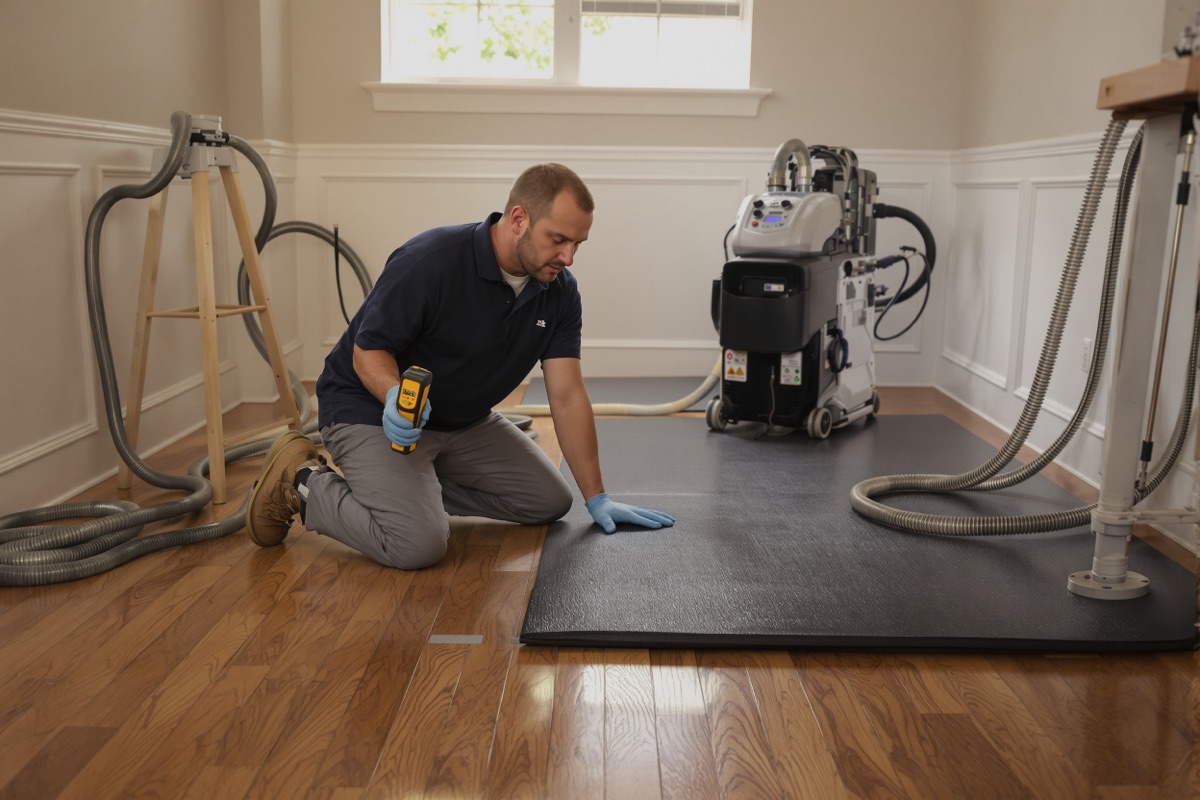
In a newer house, replacing a few sheets of wet drywall is quick and routine. In an older Madison home, the wet material might be plaster on wood lath, a quartersawn oak floor or a run of custom molding that would be hard to match. We try hard to save what can be saved.
Hardwood floors
Wood swells and cups when it soaks up water. If we start fast, we can often pull moisture out of the boards with specialty drying mats, air movers and dehumidifiers, and many floors flatten back out as they dry. We track the boards and the subfloor with pin and pinless meters until both reach a dry standard.
Plaster walls and ceilings
Plaster holds water longer than drywall and can look fine while the lath behind it stays wet. Thermal imaging and meter readings show us what is really happening. If plaster has lost its grip on the lath or the ceiling sags, we remove only the section that failed.
Trim and built-ins
Baseboards, casings and built-in cabinets can sometimes be removed carefully, numbered and set aside so the wall behind them can dry. If they cannot be saved, our rebuild crew can work on matching the profile during the repair.
Brooklake Park, East Madison and North Park
Brooklake Park, East Madison and North Park are named places in the borough. Different parts of town have different mixes of house ages and lot types, so the questions we ask change from street to street.
On any lot, we look at how water moves around the outside of the house. Gutters that overflow, downspouts that drain at the foundation and yards that slope toward the house can all push water into a basement during a long storm. Inside, we check for finished basements, crawl spaces and slabs, because each needs its own drying plan.
We hedge on generalizations about any one section of town. The only way to know how a specific house will behave is to measure it, and our moisture map is the first thing we build on every job.
Downtown, the campuses and offices with underground parking
Madison is more than a residential town. It is a college town, home to Drew University and the Florham Campus of Fairleigh Dickinson University, which sits on the former Twombly estate. The borough also includes Giralda Farms, a planned office development on part of the former Dodge estate where all parking is required to be underground. Downtown, the railroad tracks were raised above street level when the historic station was completed in 1916.
Each of these settings has its own water risks. Underground garages collect water when drains clog or pumps fail. Older downtown storefronts share walls and ceilings, so a leak in one space can spread to the next. Large buildings with many restrooms, kitchens and mechanical rooms have more pipes to fail.
Our commercial water damage service plans extraction and drying around operating hours where possible. We set up containment to keep dust and noise down, run equipment overnight when that helps, and document everything for the building owner, tenants and insurers.
A typical job, day by day
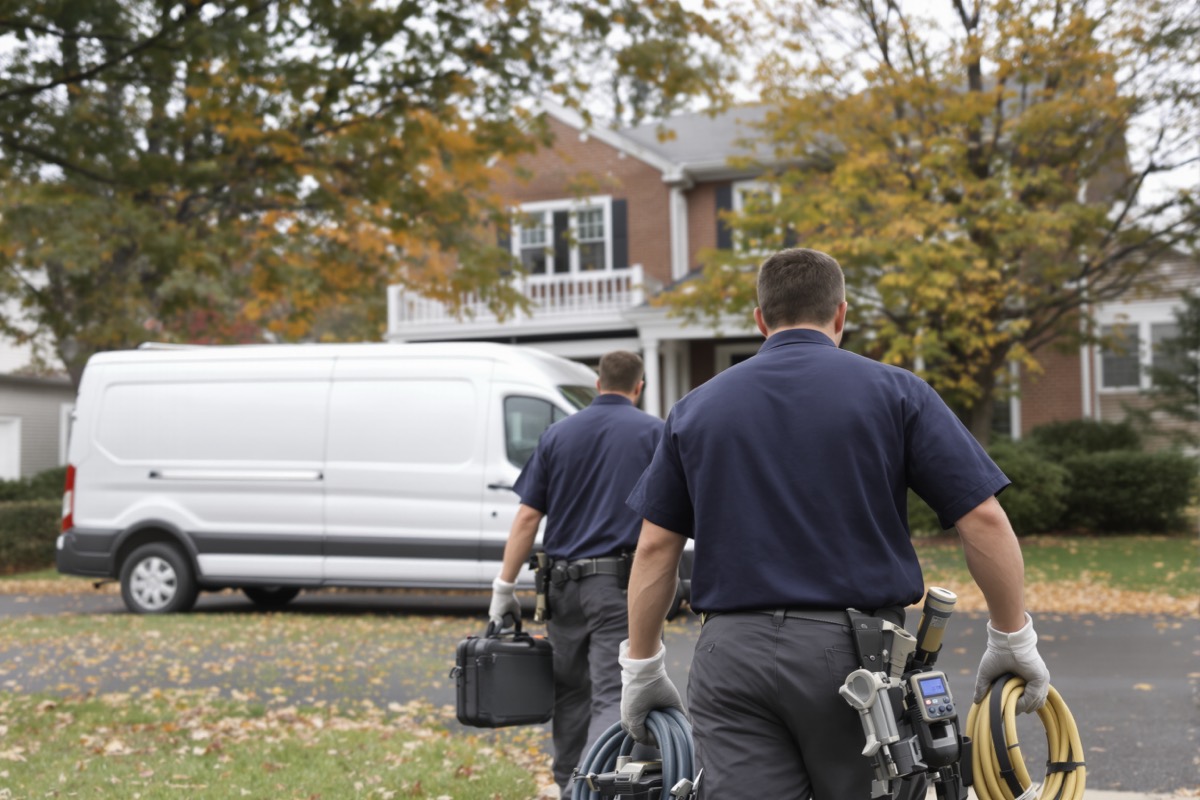
Every loss is different, but most follow a similar rhythm. Here is how a common case plays out, such as a burst pipe that soaks a kitchen and the finished basement under it.
First call. A person picks up 24/7/365. We ask a few questions about the source, the size of the area and the type of water, and we send a crew as soon as you call. If you can safely shut off the main water valve, do it.
Day one. We confirm the leak is stopped, scan the rooms with a thermal camera and record moisture readings on a floor sketch. Extractors remove standing water from floors and carpet. Wet pad and soaked insulation come out. If water ran inside walls, we remove a band of drywall along the bottom, cut just past the dampness, to let air reach the cavity. Then air movers and commercial dehumidifiers go to work.
Days two through four. We return each day to take new readings, move equipment and log progress. You get a plain update on what the numbers show and what comes next.
Dry standard reached. When readings show every material is dry, the equipment leaves. Thick subfloors, plaster and hardwood may need a little longer.
Rebuild. We put the rooms back together: fresh insulation and wallboard, refinished or replaced floors, millwork, cabinetry and paint. You never have to hire a separate builder. See our remodeling page for examples of the finish work.
For a broader look at the process, visit our main water damage restoration page.
Sewer backups and older drain lines
When sewage comes up through a basement floor drain or a low toilet, the job changes completely. Sewage carries bacteria and other contaminants, so the cleanup has to be handled with protective gear and a strict order of work.
Here is how we approach it. First, everyone stays out of the affected area. We remove the contaminated water with pumps and extractors, then strip out the absorbent things it reached, like carpet, padding and the lowest stretch of drywall and insulation. Hard surfaces get cleaned and disinfected. Only then do we set up drying equipment, and we keep taking readings until the area is dry.
Homes with long histories can have drain lines that have been extended, patched and reconnected many times over the years. We do not repair sewer or drain lines; a plumber handles that. Our part of Madison water damage restoration is cleaning, drying and rebuilding everything the backup reached, and documenting it for your insurance company.
Cold snaps, thaws and the calls they bring
North Jersey winters bring a predictable set of problems, and large homes feel them more because they have more exterior walls, more plumbing and more roof edge.
- Frozen pipes. Lines in outside walls, over garages and in unheated additions freeze first. The leak usually starts when the pipe thaws, which can be hours or days later.
- Ice at the roof edge. Snow melts on a warm roof, refreezes at the cold eaves and backs water up under the shingles. It shows up as wet attic insulation and stains on top-floor ceilings. We dry the inside; a roofer handles the roof.
- Heating system leaks. Boilers, radiators and baseboard heat put hot water through pipes all winter. A failed valve or fitting can leak for a long time under a floor.
- Snowmelt at the foundation. When deep snow melts fast, water can pool along basement walls and seep in at cracks and window wells.
If you are leaving a large house empty during a cold stretch, keep the heat on, open cabinet doors under sinks on outside walls and ask someone to check the house. When something does go wrong, call us right away. Madison water damage restoration is much simpler when the water has only had a few hours to spread.
Mold in closed rooms, attics and crawl spaces
Big houses often have rooms that sit closed for weeks: a guest suite, a third-floor storage room, a basement workshop. A slow leak in a space like that can run unnoticed long enough for mold to grow. Attics and crawl spaces are the same. Nobody goes up or down there until something smells off.
When we find mold, our mold remediation team builds plastic containment around the area and runs a negative air machine to keep spores in the work zone. HEPA air scrubbers clean the air. We remove affected drywall, insulation and other porous materials, HEPA vacuum and clean the remaining surfaces, and dry the structure. Readings, thermal imaging and a photo set show the finished result.
Most important, we fix the moisture problem that let the mold start. Without that, it comes back.

Documenting the loss for your insurer
Whether a claim is paid rests on your policy language and what triggered the damage. Your insurance company makes that decision. We make it easier for them to decide by giving the adjuster a complete record of what happened and what we did.
Our job file includes photos from the first walk-through to the final day, moisture readings for each room, daily drying logs, thermal images and a list of materials removed with the reason for each. For a large home or a commercial building, where the file can get long, we organize it by room or zone so the adjuster can follow it easily.
If you are getting ready for storm season, the federal Ready.gov flood guide has a good checklist for protecting papers and valuables before water arrives.
Madison water damage restoration past the borough line
Madison borders Chatham Borough to the east, Chatham Township to the south, Harding and Morris townships to the west and Florham Park to the north. Our crews cover all of Morris County along with Essex, Bergen, Passaic and Hunterdon.
Next door, we provide water damage restoration in Chatham and Florham Park water damage cleanup. Following the old estate corridor west, we also handle water damage service in Morristown. Every town we serve is listed on our service areas page.
Owning property in more than one of these towns? Call one number and we will handle each location the same way, with the same records.
Frequently asked questions from Madison property owners
Can you dry the original hardwood floors in an older Madison home?
Often, yes, if we start quickly. We use drying mats, air movers and dehumidifiers and track the boards and subfloor with meters. Some cupping flattens as the wood dries. Boards that stay damaged can be replaced during the rebuild.
Water came through the ceiling from an upstairs laundry room. What happens next?
Shut off the water to the washer, take photos and call us. We will trace how far the water traveled through the floor and walls, open only what we need to, dry the cavities and rebuild the ceiling and finishes afterward.
Do you work on commercial buildings and offices in Madison?
Yes. Our commercial water damage service handles offices, retail spaces and other buildings. We plan the work around business hours when possible and keep detailed records for owners, tenants and insurers.
What if we have plaster walls?
Plaster can often be dried in place. It holds water longer than drywall, so we monitor it for several days. If the plaster has separated from the lath or is sagging, we remove only that section.
Water collected in our building’s underground parking level. Can you help?
Yes. We use submersible pumps and extractors to remove standing water, dry the affected areas with commercial equipment and check nearby rooms and stairwells for moisture that traveled. The drain or pump repair itself is a job for a plumber or the building’s maintenance contractor.
Will you help with my insurance claim?
We do not decide what your policy covers, but we give you and your adjuster complete documentation: photos, moisture readings, drying logs and a list of removed materials.
Call now for Madison water damage restoration
Whether it is a leak in a historic home, a flooded basement or a wet office floor, call DryMax at (973) 992-4400. We staff the phone 24/7/365, overnight and on holidays as well. Explain what happened and we will send a crew as soon as you call. You can also read more about DryMax and how we work.