
Glen Ridge water damage restoration is a little different from the work we do in river towns. The borough sits on a ridge, so most of the calls we get here come from water that started inside the house: a split supply line, a toilet that kept running, a frozen pipe in an outside wall, a water heater that finally gave out. DryMax Water Restoration is a locally owned, IICRC certified company that has served Essex County homeowners since 2018, and our phone at (973) 992-4400 is answered by a person every hour of every day.
This page is written for people in Glen Ridge who are standing in a wet room right now, and for those who want to know what to expect before it ever happens. We cover the borough’s own layout and weather, the problems we look for in houses like the ones on these streets, and the steps we follow from the first phone call to the finished room.
Why Glen Ridge water damage restoration usually starts indoors
Glen Ridge has something most towns in Essex County cannot claim: because of the borough’s elevation and the shape of its river banks, it is not prone to significant flooding. That is good news. It also means the water that ruins a Glen Ridge kitchen or basement rarely comes from a rising river. It comes through a pipe, a fitting, an appliance hose or a roof edge.
Indoor water is sneaky. A burst pipe in a finished basement makes an obvious mess, but a pinhole leak behind a bathroom wall can wet the framing for weeks before a stain shows on the ceiling below. Once you spot it, the drywall, insulation and subfloor may all be holding water. That is why we treat every call as a hunt for the outer boundary of the moisture, which is often much farther than it looks.
Typical sources we find in homes on the ridge:
- Washing machine hoses that split while nobody is home
- Water heaters that leak slowly, then all at once
- Supply lines under sinks and behind toilets
- Dishwasher and refrigerator ice maker lines
- Pipes that freeze in exterior walls or crawl spaces during a hard cold snap
- Sump pumps that stop during a long rain, where a house has one
- Sewer backups through a floor drain
High ground above Toney’s Brook
The borough follows a ridge on the eastern flank of First Mountain, the front range of the Watchungs. Toney’s Brook cuts through the glen that gave the borough half its name, and in the nineteenth century it powered three mills that made lumber, calico, pasteboard boxes and brass fittings. Today the brook is a quiet feature of the landscape, and the borough’s height keeps it from the kind of flooding that hits lower towns.
High ground still has water problems, though they look different. Rain that falls on a slope moves downhill fast. On a lot that tilts toward the house, a heavy storm can push water against the foundation wall faster than the soil can take it. If gutters overflow or a downspout empties right at the corner of the house, that water finds the easiest way in, which is often a crack, a basement window well or the joint where the floor meets the wall.
Good Glen Ridge water damage restoration accounts for that slope. So when a homeowner tells us “we’re up on the hill, we never flood,” we believe them about the brook. We still check the window wells, the grade and the downspouts, because those are the places a basement on a slope takes in water during a long storm.
Forty-nine inches of rain and a January low near 21
Glen Ridge averages about 49 inches of rain a year, well above the national average, plus about 20 inches of snow. It records measurable precipitation on roughly 124 days a year. Summers run hot and humid with highs around 86, and January lows sit near 21 degrees.
Each part of that pattern lines up with a kind of call we take:
Heavy, frequent rain
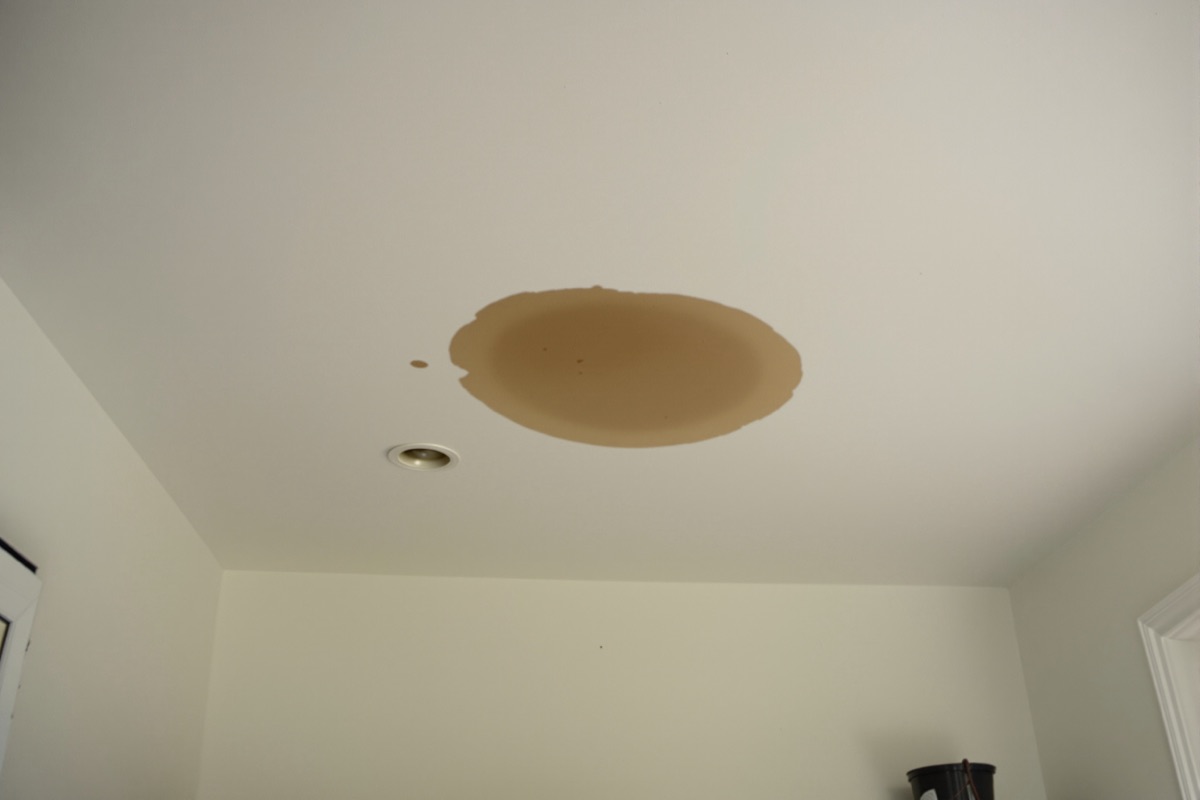
More rain days means more chances for a clogged gutter, a failed flashing detail or an overworked sump pit to let water into the house. Leaks at the roof line tend to show up as ceiling stains on the top floor or as wet plaster around a window head.
Snow and ice in February and March
Most of the snowfall arrives in February and into March. When snow sits on a roof and melts during the day, then freezes at the cold eaves overnight, it can build a ridge of ice that backs water up under the shingles. That water drips into the attic, soaks insulation and comes through the ceiling of a bedroom or closet. We dry the attic and the rooms below; the roof itself is a job for a roofer.
Deep cold in January
At 21 degrees, water can freeze inside a pipe that runs through an outside wall, an unheated porch or a garage ceiling. Frozen pipes often do not leak until they thaw, so our phone tends to ring on that first mild morning after a bitter night.
Humid summers
Muggy air slows drying. A basement that got wet in July will not dry on its own with a fan and an open window. It needs commercial dehumidifiers pulling water out of the air while air movers push it off the surfaces.
Long, narrow blocks and houses built close together
Glen Ridge is about 2 miles from north to south and no more than six blocks wide. North of Bay Avenue, in the part locals call the Panhandle, it narrows to two or three blocks. The borough was incorporated in 1895, became the first town in New Jersey to adopt a zoning ordinance in 1924, and is known for its gas street lamps and slate sidewalks. On streets with gas lamps, the electric lines run behind the houses instead of on poles out front.
For our crews, that layout means a few practical things. Lots are often close together, so we plan where the truck, hoses and equipment go before we start. Many homes in older boroughs like this one have plaster walls, wood floors, and basements that were finished long after the house was built. Each of those materials handles water in its own way.
- Plaster holds water longer than drywall and can hide wet lath behind a dry-looking face. We read it with pin and pinless moisture meters instead of guessing by touch.
- Hardwood floors cup as the boards swell. Caught early, many can be dried in place with specialty drying mats and dehumidifiers.
- Finished basements trap water behind paneling, carpet pad and stud walls. A flood cut along the bottom of the wall lets air reach the cavity.
- Older foundations made of stone or block can wick moisture, so we check the walls as well as the floor.
We do not assume every house on the ridge is the same. A drying plan goes better when it fits the building. A house with a recent renovation behaves differently from one with its original plaster and trim, and a moisture map tells us which one we are dealing with.
What we do in the first hours
When you call, a person answers. We ask where the water came from, whether it is still running, how many rooms are wet and whether the water is clean, gray or sewage. Then we send a crew as soon as you call. While you wait, shut off the water at the main valve if you can do it safely, and keep people and pets away from any wet area near outlets or the electrical panel.
Once we arrive, the work follows a set order:
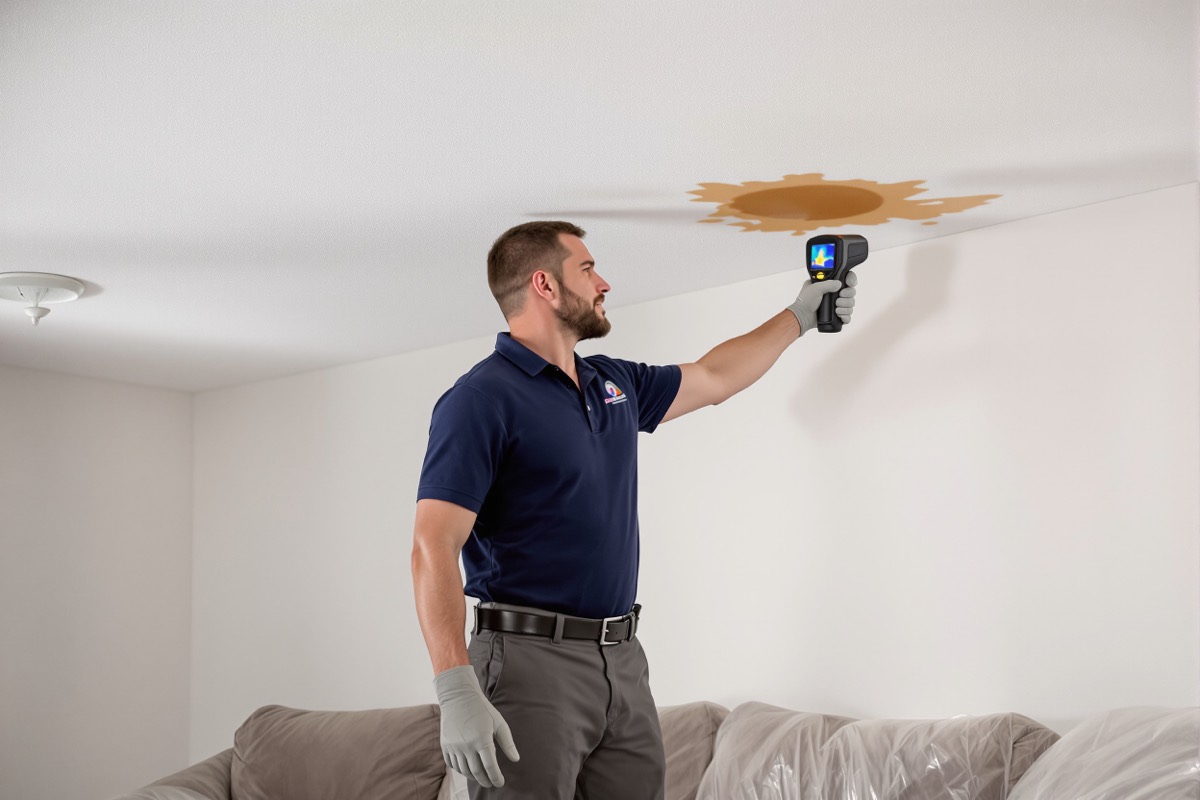
- Stop and assess. We confirm the source is off and walk the house with a thermal imaging camera to find wet areas you cannot see.
- Remove standing water. Truck-mounted or portable extractors pull water out of carpet and pad. In a deep basement, submersible pumps go in first.
- Map the moisture. Meter readings at walls, floors and baseboards go onto a sketch of each room. This becomes the baseline we measure against every day.
- Remove what cannot be saved. Soaked pad, wet insulation and swollen trim come out. Where walls are wet inside, we cut the drywall a little above the wet line.
- Set drying equipment. Air movers and commercial dehumidifiers go where the readings say they are needed.
- Check daily. We return to take new readings, move equipment and record progress until materials reach a dry standard.
Most rooms take a few days to dry. Plaster, hardwood and thick subfloors can take longer. We tell you what the readings show each visit so you know where things stand. For a closer look at the full process, see our water damage restoration page.
When a slow leak turns into mold
The EPA notes that mold can begin to grow on damp materials within 24 to 48 hours. A burst pipe gets attention fast. The leaks that cause mold are usually the quiet ones: a weeping shower valve, a slow drip from an upstairs radiator connection, a toilet seal that lets a little water out every time it is flushed. Weeks later, someone smells it or sees spotting at the bottom of a wall.
Our mold remediation work follows a set plan. We build plastic containment around the affected area and a negative air machine keeps the work zone under slight suction so spores stay put. HEPA air scrubbers clean the air in the space. Affected drywall, insulation and other porous materials are removed and bagged. Framing and other surfaces are HEPA vacuumed and cleaned, then dried, and we confirm dryness with moisture readings, thermal images and photos.
We fix the moisture problem as part of the job, because mold comes back if the leak or dampness that fed it is still there. The EPA’s brief guide to mold, moisture and your home is a good plain-language read if you want background.
Putting the room back together
Drying is only half of the job. After the equipment comes out, the room still has cut walls, missing baseboard and maybe a bare subfloor. Many homeowners do not want to find, schedule and manage a second contractor while they are already dealing with an insurance claim.
We handle the rebuild ourselves, so Glen Ridge water damage restoration does not stop at bare studs. That includes drywall, insulation, flooring, paint, trim and cabinets. In Glen Ridge homes with older trim profiles or plaster, we talk through options with you, such as matching existing moldings or patching plaster to blend with the walls that stayed dry. You deal with a single company for drying and repairs alike. Our remodeling page shows the kind of finish work we do.

Paperwork the adjuster will ask for
Insurance is often the second stress after the water itself. Your insurer, reading your policy and the cause of the loss, makes the coverage decision. What we can do is give the adjuster clear, complete records to work from.
On every job we keep:
- Photos of the source, the damage and each stage of the work
- Moisture readings from the first visit through the last
- Drying logs that show which equipment ran, where and for how long
- Thermal images that show wet areas inside walls and ceilings
- A list of materials removed and why
You can pass this package straight to your adjuster. Good records tend to answer questions before they are asked, which helps keep the claim moving.
Glen Ridge water damage restoration and the towns around it
Glen Ridge is bounded by Bloomfield to the east, Montclair to the west, East Orange to the south and a short stretch of Orange to the southwest. Our crews cover the whole county plus four more, Morris, Passaic, Bergen and Hunterdon, so the roads linking these towns are familiar ground.
Our crews also handle water damage restoration in Montclair, just over the western border, as well as Verona water damage cleanup in the valley past First Mountain and water damage help in Cedar Grove to the north. The full list of towns is on our service areas page.
Business owners along the main roads that serve the borough, such as Bloomfield Avenue, can read about our commercial water damage service for offices, shops and other buildings where drying has to work around open hours.
Frequently asked questions from Glen Ridge homeowners
Glen Ridge is on high ground. Do I still need to worry about a wet basement?
Yes. The borough’s elevation keeps it away from major flooding, but basements still take in water from overflowing gutters, downspouts that empty against the wall, window wells and failed sump pumps. Indoor plumbing leaks are the most common cause of the calls we get here.
Our house has plaster walls. Can they be dried, or do they have to come out?
Many plaster walls can be dried in place if we catch the water early. Plaster holds moisture longer than drywall, so we track it with meters for several days. If the lath behind it stays wet or the plaster loses its bond, we remove only the section that has failed.
A pipe froze and burst during a January cold snap. What should I do first?
Close the main water valve, kill the breakers for wet rooms only if the panel sits somewhere dry, and call us at (973) 992-4400. Take a few photos before you move anything. We take it from there, including extraction, drying and the records for your insurance company.
We found a ceiling stain after the snow melted. Is that a roof problem or a plumbing problem?
It can be either. Stains near the eaves after snowmelt often point to ice backing water under the shingles. Stains below a bathroom usually point to plumbing. We use thermal imaging and moisture readings to trace it, dry the attic and ceiling, and tell you what we found so the right trade can make the repair.
Do you handle sewage backups in older Glen Ridge homes?
Yes. Sewage and sewer backup cleanup is part of what we do. We remove contaminated water and materials, clean and disinfect, dry the area and document everything. Porous items that sewage touched, such as carpet and drywall, usually have to be removed.
Once the house is dry, who handles the repairs?
We rebuild. Patching plaster, new wallboard, insulation, floors, cabinets, paint and trim are all part of what our crew does, so the same people stay with your house to the end.
Call for Glen Ridge water damage restoration tonight
If water is coming into your Glen Ridge home right now, or you just found a stain that was not there yesterday, call DryMax at (973) 992-4400. You will reach a person at that number 24/7/365, late at night and over holiday weekends included. After a few questions we send a crew as soon as you call and start drying the house so you can get back to normal. You can read more about DryMax while you wait.